Owner’s manual
 Error Codes


Why does my LG freezer keep icing up at the bottom?
On the LG LRMVC2306S, ice building up on the freezer floor is most often caused by a clogged defrost drain; defrost water can’t flow to the drain pan, so it refreezes into a sheet of ice at the bottom. Use the steps in the LRMVC2306S manual to safely access and clear the drain area.
What to check first (quick diagnosis)
- Look for a solid ice sheet on the freezer floor or under the lower basket.
- Check for water dripping or refreezing after the unit runs through a defrost cycle.
- Inspect door closure; warm, humid air can add frost that later melts and refreezes.
- Confirm freezer temperature is near 0°F; warmer temps can increase meltwater.
How we recommend fixing it
- Unplug the refrigerator and remove food from the freezer drawer.
- Manually defrost the ice (leave the freezer open; use towels to catch water). Avoid sharp tools that can puncture liners.
- Clear the defrost drain once ice is softened: flush the drain opening with warm water until it flows freely.
- Dry the freezer floor and reinstall bins and baskets.
- Restore power and monitor for 24 to 48 hours.
Common causes and what they look like
| What you see | Most likely cause | What to do |
|---|---|---|
| Ice sheet on freezer floor | Defrost drain blocked | Defrost and flush drain |
| Frost on packages and walls | Door not sealing or left ajar | Check gasket contact and drawer closure |
| Water pooling then freezing repeatedly | Drain partially restricted | Repeat warm-water flush; verify steady flow |
Why it matters
A blocked drain can keep returning even after you chip away the ice; clearing the drain stops the meltwater from refreezing, helps prevent drawer sticking, and reduces temperature swings that can affect food quality.
When to consider parts or service
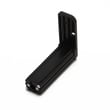
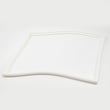
If the drain keeps clogging or the freezer won’t maintain temperature after you clear it, we recommend having a technician check the defrost system and airflow components. For airflow-related issues, the freezer fan and ducting are common suspects; see the parts list for compatible options such as the refrigerator freezer air duct cover and fan assembly AEB76044903.
Last updated: January 2026
What is the most common problem with an LG refrigerator?
For the LG LRMVC2306S, the most common service issue we see is a cooling problem (refrigerator or freezer not staying cold). Many “not cooling” complaints trace back to airflow restrictions (dirty condenser area, blocked vents) or a failed cooling-system component; use the LRMVC2306S manual to confirm the correct temperature settings and basic checks.
Quick checks we recommend first (no parts)
- Confirm the control panel is not in Display/Demo mode (cooling is disabled when “OFF” shows).
- Verify set temperatures: refrigerator 37°F and freezer 0°F.
- Make sure doors fully close and gaskets seal all the way around.
- Keep food packages from blocking interior air vents.
- Clean the condenser cover and vents with a vacuum brush (do not remove the sealed cover panel).
If it’s still warm: likely causes on this style of LG
Cooling issues usually fall into one of these buckets:
- Airflow problem: condenser area clogged, fan not moving air, vents blocked.
- Defrost/ice buildup: frost restricting airflow through the evaporator area.
- Cooling-system problem: compressor or related components not running correctly.
If you suspect a fan or compressor issue, these model-compatible parts are commonly involved:
Symptom-to-cause guide
| What you notice | Most likely direction | What to do next |
|---|---|---|
| Freezer cold, fridge warm | Airflow/evaporator issue | Check vents, frost buildup, door sealing |
| Both sections warm | Compressor, condenser fan, or control issue | Check condenser airflow, listen for fan/compressor |
| Runs constantly, still warm | Dirty condenser area or sealed-system issue | Clean condenser area; then diagnose further |
Why it matters
A refrigerator that is even 5 to 10°F too warm can shorten food life quickly. Catching airflow problems early (before the compressor runs nonstop) can prevent bigger failures and reduce energy use.
Helpful DIY resources
Last updated: January 2026
Why is my LG refrigerator leaking from the bottom?
On the LG LRMVC2306S, a leak from the bottom is most often caused by defrost water not draining correctly (so it overflows into the cabinet and down to the floor) or by a water supply connection that’s seeping and running down the back. Use the LRMVC2306S manual to locate access points and safe cleaning steps.
Quick checks we recommend first
- Look for a sheet of ice or standing water on the freezer floor; that points to a clogged defrost drain.
- Check the drip tray area under the front for water that appears after a defrost cycle.
- Inspect the water line behind the refrigerator for kinks, rubbing, or a slow drip.
- Check the filter area and tubing connections for moisture.
- Make sure doors close fully; warm air can increase frost and drain overflow.
Most common causes (and what to do)
1) Clogged defrost drain
When the drain is blocked, meltwater can back up and leak out the bottom.
What to do:
- Unplug the refrigerator.
- Remove items from the freezer and check for ice buildup near the drain area.
- Carefully melt ice with warm (not boiling) water and clear debris.
2) Water line or connection leak
A small leak at a fitting can run down the cabinet and show up as a puddle at the bottom.
What to do:
- Turn off the household water supply valve.
- Dry all fittings, then watch for fresh moisture.
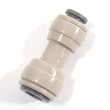
- If a connector is cracked or won’t seal, replacing the fitting is often the fix; see refrigerator water tube fitting 4932JA3002C.
Helpful guide for this symptom
Symptom-to-cause guide
| What you see | Most likely cause | Where to focus |
|---|---|---|
| Ice on freezer floor, then water | Defrost drain clogged | Freezer drain area |
| Water only when dispenser/ice used | Water line or fitting leak | Rear water line, filter area |
| Water after door left open | Excess frost then overflow | Door seal, door closing |
Why it matters
Bottom leaks can damage flooring and can also lead to ice buildup that affects cooling and ice maker performance. Fixing the drain or a small fitting leak early usually prevents bigger problems.
Last updated: January 2026