Owner’s manual
 Error Codes



How much is a new compressor for a GE refrigerator?
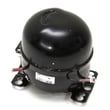
For the GE PFSF6PKXABB bottom-mount refrigerator, a replacement compressor typically costs $400 to $700 for the part alone; professional sealed-system labor and refrigerant handling usually makes the total repair much higher. Confirm your exact compressor and warranty coverage in the PFSF6PKXABB owner's manual.
Compressor replacement is a sealed-system repair; pricing usually breaks down like this:
- Compressor part: commonly $400 to $700 (varies by model and supplier)
- Labor: often 2 to 5 hours (sealed-system work)
- Refrigerant recovery and recharge: typically required
- Filter drier and brazing materials: commonly replaced during the job
- Service call and diagnostics: often added to the total
| Cost item | Typical range | Notes |
|---|---|---|
| Compressor (part) | $400 to $700 | Model-specific part required |
| Sealed-system labor | $300 to $900+ | Depends on region and complexity |
| Refrigerant handling | $100 to $300+ | Recovery, vacuum, recharge |
Your manual describes the compressor as a high-efficiency design that can run longer and sound different than older refrigerators (a high-pitched hum or pulsating sound can be normal). Use the PFSF6PKXABB owner's manual to separate normal operating sounds from true cooling failures.
A compressor is more likely when:
- Both sections are warm and the compressor is not running or is overheating
- You hear repeated clicking and the unit will not stay running
- The condenser fan runs but cooling does not improve
Other common causes that can mimic compressor trouble:
- A failed temperature sensor such as refrigerator temperature sensor WR23X10582
- A control issue involving refrigerator electronic control board WR55X10856
- Airflow problems (evaporator fan, frost buildup, damper issues)
Compressor replacement is one of the highest-cost refrigerator repairs and requires specialized tools and EPA-compliant refrigerant handling. Verifying the diagnosis first helps avoid replacing an expensive sealed-system part when a sensor, control, or airflow issue is the real cause.
Last updated: February 2026
What is the most common problem with GE profile refrigerators?
The most common issues we see on GE Profile-style refrigerators like the GE PFSF6PKXABB are ice maker and water system problems (no ice, slow ice, hollow cubes) and temperature control complaints (warm freezer or fresh food section). These often trace back to water supply setup, airflow, or a failed sensor/control.
- Ice maker not making ice or slow production: water supply turned off, freezer too warm, cubes jammed in the bin
- Hollow or small ice cubes: restricted water flow, filter restriction, or reverse osmosis setup needing the bypass plug
- Warm freezer or fresh food section: airflow issue (damper), evaporator fan problem, or temperature sensing issue
- Bad taste or odor in ice: food odors, dirty interior, or old filter
- Moisture on the outside: high humidity, Energy Saver setting, or doors not sealing well
- Confirm the freezer is cold enough; many ice complaints are simply a freezer that has not fully cooled (allow about 24 hours after changes).
- Make sure the ice bin is not overfilled or jammed; piled cubes can shut the ice maker off.
- Verify the water supply is connected and fully on; follow the PFSF6PKXABB owner's manual water line guidance.
- If you use reverse osmosis and the refrigerator also has a filter, install the bypass plug to prevent hollow cubes.
- If odors are the issue, clean the interior and keep an open box of baking soda, replacing it every 3 months.
| Problem area | What fails most often | Example part for this model |
|---|---|---|
| Water quality and flow | Clogged filter | GE refrigerator water filter MWFP |
| Temperature feedback | Thermistor/sensor drift | Refrigerator temperature sensor WR23X10582 |
| Cooling control | Electronic control issues | Refrigerator electronic control board WR55X10856 |
| Ice production | Ice maker module/mechanism | Refrigerator ice maker assembly WR30X10097 |
Ice maker and cooling problems can look the same at first, but the fix is very different. A simple water supply or filter issue can mimic a bad ice maker, and a warm freezer can stop ice production even when the water system is perfect.
Last updated: February 2026
What is the life expectancy of a GE Profile refrigerator?
GE Profile refrigerators typically last 10 to 15 years. With consistent care (cleaning condenser coils, keeping door gaskets sealing, and maintaining proper temperatures), many units reach 15 to 20 years before major repairs become more likely. For model-specific care and settings, use the PFSF6PKXABB owner's manual.
Most GE Profile refrigerators run reliably for a decade or more; after that, wear items and cooling-airflow parts tend to drive service calls.
- Door gaskets can loosen or tear, causing warm temps and frost
- Ice maker and dispenser components can jam or leak
- Evaporator fan or airflow controls can get noisy or stick
- Sensors can drift, leading to temperature swings
- Control boards can fail after power surges or moisture exposure
These steps reduce compressor run time and prevent temperature problems.
- Vacuum condenser coils and the grille area every 6 to 12 months
- Keep doors closing squarely; avoid overloading door bins
- Replace the water filter on schedule; a clogged filter strains the water system
- Confirm freezer is near 0°F and fresh food is near 37°F
- Level the refrigerator so doors self-close and seals stay tight
| Symptom | Common cause | Example part for this model |
|---|---|---|
| Bad taste/slow water | Clogged filter | GE refrigerator water filter MWFP |
| Warm spots, frost, leaks | Door not sealing | Refrigerator door gasket WR24X10201 |
| Lights out | Burned-out bulb | Refrigerator incandescent lamp 40A15 |
A refrigerator that is running longer to hold temperature uses more energy and puts extra load on the sealed system (compressor, condenser, evaporator). Simple airflow and sealing maintenance often delays expensive repairs.
Last updated: February 2026
How do I reset my GE refrigerator compressor?
On the GE PFSF6PKXABB bottom-mount refrigerator, the most reliable “compressor reset” is a power reset: unplug the refrigerator (or switch off the breaker) for about 5 minutes, then restore power and allow up to 24 hours for temperatures to stabilize. For control-related cooling issues, use the steps in the PFSF6PKXABB owner's manual.
- Unplug the refrigerator or turn off the circuit breaker.
- Wait 5 minutes (this lets the control board fully reboot).
- Restore power.
- Confirm the controls light up and the unit starts running.
- Wait up to 24 hours for full cool-down after a reset or power loss.
Many “compressor problems” are actually airflow, sensor, or control issues. Check these common causes:
- Defrost cycle: the refrigerator can pause cooling; wait about 30 minutes.
- Door left open: warm air forces long run times; make sure nothing holds the door ajar.
- Condenser coils: dirty coils can reduce cooling and increase run time.
- Evaporator fan and airflow: weak airflow can mimic compressor failure.
- Temperature sensing/control: a bad sensor or board can prevent proper compressor operation.
| Symptom | What it often points to | Example part for PFSF6PKXABB |
|---|---|---|
| Warm fresh food section, freezer OK | Air damper not opening | Refrigerator damper motor WR60X10253 |
| Temps swing, runs oddly | Sensor feedback issue | Refrigerator temperature sensor WR23X10582 |
| No response to settings, erratic operation | Control issue | Refrigerator electronic control board WR55X10856 |
A reset clears control glitches after a power interruption and gets the compressor logic back to normal. If cooling does not recover after the reset and a full cool-down window, checking airflow and control components prevents unnecessary compressor replacement.
Last updated: February 2026