 Error Codes




What is the most common problem with GE Dishwashers?
The most common problems we see on GE dishwashers like model GDT550PYR7FS are drainage problems, leaks, and won’t start/won’t run issues. In most homes, a clogged filter or drain path causes the most frequent day-to-day complaint: standing water or poor cleaning.
Most common issues (and what they usually point to)
- Not draining or water left in the tub: clogged filter area, blocked drain hose, drain pump issue
- Not cleaning well: dirty filter, spray arm blockage, low water fill, detergent problems
- Leaks: door gasket wear, loose hose connections, over-sudsing from wrong detergent
- Won’t start or stops mid-cycle: door latch not sensing closed, control glitch, power supply issue
- Not drying: rinse aid low, heater circuit issue, plastic items holding water
Quick checks we recommend first
- Cancel/Drain and restart the cycle to clear a temporary control hiccup.
- Clean the filter area and remove debris around the sump (glass, labels, food).
- Confirm the door closes firmly and nothing is blocking the latch.
- Run hot water at the sink before starting so the dishwasher fills with hotter water.
- Use the right detergent (dishwasher detergent only) and avoid overfilling.
Symptom-to-likely-cause guide
| Symptom | Most likely cause | Best first action |
|---|---|---|
| Standing water | Clog in filter/drain path | Clean filter area; check drain hose routing |
| Dishes gritty | Dirty filter or spray arm blockage | Clean filter; clear spray arm holes |
| Won’t start | Door not latched or control issue | Re-close door; power reset at breaker |
| Water on floor | Door seal or hose leak | Inspect gasket; check inlet/drain connections |
Error codes can speed up diagnosis
If your GE dishwasher shows a code or flashing pattern, match it to the failure type before replacing anything. Use our GE electronic dishwasher error codes guide for the fastest next step.
Why it matters
Drainage and wash-performance problems often start as simple clogs; fixing them early helps prevent pump strain, odors, and repeat cycle failures.
Last updated: February 2026
What is the average lifespan of a GE dishwasher?
Most GE dishwashers, including model GDT550PYR7FS, typically last 10 to 12 years. With normal household use, keeping the filter and spray arms clean and fixing small leaks or drain issues quickly helps you reach the high end of that range.
Typical lifespan range (what to expect)
Dishwasher life depends most on water quality, how often you run it, and whether wash and drain systems stay clear.
- Typical GE dishwasher lifespan: 10 to 12 years
- Common overall range: 8 to 15 years
- Heavy use (multiple loads daily): tends toward the lower end
- Light use and good maintenance: tends toward the higher end
| Usage pattern | What it usually means | Likely outcome |
|---|---|---|
| 1 load/day, average water | Normal wear on pump, heater, racks | Around 10 to 12 years |
| 2+ loads/day | Faster wear on motor, seals, door latch | Closer to 8 to 10 years |
| Regular cleaning and prompt repairs | Less strain on circulation and drain | Closer to 12 to 15 years |
What shortens a dishwasher’s life fastest
These issues create extra load on the circulation pump, drain pump, and heating system.
- Clogged filter or sump area
- Spray arms blocked by debris or hard-water scale
- Chronic overloading (poor water flow, more re-washes)
- Standing water from partial clogs in the drain path
- Small door leaks that go uncorrected (moisture reaching wiring and components)
How to help your GE dishwasher last longer
We recommend a simple routine that prevents the most common failures.
- Clean the filter area regularly and remove labels, glass, and food bits
- Run a dishwasher cleaner periodically to reduce grease and mineral buildup
- Use the right detergent amount for your water hardness
- Keep the spray arms spinning freely and clear the holes if needed
- Address “won’t start,” “not draining,” or “not cleaning” symptoms early
Why it matters
A dishwasher that is struggling to fill, wash, heat, or drain often still runs, but it wears out key components faster. Checking symptoms early can extend the service life and improve cleaning results.
For troubleshooting by display or blink patterns, use our GE electronic dishwasher error codes guide.
Last updated: February 2026
How do you do a hard reset on a GE dishwasher?
For a GE dishwasher like model GDT550PYR7FS, a “hard reset” is a power reset: shut off power at the breaker (or unplug) for at least 1 minute, restore power, then press and hold Start/Reset for about 3 seconds to clear the current cycle and reboot the control.
Hard reset steps (power reset)
- Turn the dishwasher OFF.
- Switch the dishwasher circuit breaker OFF (or unplug the dishwasher).
- Wait 1 full minute (2 minutes is fine if the control seems “stuck”).
- Turn the breaker ON (or plug back in).
- Press and hold Start/Reset for 3 seconds.
- Close the door and wait 1 to 2 minutes; many GE models run a short drain or reset routine.
If it still will not run
Quick checks
- Make sure the door is fully latched; a weak latch can prevent a restart.
- Cancel any cycle first (hold Start/Reset), then select a new cycle.
- If the control panel is unresponsive, repeat the power reset and try again.
- If the unit drains but will not fill, check the water supply valve under the sink is fully open.
- If it powers up but stops with beeps or lights, pull the fault code and use our GE electronic dishwasher error codes guide.
What to do based on symptoms
| What you see | What it usually means | What we do next |
|---|---|---|
| No lights, no response | Power supply issue | Check breaker, outlet, junction box connections |
| Lights on, will not start | Door latch or control lock issue | Re-latch door, cancel cycle, retry |
| Starts then stops, flashing lights | Stored error condition | Use GE dishwasher error codes and address the cause |
Why it matters
A hard reset clears a “hung” control board state after a power glitch or interrupted cycle. If the same problem returns after resetting, the dishwasher is usually reacting to an underlying issue (drain, fill, door latch, or a stored error code).
Last updated: February 2026
Are GE Profile Dishwashers any good?
Yes. GE Profile dishwashers are a solid choice when you want quiet operation, strong cleaning, and modern features; many owners highlight low noise, good wash results, and convenience upgrades like a third rack and targeted spray jets. For a GE dishwasher like model GDT550PYR7FS, overall performance depends most on cycle selection, loading, and routine maintenance.
What “good” usually means for a dishwasher
A “good” dishwasher consistently cleans and dries while staying reliable and reasonably quiet. In real kitchens, these factors matter most:
- Noise level: quieter models are easier to run overnight or during meals
- Cleaning performance: ability to remove baked-on soils without rewashing
- Drying results: especially on plastics and in humid kitchens
- Rack design: third rack, adjustable tines, and bottle jets can improve capacity and coverage
- Controls and features: delay start, sanitize, smart connectivity (on some models)
Quick feature check: GE Profile vs what you may already have
| Feature | GE Profile (typical) | Basic dishwasher (typical) |
|---|---|---|
| Noise | Lower (quieter) | Higher (more noticeable) |
| Racks | Often more adjustable; may include third rack | Fewer adjustments; usually 2 racks |
| Wash coverage | More targeted spray options on some models | Standard spray arms |
| Cycles/options | More specialized cycles | Fewer cycle choices |
How to get the best results from a GE dishwasher
Even a high-end dishwasher can underperform if setup and habits are off. We recommend:
- Use the Auto/Normal cycle for everyday loads; use Heavy for baked-on soils
- Load so spray arms spin freely; avoid blocking the detergent dispenser
- Run hot water at the sink for 30 to 60 seconds before starting (helps fill temperature)
- Clean the filter area and spray arms periodically to prevent redepositing food soil
- Use rinse aid if drying is inconsistent, especially with plastics
Why it matters
Dishwasher “quality” shows up in daily use: fewer rewashes, less noise, and more flexible loading. If you are comparing models, focusing on noise, rack layout, and cleaning consistency usually predicts satisfaction better than extra modes.
For troubleshooting and feature-related issues (like beeps, flashing lights, or a cycle that will not run), use our GE dishwasher error codes and GE electronic dishwasher error codes resources.
Last updated: February 2026
Is it worth repairing a GE dishwasher?
Yes, repairing a GE dishwasher like model GDT550PYR7FS is worth it when the unit is under 10 years old and the repair is a straightforward fix (drain, fill, heat, or door-latch related) that costs less than about half the price of a comparable new dishwasher.
Quick decision checklist
- The dishwasher is under 10 years old and the tub is not damaged
- The problem is one-time (not a repeating breakdown every few months)
- The estimate is under ~50% of replacement cost (parts + labor)
- You are not seeing multiple symptoms (leaking + not draining + not heating)
- The unit still cleans well when it runs (spray arms and filtration are in good shape)
Typical repair vs replace guidance
| Situation | Usually makes sense | Why |
|---|---|---|
| Won’t start, has power, or seems “stuck” | Repair first | Often a control setting, door latch, or electrical supply issue |
| Not draining or not filling | Repair first | Common service items (drain path, pump, inlet valve, float) |
| Not cleaning or not drying | Repair first | Frequently maintenance, loading, detergent, or heating-related |
| Repeated major failures or multiple costly parts at once | Replace | Reliability drops and total cost climbs quickly |
What we recommend checking first (low-cost steps)
- Reset power at the breaker for 1 to 2 minutes, then retry a cycle
- Confirm the door fully latches and the controls respond normally
- Check the drain hose for kinks and the sink/disposer connection for blockage
- Clean the filter area and look for debris around the sump
- Run hot water at the sink first to improve wash performance on the next cycle
Use error codes to decide faster
If your GDT550PYR7FS is showing beeps, blinking lights, or a code, use the code to narrow the failure to a specific system (drain, fill, heating, or control). Start with GE electronic dishwasher error codes to match the symptom to the most likely repair path.
Why it matters
A dishwasher typically lasts about 10 years. If you are close to that mark, a large repair can cost more over time than upgrading to a newer, more efficient unit. If you are well under 10 years, a targeted repair usually restores reliable service at a lower total cost.
Last updated: February 2026
Can I replace dishwasher parts myself?
Yes, for a GE dishwasher model GDT550PYR7FS, we can replace many common parts ourselves if we’re comfortable with basic hand tools and we shut off power and water first. Jobs involving wiring, leak diagnosis, or built-in plumbing connections take more care and planning.
What’s usually DIY-friendly vs. pro-level
Most homeowners can handle cleaning and simple mechanical swaps; electrical troubleshooting and water-supply work are the most common reasons to stop and bring in a technician.
- DIY-friendly: filter cleaning, spray arm cleaning/replacement, rack adjusters/rollers, door gasket inspection, tightening loose mounting brackets
- Intermediate: replacing the drain hose, replacing the water inlet valve (requires careful leak checks), replacing the latch assembly
- Advanced: control board, user interface, wiring harness repairs, motor/pump work, diagnosing error codes
Safety checklist before you start
- Turn off the breaker to the dishwasher (do not rely on the door switch).
- Shut off the water supply at the dishwasher shutoff valve.
- Protect the floor; keep towels ready for residual water.
- Take photos of wire locations and hose routing before disconnecting anything.
- After reassembly, run a short cycle and check for leaks under the unit.
Quick “should I DIY this?” guide
| What you’re seeing | Most likely area | DIY difficulty |
|---|---|---|
| Not cleaning well | spray arms, filter, loading, water temp | Easy to medium |
| Not draining | drain path, drain hose, pump area | Medium |
| Won’t start | door latch, power supply, control | Medium to advanced |
| Standing water or leaks | hose connections, seals, inlet valve | Medium |
Why it matters
Dishwashers combine electricity, hot water, and tight clearances. Doing the right prep (power off, water off, leak check) prevents shocks, flooding, and repeat failures, and it helps us confirm the real root cause before buying parts.
Helpful troubleshooting resources
- Use GE electronic dishwasher error codes to interpret display or blink patterns and narrow the failure.
- If the unit is dead or won’t run, follow dishwasher wont start video for a step-by-step diagnostic flow.
Last updated: February 2026
What are the commonly replaced parts in a dishwasher?
In a GE dishwasher like model GDT550PYR7FS, the most commonly replaced parts are the ones that handle water flow, heating, and door sealing. These parts wear from normal use, mineral buildup, clogs, and repeated door cycles, and they directly affect cleaning, draining, and leak prevention.
Commonly replaced dishwasher parts
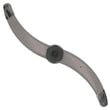
- Spray arms: crack, clog, or lose spray pressure; leads to poor cleaning.
- Filters and sump screens: clog with food debris; causes draining and wash performance issues.
- Drain pump: fails electrically or jams; dishwasher won’t drain or drains slowly.
- Circulation (wash) pump and motor: weak wash action, loud grinding, or intermittent washing.
- Heating element (or heater circuit components): poor drying, cool water, long cycles.
- Door latch and door switch: dishwasher won’t start or stops mid-cycle.
- Door gasket and bottom door seal: leaks at the corners or along the bottom edge.
- Water inlet valve: slow fill, no fill, or underfilling.
Quick symptom-to-part guide
| Symptom | Most likely parts to check first | What to do next |
|---|---|---|
| Not cleaning well | Spray arms, filter, circulation pump | Clean filter and spray arm holes; then check pump performance |
| Not draining | Filter/sump, drain pump, drain hose | Clear debris; verify hose routing and pump operation |
| Not drying | Heating element, vent, rinse aid system | Use rinse aid; confirm heater is working |
| Won’t start | Door latch/switch, control, user interface | Confirm door closes firmly; check for error codes |
| Leaking | Door gasket, bottom seal, inlet valve, pump seals | Inspect seals for tears; check for drips under the unit |
Why it matters
These parts control the three basics of dishwasher performance: spray pressure, water temperature, and watertight sealing. Replacing the right component restores cleaning and prevents repeat failures caused by clogs or leaks.
Helpful troubleshooting resources
- Use GE electronic dishwasher error codes to match beeps/lights or displayed codes to likely failed components.
- Use GE dishwasher error codes if your model uses a different GE control style or code format.
Last updated: February 2026





