Error Codes

How to tell if an electric water heater thermostat is bad?
A bad thermostat on a State ES652DOCT electric water heater typically shows up as no hot water, water that turns cold quickly, or overheating. We confirm it by safely shutting off power, then checking the upper and lower thermostats for proper continuity and switching behavior; see how to replace an electric water heater thermostat.
- Turn OFF the water heater breaker (240V can be fatal).
- Verify power is off with a non-contact tester or multimeter.
- Remove the access panels and insulation carefully.
- Do not touch bare terminals until you confirm 0 volts.
- If wiring is burned or insulation is melted, stop and have a technician inspect it.
- No hot water at all: often points to the upper thermostat or upper circuit issue.
- Some hot water, then it goes cold fast: often points to the lower thermostat or lower heating circuit.
- Water too hot or temperature swings: thermostat contacts can stick or misread tank temperature.
- With power OFF, expose the thermostat(s) and heating element terminals.
- Check for loose, corroded, or overheated wire connections.
- Use a multimeter to check thermostat continuity (contacts should open/close as temperature changes).
- If the thermostat fails continuity checks or will not switch correctly, replace it.
Helpful model-matched parts for ES652DOCT:
- Thermostat 100108683 (upper thermostat)
- Thermostat 100108421 (lower thermostat)
| What you observe | More likely cause | What to check next |
|---|---|---|
| No hot water | Upper thermostat not switching, or power supply issue | Voltage at heater (if qualified), upper thermostat continuity |
| Hot water runs out quickly | Lower thermostat not calling for heat, or lower element issue | Lower thermostat continuity; element resistance |
| Water overheats | Thermostat contacts stuck closed | Replace the thermostat; verify temperature setting |
A failing thermostat can prevent proper heating, cause inconsistent water temperature, or overheat the tank. Correct diagnosis helps you replace the right part the first time and avoid repeat shutdowns.
Last updated: January 2026
Is it cheaper to repair or replace a water heater?
For a State ES652DOCT electric water heater, it’s usually cheaper to repair when the issue is limited to serviceable components (like a thermostat or heating element). Replacement is typically the better value when the tank itself is leaking or badly corroded because tank failures are not economical to repair.
- Repair if you have no tank leak and symptoms point to a control or heating issue.
- Replace if you see water leaking from the tank body, heavy rust at seams, or recurring failures.
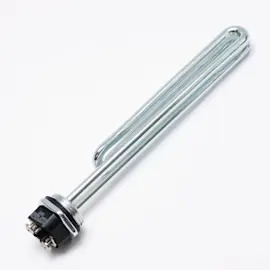
- Repair if the fix is a common part swap such as an thermostat 100108683 or element 100108283.
- Replace if repair cost is approaching 50% or more of the installed cost of a new heater.
- Replace if you are already planning an efficiency upgrade or capacity change.
| Scenario | Usually makes sense | Why |
|---|---|---|
| No hot water, breaker OK | Repair | Often a thermostat or element issue |
| Water too hot or fluctuating temps | Repair | Control/thermostat calibration or failure |
| Water in drain pan from tank | Replace | Tank leak is a structural failure |
| Frequent element failures | Repair first, then evaluate | May indicate sediment, wiring, or thermostat issues |
- Confirm the circuit breaker is on and not tripping.
- Look for tank leak signs: water at the base, wet insulation behind access panels, rust trails.
- If you have power but poor heating, inspect/test:
- Upper thermostat (example: thermostat 100108683)
- Lower thermostat (example: thermostat 100108421)
- Heating element (example: element 100108283)
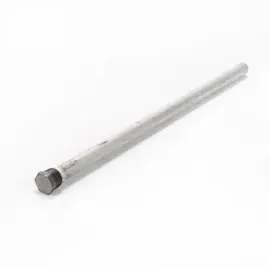
- Anode rod condition (example: 2-way 100109624)
Repairing a non-leaking ES652DOCT can restore hot water quickly and cost-effectively. Replacing a leaking tank avoids ongoing water damage risk and repeated service calls, which often cost more than upgrading to a new unit.
Related help: how to replace an electric water heater thermostat
Last updated: January 2026
What is the average lifespan of an electric hot water tank?
An electric hot water tank like the State ES652DOCT typically lasts 10 to 15 years. Lifespan depends most on water quality (hard water shortens life), maintenance (periodic draining and flushing), and whether key wear parts like the anode rod are kept in good shape.
- Hard water and sediment buildup (overheats elements and stresses the tank)
- Anode rod condition (protects the tank from corrosion)
- Water temperature setting (higher temps increase wear)
- Leak history around fittings, drain valve, or tank seams
- Electrical component health (thermostats and heating elements cycling correctly)
We recommend these habits for the State ES652DOCT:
- Drain a few gallons periodically to reduce sediment
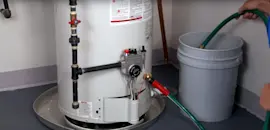
- Do a full drain and flush on a regular schedule
- Inspect and replace the anode rod when it is heavily depleted (see 2-way 100109624)
- Address “not enough hot water” early (often tied to a thermostat or element)
- Keep access covers and insulation in place after service
| What you’re seeing | What it usually means | Typical next step |
|---|---|---|
| No hot water but tank is not leaking | Control or heating issue | Diagnose thermostat/element |
| Slow recovery or lukewarm water | Sediment or weak element | Flush tank; test element |
| Water on floor from tank seam | Tank corrosion | Replace water heater |
Once the tank itself starts leaking, it is not a “part replacement” situation; it is end-of-life. Replacing wear items earlier (especially the anode rod) can delay corrosion and help you avoid an unexpected failure.
For common symptoms and upkeep tips, we also recommend water heater common questions.
Last updated: January 2026
What's the average cost to replace a 50 gallon electric water heater?
Replacing a 50-gallon electric water heater typically runs about $700 to $2,500 total (heater plus installation). For the State ES652DOCT model, the exact replacement cost depends on the new heater type you choose and local labor rates; the model number itself does not set a fixed price.
- Water heater unit: roughly $500 to $1,200 for a standard electric tank
- Labor/installation: commonly $200 to $600 (higher if access is difficult)
- Materials: shutoff valve, fittings, flex connectors, wire/whip, drain pan, pipe
- Haul-away/disposal: sometimes added as a separate line item
- Code upgrades: expansion tank, seismic straps, bonding, or venting changes (as required)
| Cost item | Typical range | What makes it go up |
|---|---|---|
| Heater (standard electric) | $500 to $1,200 | Higher warranty, better insulation, brand tier |
| Installation labor | $200 to $600 | Tight space, stairs, long run to panel |
| Add-ons/upgrades | $0 to $700+ | Code items, new shutoff, new wiring |
- Tank type: standard electric vs. heat pump (hybrid) electric
- Capacity and size: tall vs. short tanks can affect fit and labor
- Electrical work: new breaker, wire gauge changes, or disconnect requirements
- Plumbing condition: corroded nipples, old valves, or rigid piping
- Location: attic, crawlspace, or finished closet installs cost more
If your ES652DOCT is otherwise in good shape, a repair can be far cheaper than replacement. Common service parts include the thermostat 100108683 (upper), thermostat 100108421 (lower), and element 100108283.
A realistic replacement budget helps you compare quotes apples-to-apples and decide whether a targeted repair (thermostat, heating element, anode rod) is the better value for restoring hot water.
Last updated: January 2026