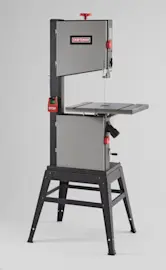
Owner’s manual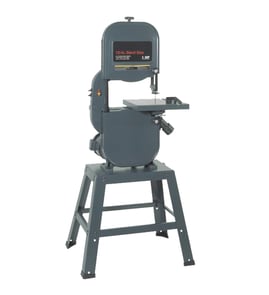

What is the 3-tooth rule for bandsaws?
The 3-tooth rule means you choose a band saw blade TPI (teeth per inch) so at least three teeth are in the workpiece at all times during the cut. On your Craftsman 113243401 12" band saw, this helps prevent tooth snagging, rough cuts, and premature blade wear.
How to apply the 3-tooth rule (quick method)
- Measure the material thickness (the direction the blade teeth travel through).
- Pick a blade where: TPI x thickness (in inches) ≥ 3.
- 1/4 in. thick stock: 3 ÷ 0.25 = 12 TPI or finer
- 1/2 in. thick stock: 3 ÷ 0.5 = 6 TPI or finer
- 1 in. thick stock: 3 ÷ 1 = 3 TPI or finer
- 2 in. thick stock: 3 ÷ 2 = 1.5 TPI or finer (typically a very coarse wood blade)
Common blade choices by material thickness
| Material thickness | Typical TPI range | What you get |
|---|---|---|
| 1/8 to 1/4 in. | 10 to 18 TPI | Cleaner cut, less tooth grab |
| 3/8 to 3/4 in. | 6 to 10 TPI | Good general-purpose cutting |
| 1 to 3 in. | 3 to 6 TPI | Faster cuts, better chip clearance |
Why the rule matters
- Too few teeth in the cut (TPI too low): teeth can hook and strip, and the blade can chatter.
- Too many teeth in the cut (TPI too high): gullets pack with sawdust or chips, causing heat, drift, and slow cutting.
Safety and setup notes for this model
Before changing blades or making adjustments on the Craftsman 113243401:
- Unplug the saw before servicing.
- Make sure the blade teeth point down toward the table.
- Use correct blade width and tension; this saw is designed for 1/8 in. to 1/2 in. blades, and it commonly uses a 1/4 in. blade.
- Track the blade so it runs centered on the tires before cutting.
For the model-specific blade installation, tracking, and tension steps, follow the owner's manual.
Last updated: February 2026
What are the specs of the Craftsman 12 inch band saw 113243401?
The Craftsman 113243401 is a 12-inch band saw/sander. From the model documentation, we can confirm it uses an upper drive wheel system with ball bearings and a V-belt drive; for the full cutting capacity, table size, and motor details, use the 113243401 owner's manual.
Key specs we can confirm from the manual
The parts lists in the manual identify several core build and drive components that define how this saw is set up.
- Model type: Craftsman 12-inch band saw/sander (MODEL 113.243401)
- Drive system: Belt-driven with V-belt and pulleys
- Wheel system: Upper drive wheel assembly with trim tire
- Bearings: Ball bearings used in the wheel assemblies
- Sanding capability: Uses a 1/2 x 80 sanding belt (for the sander function)
Common “specs” customers look for (where to find them)
For woodworking and shop planning, these are the specs that matter most. They are typically listed in the specifications or setup sections of the manual.
| Spec you may need | What it affects | Where to verify it |
|---|---|---|
| Throat capacity | Max width of cut | Specs section in the manual |
| Max cutting height | Max thickness of stock | Specs section in the manual |
| Table size and tilt range | Rip cuts, bevel cuts | Table/trunnion setup section |
| Blade length and width range | What blades fit | Blade installation/specs section |
| Motor HP and electrical rating | Power and circuit needs | Motor/electrical section |
Why it matters
Matching the correct blade length, blade width range, and electrical requirements prevents poor tracking, stalling, and premature wear on wear items like tires, bearings, and belts.
Quick tips when measuring or comparing band saw specs
- Measure throat from blade to frame, not to the table edge.
- Measure resaw height from table to the highest point under the upper guide.
- Confirm blade length before ordering; “12-inch” refers to wheel size, not blade length.
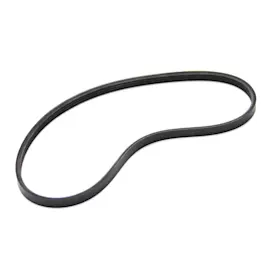
- If the saw vibrates, check belt condition and pulley alignment first.
- Use the manual’s parts diagrams to identify assemblies (wheel, guide, trunnion) before disassembly.
Last updated: February 2026
How do I know the size of my bandsaw blade?
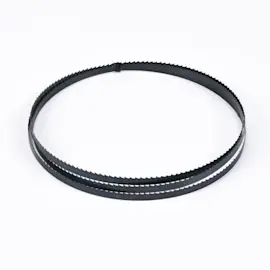
For your Craftsman 113243401 12-inch band saw, blade “size” means length, width, and TPI (teeth per inch). You can measure your current blade to match it, and the owner's manual also confirms this saw uses blades 1/8 inch to 1/2 inch wide (a 1/4 inch blade was included).
What to measure (the 3 specs that matter)
- Blade length: the total loop length of the blade.
- Blade width: from the tooth tip to the back edge of the blade.
- TPI: count how many teeth are in 1 inch.
How to measure blade length safely
- Unplug the saw and open the wheel covers.
- Release blade tension, then remove the blade.
- Carefully uncoil the blade while wearing gloves.
- Lay the blade flat on the floor.
- Mark a starting point (the weld is easiest).
- Use a tape measure along the blade edge, rolling the loop until the mark returns; that distance is the blade length.
Quick blade selection guide (width and TPI)
| What you’re doing | Typical blade width | Typical TPI range |
|---|---|---|
| Tight curves | 1/8 in to 3/16 in | 10 to 18 |
| General cutting | 1/4 in | 6 to 10 |
| Straighter cuts, resaw style work | 3/8 in to 1/2 in | 3 to 6 |
Why it matters
Matching the correct blade length lets you tension and track the blade correctly; choosing the right width and TPI improves cut quality and helps prevent blade wandering, stalling, or premature blade wear.
Last updated: February 2026
What is the 4 inch rule for bandsaw?
The 4-inch rule means we keep our hands and fingers at least 4 inches away from the moving blade while using the Craftsman 113243401 12-inch band saw. When a cut would bring hands closer than that, we use a push stick, push block, or a holding jig instead.
How to apply the 4-inch rule on this band saw
Use the rule any time the workpiece is small, narrow, or awkward to control by hand.
- Plan the cut so your hands never track toward the blade line.
- Use a push stick or push block for short pieces and narrow rips.
- Use a sled or simple jig for tiny parts so your fingers stay well away from the blade.
- Keep the table clear of scraps and tools before switching the saw on.
- Avoid awkward hand positions where a slip could pull your hand into the blade.
Setups that make the rule easier (and safer)
Your manual emphasizes reducing contact risk by setting the saw up correctly.
| Setup item | What to do | Why it matters |
|---|---|---|
| Upper guide height | Adjust the upper guide so it just clears the workpiece | Less exposed blade reduces the chance of accidental contact |
| Workpiece control | Keep steady, even feed pressure | Prevents sudden slips and twisting |
| Saw stability | Bolt the band saw securely to a stand or bench | Reduces tipping or shifting during long cuts |
Why it matters
A band saw blade cuts continuously, and a brief slip is enough to cause a serious injury. Keeping a 4-inch buffer forces us to use proper support devices (push tools and jigs) instead of “hand-feeding” small stock.
Quick safety reminders specific to this model
These points align with the Craftsman 113243401 safety guidance:
- Wear ANSI Z87.1 safety goggles; add a face shield for dusty work.
- Do not wear gloves around the moving blade.
- Keep sleeves rolled above the elbow and secure loose clothing.
- Shut off power and unplug before adjusting guides, tracking, or clearing a problem.
For more model-specific safety and setup details, follow the 113243401 owner's manual.
Last updated: February 2026