Owner’s manual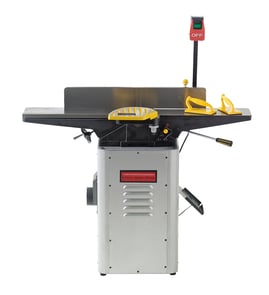

Can you use a jointer without a planer?
Yes. You can use the jointer function on your Craftsman 113232240 6-1/8 inch jointer/planer without using the planer function; a jointer’s job is to flatten one face and square one edge, while a planer’s job is to make the opposite face parallel and bring the board to consistent thickness. For safe setup and operation details, follow the owner's manual.
What each tool does (and what it cannot do)
A jointer and a planer are complementary, not interchangeable.
- Jointer: flattens one face; squares one edge to that face
- Planer: thicknesses stock; makes the second face parallel to the first
- Without a planer: you can get a flat face and a straight edge, but you cannot reliably make the board uniformly thick
- Without a jointer: you can thickness boards, but you may “copy” twist or cup unless you use a sled/jig
Practical workflow options
Here are common ways woodworkers work when they do not have both machines.
| Your setup | What you can do well | Typical limitation |
|---|---|---|
| Jointer only | Flatten one face; straighten/square one edge | Final thickness varies; opposite face may not be parallel |
| Planer only | Consistent thickness | Needs a flat reference face (often a sled) |
| Jointer + planer (combo) | Flat, square, parallel, consistent thickness | Requires careful setup and safe feeding |
Safety rules that matter when using the jointer function
We follow these basics every time because kickback and hand contact happen fast.
- Do not plug in until the jointer/planer is fully assembled and aligned; confirm the ON/OFF switch and cutter guard function correctly.
- Let the cutterhead reach full speed before cutting; feed only fast enough to avoid bogging or binding.
- Never cut freehand; keep the workpiece guided firmly against the fence and table.
- Clear the table of everything except the workpiece and needed supports before turning the tool on.
- Use hold-down/push-blocks for control; use extra supports for long or awkward stock.
Minimum stock sizes (from the manual)
These limits help prevent loss of control.
- Jointing/beveling: never joint or bevel stock less than 3/4 inch wide or 1/4 inch thick
- Planing: never plane wood thinner than 1/2 inch
Why it matters
If you skip the planer step, boards can look flat but still vary in thickness, which causes gaps in glue-ups, uneven joinery, and fit problems. Using the jointer first gives you a true reference surface so thicknessing (now or later) is accurate.
Last updated: February 2026
What is the difference between a jointer and a jointer planer?
A jointer is built to straighten and square an edge and flatten a face; a jointer/planer like the Craftsman 113232240 combines those jointing functions with planing-style surfacing operations on the same machine, using the same cutter head and tables. For operating details and safety rules, use the owner's manual.
What each tool is designed to do
- Jointer: Removes wood along an edge to make it straight, smooth, and square to the face held against the fence.
- Planing on a jointer/planer: Removes wood from the wide face to make it flatter and smoother, but it does not automatically make faces parallel or square to other surfaces.
- Jointer/planer combo: One machine that supports both operations (jointing edges and surfacing faces) with shared components like the fence, infeed table, and cutter head.
How the Craftsman 113232240 behaves in real use
The manual’s definitions match what you see at the bench:
| Operation | What you’re improving | What you must control | Common result if rushed |
|---|---|---|---|
| Jointing | Edge straightness and squareness | Keep the face tight to the fence | Out-of-square edge, kickback risk |
| Planing (on jointer) | Face smoothness and flatness | Feed rate and grain direction | Rippled cut, tear-out |
Best-practice workflow (why order matters)
When you need both a flat face and a square edge, we follow the sequence the manual calls out:
- Plane the face first to get it flat and smooth.
- Joint the edge after, so the edge can be cut square to that flattened face.
- Feed with the grain when possible.
- If you must go against the grain, take very light cuts and feed slowly.
Why it matters
Knowing the difference prevents frustration and unsafe cuts. Jointing is about straight and square referencing surfaces (fence plus tables); planing is about controlled surfacing (depth of cut plus feed rate). Using push blocks, keeping hands positioned safely, and bolting or clamping the tool to a firm, level surface all reduce the chance of kickback or unexpected movement.
Last updated: February 2026
What can you make with a jointer planer?
With the Craftsman 113232240 6-1/8" jointer/planer, we use the jointer function to straighten and square an edge and the planer function to flatten and smooth a face. Those steps let you build accurate projects like tables, shelves, cabinets, frames, and doors with tight-fitting joints.
What this tool helps you do (and what you can make)
A jointer/planer is mainly a milling tool; it prepares rough lumber so your table saw, miter saw, and glue-ups work better.
Common results you can create:
- Flat, smooth board faces for panels, shelves, and tabletops
- Straight, square edges for glue-ups (edge-jointed panels)
- Beveled edges and chamfers for trim details
- Rabbets for simple joinery (for example, backs and ledges)
- Better-fitting parts for boxes, frames, and cabinet components
Core operations on the 113232240
The manual describes these basic cutting operations and the order that typically works best.
| Operation | What it produces | Typical “project” use |
|---|---|---|
| Planing (face) | Flattens and smooths a wide face | Panels, shelves, tabletops |
| Jointing (edge) | Straight, smooth edge square to a face | Glue-ups, straight reference edge |
| Beveling/chamfering | Angled edge or eased corner | Trim, decorative edges |
| Rabbeting | Stepped shoulder cut (in light passes) | Simple joinery, back panels |
For model-specific setup, fence adjustment, and safe hand placement, follow the owner's manual.
Safety limits that affect what you can make
Your project parts must be large enough to handle safely.
We follow these key limits from the manual:
- Never joint, plane, or bevel workpieces shorter than 12 inches.
- Never joint or bevel pieces less than 3/4 inch wide or 1/4 inch thick.
- Never plane wood thinner than 1/2 inch.
- Use hold-down/push-blocks for narrow stock (especially under 3 inches wide).
- Make rabbeting cuts in 1/8-inch increments or less.
Why it matters
When we mill lumber flat and straight first, parts register accurately against fences and tables. That reduces twist, gaps in glue joints, and “fighting the wood” during assembly, which improves both safety and final fit.
Last updated: February 2026
What sizes do jointers come in?
Jointer sizes are usually described by the maximum board width the cutter head can joint in one pass. Common sizes are 6-inch, 8-inch, and 10-inch jointers; your Craftsman 113232240 is a 6-1/8 inch jointer/planer, which fits the popular 6-inch class for home shops.
Common jointer sizes (and what they’re best for)
Most woodworkers choose a jointer size based on the widest boards they expect to face-joint and edge-joint.
- 6-inch (including 6-1/8 inch models like 113232240): great for typical DIY boards and smaller furniture parts
- 8-inch: better for wider stock and fewer glue-ups
- 10-inch and larger: best for frequent wide lumber and heavier shop use
- Benchtop vs. floor models: benchtop units are often 6-inch; larger sizes are commonly floor-standing
Quick comparison
| Jointer size class | Max jointing width | Typical use case |
|---|---|---|
| 6-inch | Up to 6 inches (about 6-1/8 inches on your model) | General DIY, smaller projects |
| 8-inch | Up to 8 inches | Wider boards, more versatility |
| 10-inch | Up to 10 inches | Wide stock, higher throughput |
Why size matters (especially on a jointer/planer)
A wider jointer lets you flatten wider faces without ripping boards down first. With a 6-1/8 inch jointer/planer like the Craftsman 113232240, you will often joint one face/edge, then rip and glue-up wider panels when needed.
Safety and setup reminders for this model
The 113232240 manual emphasizes safe operation and stability. Before jointing or planing:
- Bolt the tool down if it can slip, walk, or tip
- Let the machine run briefly; stop if you hear unusual noise or feel heavy vibration
- Avoid short stock; never joint/plane workpieces shorter than 12 inches
- Use hold-downs/push-blocks for narrow pieces (especially under 3 inches wide)
For model-specific operating limits and adjustments (fence stops, safe thickness/width guidance, and inspection steps), use the owner's manual.
Last updated: February 2026