Owner’s manual
 View engine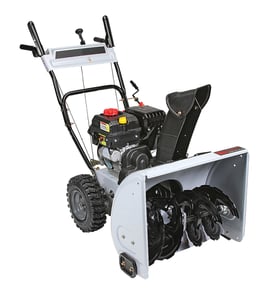


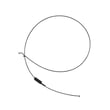
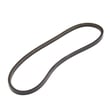

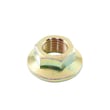
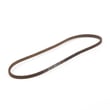
Where is the serial number on a snowblower?
On the Craftsman snow thrower model 247883960, the model and serial number are typically printed on an ID label (or stamped tag) mounted on the rear of the unit near the handle frame or back panel. Use that full number set when ordering parts and looking up the correct manual.
Check these common label locations first:
- Rear of the snowblower housing, behind the engine area
- Back of the frame near the handles (left or right side)
- Near the axle area on the rear frame crossmember
- On the underside of the handle panel area (if equipped)
- Occasionally on the side of the auger housing near the frame junction
For diagrams and the exact identification callouts used for this model, use the 247883960 owner's manual.
Most snowblowers list multiple identifiers on the same label. Record all of them:
- Model number (for this unit: 247883960)
- Serial number (unique to your machine)
- Code/date number (manufacturing code used for parts lookups)
| You need to… | Use this number | Why it matters |
|---|---|---|
| Find the correct parts list | Model number | Ensures diagrams match your exact build |
| Confirm the exact version/build | Serial number and code/date | Helps match running changes |
| Get operating and maintenance steps | Model number | Matches controls, adjustments, and specs |
Snowblower parts can vary by production run even within the same model family. Having the model number plus the serial and code/date numbers helps us match the correct Craftsman parts (like shear pins, clutch cables, and chute components) the first time.
Last updated: February 2026
How long should a gas snowblower last?
For the Craftsman snow thrower model 247883960, plan on about 7 years (or roughly 60 hours of use) as the average useful life, with longer life possible when you keep up with seasonal maintenance and proper storage. For the exact maintenance schedule and specs, use the 247883960 owner's manual.
Many owners get more than the “average useful life” by staying ahead of wear items and keeping the fuel system clean.
- Average useful life (guideline): 7 years or 60 operating hours
- Common real-world range with good care: 10 to 15 years
- Biggest life-shorteners: stale fuel, wrong oil, lack of lubrication, and impacts that bend the auger shaft or frame
These are the highest-impact habits for a gas snowblower like the Craftsman 247883960:
- Use fresh gasoline; don’t store fuel longer than about 30 days without proper prep
- Change oil and use the correct oil type (commonly SAE 5W-30 for this model)
- Lubricate key moving points at least once per season (wheels, drive/hex shaft, auger shaft)
- Inspect and replace wear parts promptly (belts, friction wheel rubber, cables)
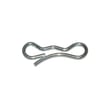
- Replace shear pins after jams or impacts; keep spares on hand like Craftsman snowblower shear pin 738-04124A
| What you measure | What it means | What to do |
|---|---|---|
| Years/hours used | Baseline life estimate | Inspect annually as it ages |
| Maintenance consistency | Biggest driver of longevity | Follow the seasonal checklist in the manual |
| Storage habits | Prevents corrosion and carb issues | Run it dry for storage, change oil |
A snowblower can still “run” while critical safety and drive components are worn. Treating 7 years or 60 hours as a service-life checkpoint helps you avoid mid-storm failures and keeps the auger, drive system, and controls operating safely.
Last updated: February 2026
Can you use 10W30 instead of 5W30 in a snowblower?
Yes; for Craftsman snow thrower model 247883960, we recommend sticking with 5W-30 for the best cold-weather starting and protection. If you use 10W-30, it can crank slower and start harder in freezing temperatures, even though it lubricates fine once the engine warms up.
Our guidance comes straight from the 247883960 operator's manual: add 5W-30 engine oil with a minimum classification of SF/SG, and keep the oil level between the high (H) and low (L) marks on the dipstick.
- Check oil level before each use on a level surface with the engine stopped
- Add oil slowly; stop when the level is between H and L
- Do not overfill; overfilling can cause smoking, hard starting, or spark plug fouling
- Change the oil as part of seasonal maintenance (especially before storage)
10W-30 is a common small-engine oil, but it is thicker at cold start than 5W-30.
- OK to use temporarily: mild winter temps, machine stored in a warmer garage, or you need to top off to reach the safe level
- Avoid for regular winter use: frequent starts below freezing, outdoor storage, or hard-start complaints
- Never mix gas and oil: this is a 4-cycle engine; fuel is straight gasoline
| Oil grade | Cold starts | Best use case |
|---|---|---|
| 5W-30 | Best | Typical snowblower winter operation |
| 10W-30 | Fair | Milder temps or short-term substitute |
Most snowblower engine wear happens at startup. Using the correct winter-weight oil helps the engine build oil film faster, improves starting, and reduces spark plug fouling risk.
- Use fresh unleaded gasoline (minimum 87 octane)
- Keep the spark plug clean and properly gapped
- Change oil at the end of the season before storage
- Run the engine a few minutes after snow throwing to dry moisture off
Last updated: February 2026
How to tell if a snowblower auger belt is bad?
On the Craftsman snow thrower model 247883960, a bad auger belt usually shows visible wear (cracks, fraying, glazing) or causes poor performance such as the augers slipping, not turning consistently, or weak snow throwing. Use the inspection and belt-access steps in the 247883960 owner's manual to check belt condition safely.
- Cracks or missing chunks on the belt
- Frayed edges or exposed cord fibers
- Glazed, shiny surface (belt slips on the pulley)
- Burning rubber smell after engaging the auger
- Augers stop under load or throw snow weakly
- Squealing when you squeeze the auger control
If the augers will not turn at all, check these common causes in this order:
- Shear pins: If the auger hit ice or a foreign object, the shear pins can break so the gearbox is protected. The manual specifies using the correct replacement shear pin 738-04124A. Consider replacing with Craftsman snowblower shear pin 738-04124A.
- Auger control cable adjustment: With the auger control released (disengaged “up” position), the cable should have very little slack but should not be tight. If the auger keeps creeping or does not fully engage, adjust per the manual.
- Belt condition: If pins are intact and the cable is adjusted, a worn or stretched belt is the most likely cause of slipping.
| What you notice | Most likely cause | What to check first |
|---|---|---|
| Auger does not turn at all | Shear pin(s) broken | Shear pins at auger shaft |
| Auger turns but slips in heavy snow | Worn/glazed belt | Belt surface and tension |
| Auger keeps moving after release | Cable out of adjustment | Cable slack in “up” position |
A slipping auger belt reduces throwing distance and can overheat, which accelerates belt wear and can stress pulleys, idlers, and the auger brake components. Catching belt wear early helps keep your Craftsman 247883960 throwing snow at full power.
Last updated: February 2026
Is it worth fixing a snowblower?
Yes, it’s usually worth fixing a Craftsman snow thrower model 247883960 when the problem is a normal wear item (shear pins, cables, belts, friction wheel rubber) and the machine is still within its typical service life. This model’s operator guidance cites an average useful life of 7 years or about 60 hours; repairs inside that window are commonly a good value. See the 247883960 operator’s manual.
- Fix it if the engine starts and runs, and the issue is drive or auger engagement, slipping, or a jam.
- Fix it if the repair is a maintenance item (oil change, spark plug, cable adjustment).
- Fix it if the auger stopped after hitting something and you suspect shear pins.
- Consider replacing if the engine has major internal damage or the machine has heavy rusted structure.
- Consider replacing if multiple major systems are failing at once (engine, gearbox, drive system).
Many problems on the 247883960 are designed to be serviceable and relatively low-cost.
| Symptom | Likely cause | Typical fix level |
|---|---|---|
| Auger will not turn | Shear pin(s) sheared | Easy DIY |
| Poor drive or no movement | Worn friction wheel rubber | Moderate (often service shop) |
| Controls feel loose | Cable needs adjustment | Easy DIY |
Model-specific note: The manual warns to use only the specified auger shear pins; for this model that is 738-04124A. Using the correct pin helps protect the gearbox. Consider the Craftsman snowblower shear pin 738-04124A.
A snowblower’s auger and drive systems are built with “sacrificial” parts (like shear pins) to prevent expensive damage. Fixing the right small part first often restores performance and avoids unnecessary replacement.
- Start with the simplest failure points: shear pins, cable adjustment, and basic tune-up.
- If the unit will not drive and cable adjustment does not help, inspect the friction wheel rubber; the manual notes replacement can require special tools and multiple component removals.
- For seasonal reliability, follow off-season storage steps in the manual (fuel management, oil change, clearing snow to prevent freeze-up).
Last updated: February 2026
How to tell year of Craftsman snowblower by serial number?
For Craftsman snow thrower model 247883960, the most reliable way to identify the build year is to read the date code embedded in the serial number and confirm the format shown in the 247883960 owner's manual. On many MTD-built Craftsman units, the first 5 characters of the serial number represent the build date (month, day, then year within the decade).
You will typically find the serial number on a model and serial tag located on the snowblower frame.
Common locations include:
- Rear of the unit near the engine
- Side of the frame near the auger housing
- Under the handle panel area
- Near the axle or wheel area
Many Craftsman snowblowers in this series were produced by MTD, and a common MTD-style serial format uses the first 5 characters as a date code.
Typical pattern:
- 2nd character = month (A = Jan, B = Feb, …, L = Dec)
- 3rd and 4th characters = day of the month (01 to 31)
- 5th character = year within the decade (for example, 1 = 2001, 2 = 2002)
If the serial begins with something like XA152…:
A= January15= 15th day2= year ending in 2 (commonly 2002)
The year digit in the serial number usually indicates the year within a decade, so you confirm the decade using the snowblower’s features and parts style.
Use this checklist:
- Engine family and labeling style (often changes by generation)
- Electric start presence and plug style
- Chute control type (manual crank vs. electric chute control)
- Parts diagrams and part numbers that match your unit
| Serial code position | What it usually means | Example value |
|---|---|---|
| 2nd character | Month (A to L) | A = January |
| 3rd to 4th | Day (01 to 31) | 15 |
| 5th character | Year in decade | 2 = year ending in 2 |
Knowing the build year helps us match the correct Craftsman parts (like shear pins, clutch cables, and chute components) and prevents ordering a look-alike part that will not fit.
Last updated: February 2026
Are Craftsman snowblowers made by MTD?
Yes. Many Craftsman snowblowers, including model 247883960, are built on MTD-designed platforms and use MTD-style parts and hardware. The most reliable way to confirm who built your specific unit is to match the parts list and diagrams in the 247883960 owner's manual.
We use the parts breakdown to identify the manufacturing family. In the 247883960 manual parts list, you will see common MTD-format part numbers (for example 946-04230A clutch cable and 738-04124A shear pin), which is a strong indicator of an MTD-built design.
Quick checks that usually confirm it:
- Part numbers in the 7xx/9xx MTD format (examples: 712-04064, 714-04040, 946-04230A).
- MTD-style assemblies such as the auger clutch cable and drive control components.
- A parts list that matches MTD naming conventions (flange lock nuts, shear pins, clutch cables).
- Decals or ID tags that reference an MTD/Cub Cadet/Troy-Bilt style numbering system.
Knowing the MTD platform helps you choose the correct replacement parts for your Craftsman snow thrower and avoid “almost fits” issues with cables, shear pins, and drivetrain components.
| What you’re doing | Why MTD origin helps | Example on 247883960 |
|---|---|---|
| Replacing wear items | Confirms the correct part-number family | Shear pin 738-04124A |
| Fixing control issues | Helps match cable lengths and ends | Auger clutch cable 946-04230A |
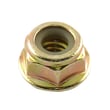
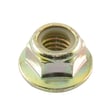
| Servicing fasteners | Ensures correct thread and flange style | Flange lock nut 712-04064 |
These are examples from the 247883960 parts list that align with MTD numbering:
- 946-04230A: auger clutch cable
- 714-04040: cotter pin
- 712-04064: flange lock nut
- 738-04124A: shear pin
MTD-built Craftsman snowblowers often share design DNA with Troy-Bilt and Cub Cadet units, so the parts catalog structure and part numbering are consistent. That consistency is what makes the manual and parts list the best confirmation method.
Last updated: February 2026