Owner’s manual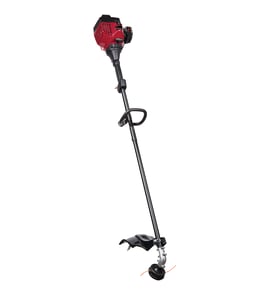





How to remove string trimmer head craftsman?
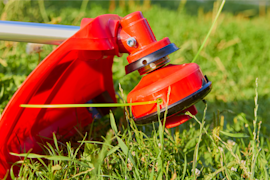
To remove the cutting head on your Craftsman line trimmer model 316791990, first shut the engine off and let the attachment stop completely. Then lock the head/shaft (if your version has a lock point) and unthread the head in the direction shown in the 316791990 owner's manual.
Safe prep before you start
- Turn the switch to OFF and disconnect the spark plug boot so it cannot start accidentally
- Let the muffler and cutting head cool completely
- Work on a flat surface with the trimmer supported so it cannot roll
- Wear gloves; the head and shield edges can be sharp
Typical removal steps (most Craftsman heads)
- Access the lock point: Rotate the head until the alignment notch or lock hole lines up (some versions use a notch on the base plate).
- Lock the shaft/head: Insert the locking tool, a small screwdriver, or the supplied pin (if included) to keep the shaft from turning.
- Unthread the head: Turn the head off the shaft. Many trimmer heads use left-hand threads, so removal is often clockwise (tightening direction feels reversed).
- Remove any spacer/washer: Keep parts in order for reassembly.
Important note for this model
Your 316791990 manual specifically notes: do not attempt to remove the cutting head from the unit when replacing line. If your goal is only to reload line, follow the line replacement procedure instead of removing the head. The manual describes removing the old line and glide plate, cleaning the head, reinstalling the keyed glide plate, and feeding new line through the large side holes.
Quick decision guide
| What you need to do | Best approach |
|---|---|
| Replace trimmer line | Reload line without removing the head (per manual) |
| Replace a damaged head/blade | Remove the head using the lock-and-unthread method |
| Fix vibration after reloading | Reinstall line to equal lengths on both sides |
Why it matters
Removing the head when you only need to reload line can strip threads, lose keyed parts (like the glide plate), or cause reassembly issues that lead to vibration and poor cutting.
Last updated: February 2026
How to replace line on Craftsman gas trimmer?
To replace trimmer line on your Craftsman gas line trimmer model 316791990, we install new line through the cutting head’s large side holes, seat it in the positioning tunnels, and make both sides the same length to prevent vibration. Follow the glide plate hole guide and do not remove the cutting head.
Before you start (safety and setup)
- Shut the engine off and let the trimmer head stop completely.
- Keep bystanders at least 50 ft (15 m) away when operating.
- Wear eye protection and gloves.
- Use only trimmer line (never wire, rope, or metal-reinforced line).
- Use two matching lines (2 red or 2 black); do not mix colors.
Line replacement steps (Hassle-Free style head)
- Remove the old line and the line glide plate from the cutting head.
- Clean the entire surface of the cutting head.
- Reinstall the glide plate; it is keyed and only fits one way. Rotate it until it slides in easily (do not force it).
- Insert both ends of a new line through the large holes on the side of the cutting head.
- Push and or pull the line until it is snug against the hub and fully extended through the positioning tunnels.
- Confirm the line is the same length on both sides.
- Repeat to install the second trimmer line.
For diagrams and the exact hole locations shown on the glide plate, use the owner's manual.
Quick checks if the line keeps tangling or breaking
- Line overlaps on the spool path: re-thread so each line sits in its own tunnel.
- Uneven line lengths: re-center the line to stop excessive vibration.
- Hitting hard objects (fence posts, walls): expect faster breakage.
- Foreign matter wrapped in the head: clean the head and tunnels.
Red vs. black line (what to use)
| Line color | Best for | Result |
|---|---|---|
| Red | Grass and small weeds | Cleaner cut, less load |
| Black | Larger weeds and light brush | More durability |
Why it matters
Correctly routing the line through the glide plate holes and positioning tunnels keeps the head feeding smoothly and prevents excessive vibration that can make the trimmer uncomfortable or hard to control.
Last updated: February 2026
What's the difference between a whipper, snipper, and a line trimmer?
A whipper snipper and a line trimmer are the same tool in most everyday use; the name changes by region. For your Craftsman 316791990 gas line trimmer, it’s a line trimmer designed for cutting grass and light weeds, edging, and decorative trimming. See the 316791990 owner's manual for the intended applications and operating tips.
What each term usually means
- Line trimmer: General name for a handheld tool that cuts with spinning nylon line.
- Whipper snipper: Common regional nickname for a line trimmer (often used in Australia and New Zealand).
- String trimmer / weed eater: Other common names for the same line-trimming tool.
- Brush cutter (not the same): Heavier-duty tool typically meant for thicker brush and may use a blade.
What your Craftsman 316791990 is built to do
According to the manual, this model’s typical uses include:
- Cutting grass and light weeds
- Edging along sidewalks and driveways
- Decorative trimming around trees, fences, and posts
- Working in tight areas where a mower cannot reach
Quick comparison
| Term you hear | Usually refers to | Cutting method | Typical job |
|---|---|---|---|
| Line trimmer | Standard trimmer | Nylon line | Grass, light weeds, edging |
| Whipper snipper | Same as line trimmer | Nylon line | Same as above |
| Brush cutter | Heavier-duty cutter | Blade or heavy line | Thick weeds, brush |
Why it matters
Using the right name helps you buy the right parts and accessories. For example, if you need a tune-up item, a common replacement is the lawn & garden equipment spark plug 794-00082. If you need cutting performance, technique and correct line setup matter as much as the cutting head.
Tips that improve trimming results
- Run at full throttle for best cutting performance
- Keep the cutting attachment parallel to the ground
- Let the tip of the line do the cutting (do not force it)
- Trim only when grass and weeds are dry
- If vibration increases, stop and make sure the line lengths are even
Last updated: February 2026
What size string for Craftsman string trimmer?
For the Craftsman 316791990 gas line trimmer, use 0.095-inch (2.4 mm) trimmer line. This diameter feeds correctly in the cutting head and gives the best balance of cutting power and durability for typical grass and weed trimming.
What to buy for model 316791990
Use these guidelines when choosing replacement line:
- Diameter: 0.095 in (2.4 mm)
- Shape: round or twisted line works well for general trimming
- Length: buy a bulk spool or pre-cut refills based on how often you trim
- Avoid oversizing: thicker line can jam the head and overload the engine
- Avoid undersizing: thinner line breaks faster and may not feed consistently
Quick reference
| Item | Recommendation for 316791990 | Why it matters |
|---|---|---|
| Line diameter | 0.095 in (2.4 mm) | Proper feed and cutting performance |
| Line shape | Round or twisted | Good all-around durability |
| Install method | Follow head routing and equal lengths | Prevents vibration and poor cutting |
Tips to prevent vibration and constant breakage
Most line problems come from installation and technique, not the engine.
- Cut two equal lengths and keep both sides even
- Seat the line fully in the head’s routing paths
- Trim at higher throttle and let the tip of the line do the cutting
- Do not slam the line into fences, edging, or thick woody stems
Why it matters
Using the correct 0.095-inch line helps your Craftsman 316791990 feed smoothly, cut efficiently, and reduce head vibration that makes the trimmer uncomfortable and harder to control.
For line routing and replacement steps specific to this cutting head, follow the 316791990 owner's manual.
Last updated: February 2026
What is the fuel mix for a Craftsman gas trimmer?
For Craftsman gas line trimmer model 316791990, use straight, fresh unleaded gasoline in the fuel tank; this model uses a 4-cycle engine, so you do not mix oil into the gas. Fill engine oil separately through the oil fill plug as shown in the owner's manual.
Fuel and oil requirements (model 316791990)
This trimmer uses two separate fluids: gasoline for combustion and engine oil for lubrication.
- Use fresh, clean unleaded gasoline.
- Do not add 2-cycle oil to the fuel.
- Add engine oil to the crankcase before first use.
- Check the oil level before each use.
- Keep blended fuels fresh (use fuel less than 60 days old).
Quick reference table
| Item | What to use | Where it goes |
|---|---|---|
| Fuel | Unleaded gasoline | Fuel tank |
| Engine oil | SAE 30 oil | Crankcase (oil fill plug) |
Why it matters
A 4-cycle trimmer is designed to run on gasoline only. Mixing oil into the fuel can foul the spark plug, increase smoke, and cause poor performance.
Related tune-up part
If the trimmer runs rough or is hard to start, a worn or fouled plug is a common cause.
Last updated: February 2026