
Is there a difference between a reciprocating saw and a sawzall?
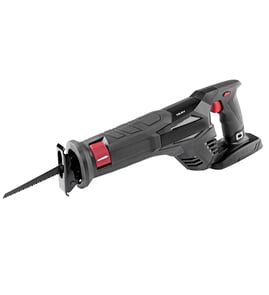
A Sawzall is a brand name that people commonly use to mean any reciprocating saw. Your Craftsman reciprocating saw model 315171080 is the same tool category as a “Sawzall”; the real differences are between specific brands and models (power, size, features), not the name.
- Reciprocating saw: the generic tool type; it uses a push-pull (reciprocating) blade motion for fast cutting.
- Sawzall: Milwaukee’s trademarked name for their reciprocating saw line; many people use it as a nickname for the whole category.
- Bottom line: “Sawzall” is to reciprocating saw as “Kleenex” is to tissues.
Even though the tools are the same category, different reciprocating saws can feel very different in use:
- Stroke length and stroke speed (affects cutting aggressiveness)
- Orbital action (some models have it; it can speed up wood cuts)
- Tool-free blade clamp vs. hex-key clamp
- Vibration control (comfort and control during demolition)
- Weight and balance (overhead cuts and one-handed use)
- Corded vs. cordless (runtime vs. steady power)
| Term you hear | What it usually means | What to check when buying parts/accessories |
|---|---|---|
| Reciprocating saw | The tool category | Blade shank type, clamp style, shoe condition |
| Sawzall | Milwaukee’s reciprocating saw (often used generically) | Same checks; brand name does not change blade basics |
Using the right blade type and tooth count (TPI) matters more than what you call the tool. A good blade match improves cut speed, reduces vibration, and helps protect the blade clamp and shoe from excess stress.
For general repair and safety habits that apply to power tools like reciprocating saws, see are diy appliance repairs safe.
Last updated: February 2026
Is a 10 amp reciprocating saw powerful enough?
Yes. A 10 amp reciprocating saw is powerful enough for most homeowner and light-to-moderate demolition work (cutting wood, nails, PVC, and thin metal) when you use the right blade and let the saw do the work. For tougher, all-day demo, higher amp or cordless high-output platforms reduce bogging and heat.
Amps are a rough indicator of how much electrical load the motor can handle. In practice, cutting performance depends just as much on blade choice, stroke length, and how hard you push.
Most 10 amp corded saws handle:
- 2x lumber and framing cuts
- Pruning with a wood or pruning blade
- Cutting nails embedded in wood (bi-metal blade)
- Thin-wall pipe and light steel (metal-cutting blade)
You will notice slow cutting or stalling when:
- You are cutting thick steel or cast iron
- The blade is dull, wrong tooth count, or the wrong material type
- You are forcing the tool (too much feed pressure)
- The shoe is not braced firmly against the work
| Material | Blade type | Typical TPI range |
|---|---|---|
| Wood (fast cuts) | Wood blade | 4 to 8 |
| Wood with nails | Bi-metal | 6 to 10 |
| Metal pipe/angle | Metal-cutting | 14 to 24 |
| Pruning | Pruning blade | 3 to 6 |
These habits make a bigger difference than chasing amps:
- Keep the shoe pressed firmly to reduce vibration and improve control
- Start slower to “bite,” then increase speed once the kerf is established
- Use a longer blade so the teeth clear the material and run cooler
- Replace blades early; a dull blade makes any saw feel weak
- If the saw has a variable-speed trigger, match speed to material (slower for metal)
Using a saw that is “powerful enough” reduces kickback, overheating, and premature wear on the motor and drive components. It also improves cut accuracy and blade life.
For tool and repair safety basics that apply to corded power tools, follow the guidance in are diy appliance repairs safe.
Last updated: February 2026
Are reciprocating saws good for cutting wood?
Yes. A reciprocating saw like the Craftsman 315171080 cuts wood well, especially for rough cuts, demolition, pruning, and cutting in tight spaces where a circular saw or jigsaw will not fit.
- Demolition work (studs, framing, pallets)
- Flush cuts (cutting nails or screws embedded in wood)
- Rough cutouts (openings, notches, trimming)
- Pruning limbs (with a pruning blade)
- Cutting wood in awkward positions (overhead, between joists)
Use the right blade type and tooth count (TPI). For wood, higher TPI usually means a smoother cut but slower speed.
| Task | Typical blade choice | What to expect |
|---|---|---|
| Fast rough cuts | Wood blade, lower TPI | Faster, splintering is common |
| Cleaner cuts | Wood blade, higher TPI | Smoother, slower |
| Wood with nails | Bi-metal “wood and metal” blade | Handles fasteners, slower than wood-only |
- Clamp the workpiece; vibration is the main cause of crooked cuts.
- Keep the shoe pressed firmly against the wood to reduce chatter.
- Start slow to establish a kerf, then increase speed.
- Let the blade do the work; forcing the saw bends blades and wanders.
- Wear eye protection and keep hands clear of the cut line.
Reciprocating saws are designed for aggressive, forgiving cutting. For finish carpentry (straight, splinter-free edges), a circular saw, miter saw, or jigsaw usually gives better results, but for jobsite wood cutting the reciprocating saw is a strong choice.
For tool and electrical troubleshooting basics that apply to corded power tools, see how to use a multimeter to test electrical parts video.
Last updated: February 2026
Can I use a reciprocating saw to cut trim?
Yes, you can use a Craftsman reciprocating saw like model 315171080 to cut trim, but it is a rough-cut tool. It works best for demolition or quick cuts where a perfectly clean edge is not critical; use the right blade and protect the surrounding surfaces.
A reciprocating saw is most useful when speed matters more than finish quality.
- OK for trim: removing baseboards, cutting trim in place, cutting nails behind trim
- Not ideal for finish cuts: visible baseboard returns, crown molding joints, stain-grade trim
- Better tools for clean trim cuts: miter saw, oscillating multi-tool, fine-tooth hand saw
The blade choice and how you support the work make the biggest difference.
- Use a fine-tooth wood blade (higher TPI) for cleaner cuts in softwood trim
- Use a bi-metal metal-cutting blade when you expect nails or screws
- Keep the shoe pressed firmly against the trim to reduce vibration and chatter
- Start slow, then increase speed once the kerf is established
- If possible, clamp loose trim to prevent splintering and bouncing
| What you are cutting | Recommended blade type | Why it helps |
|---|---|---|
| Painted wood trim | Fine-tooth wood blade | Cleaner edge, less tear-out |
| Trim with hidden nails | Bi-metal metal blade | Survives fasteners better |
| Flush cut near a wall | Shorter blade (fine-tooth) | More control, less overcut |
Trim is easy to chip and split. A reciprocating saw’s long stroke and vibration can leave a ragged edge, which means more filling, sanding, and touch-up paint. Using the correct blade and controlling vibration reduces rework.
- Wear eye protection; trim chips and nails can eject quickly
- Watch for wiring and plumbing in walls before cutting
- If the saw vibrates excessively, check blade tightness and shoe contact
- If you suspect an electrical issue (no power, intermittent running), use how to use a multimeter to test electrical parts video to guide basic testing steps
Last updated: February 2026
Where can I buy Craftsman replacement parts?
You can buy replacement parts for your Craftsman reciprocating saw model 315171080 through our model-specific parts listing, which helps you match the correct components to your exact tool. If you are shopping by brand or need to search by model number, you can also use Sears PartsDirect.
Because Craftsman tools often have similar-looking versions, the most reliable approach is to shop by the full model number (315171080) and then match the part by description and diagram location.
- Confirm the model number on the saw’s data plate before ordering
- Compare the part description to the symptom (for example, “won’t start” vs. “blade won’t clamp”)
- Check whether your saw is corded or cordless (parts are not interchangeable)
- Inspect wear items first (blade clamp, shoe, brushes, cord)
- If the tool has electrical issues, test before replacing parts
These are the most frequent replacement categories for a corded reciprocating saw like the Craftsman 315171080:
| Symptom | Most likely part area | What to check first |
|---|---|---|
| Won’t start | Power cord, switch, brushes | Cord damage, switch feel, brush wear |
| Runs but cuts poorly | Shoe, blade clamp | Loose shoe, clamp not holding blade |
| Sparks excessively | Brushes, armature | Brush length, burning smell |
| Loud grinding | Gearcase components | Metal noise, lack of lubrication |
Unplug the saw before inspecting anything internal.
- Look for cuts or kinks in the power cord
- Check for a loose plug or intermittent power
- Smell for burnt odor near the motor housing
- If you own a meter, test continuity through the cord and switch
For step-by-step testing techniques, we recommend how to use a multimeter to test electrical parts video.
Ordering by the exact model number (315171080) prevents mismatched parts, reduces returns, and gets your Craftsman reciprocating saw back to safe, reliable operation faster.
Last updated: February 2026