Owner’s manual








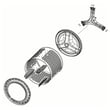
Does a Samsung washer have a filter that needs to be cleaned?
Yes. The Samsung WF45T6200AW front-load washer has a pump filter behind the lower filter cover that needs periodic cleaning to prevent slow draining, odors, leaks, and “5C” drain-related issues. Cleaning it also helps protect the drain pump from coins, lint, and debris.
Where the filter is on WF45T6200AW
On this model, the manual identifies these parts at the lower front of the washer:
- Filter cover (access door)
- Pump filter (debris filter)
- Emergency drain tube (used to drain water before opening the filter)
For the exact location and the safety knob open/close direction, follow the steps in the WF45T6200AW owner's manual.
How often we recommend cleaning it
A practical schedule for most households is:
- Every 1 to 2 months for heavy use
- Every 2 to 3 months for average use
- Immediately if you notice slow draining, standing water, or a drain code
Quick symptom-to-action guide
| What you notice | What to do first |
|---|---|
| Washer drains slowly | Clean the pump filter and check the drain hose for kinks |
| Musty odors | Clean the pump filter, wipe the door boot, run a cleaning cycle |
| “5C” code | Clean the pump filter and confirm the filter knob is fully closed |
| Water at the front bottom | Re-seat the pump filter and tighten the filter knob |
Why it matters
A clogged pump filter restricts water flow, which can trigger drain problems, leave water in the tub, and contribute to odor. The manual also notes that the washer can display “5C” when the pump filter is clogged.
Tips to avoid leaks after cleaning
- Drain water first using the emergency drain tube
- Turn the safety knob the correct direction when opening and closing
- Make sure the pump filter is fully inserted
- Tighten the filter knob firmly so it seals
- Close the filter cover completely
Last updated: February 2026
What is the lifespan of a Samsung front load washer?
A Samsung front-load washer like model WF45T6200AW typically lasts 10 to 15 years with normal household use and routine maintenance. Consistent cleaning, correct detergent use, and avoiding chronic overloading do the most to keep the tub, drain system, and motor running longer (see the WF45T6200AW owner's manual).
What affects lifespan the most
- Load size and balance: frequent overloading and unbalanced loads increase wear on suspension and bearings.
- Maintenance habits: running Self Clean and wiping the door area reduces odor, residue, and mold.
- Water quality and pressure: hard water and high pressure can stress valves and leave buildup.
- Drain care: coins, lint, and debris that reach the pump shorten pump life.
- Installation setup: a solid, level floor reduces vibration and component fatigue.
Maintenance checklist (best return for the effort)
- Run Self Clean on the schedule recommended in the manual.
- Leave the door slightly open between loads so the interior can dry.
- Use HE detergent and measure carefully; too much soap causes residue and extra rinsing.
- Check inlet hose connections for leaks and turn off taps when away.
- If draining slows or water remains, inspect the pump area and consider the Samsung washer drain pump assembly DC97-20621A if the pump is noisy or not moving water.
Quick guide: symptoms that shorten washer life
| Symptom | Common cause | What to do first |
|---|---|---|
| Excess vibration or “walking” | Unlevel install, overload, worn suspension | Level the washer; reduce load size |
| Musty odor | Moisture trapped in door boot area | Self Clean; wipe gasket; improve drying |
| Slow or no drain | Clog or failing drain pump | Check for debris; verify drain setup |
| Won’t fill or fills slowly | Supply issue or inlet valve problem | Confirm taps open; check screens |
Why it matters
Most “early failures” come from vibration, moisture, and drainage issues. Keeping WF45T6200AW level, clean, and draining freely helps protect high-wear parts like the drain pump, door boot area, and water valves.
Last updated: February 2026
Is the Samsung 4.5 front load washer any good?
Yes. The Samsung WF45T6200AW front-load washer is a strong choice if you want a true 4.5 cu. ft. capacity machine with fast spin (up to 1200 rpm) and solid efficiency; it is especially good for larger loads when it is installed level on a firm floor and maintained regularly. See the WF45T6200AW owner's manual for cycle features, care, and specifications.
What “good” looks like for this model
A washer performs well when it cleans consistently, spins out water effectively, and stays stable during high-speed spin.
- Capacity: 4.5 cu. ft. (fits bulky loads better than compact front-loaders)
- Spin speed: up to 1200 rpm (helps reduce dry time)
- Electrical requirement: 120 V, 60 Hz, 15 A dedicated circuit
- Water pressure range: 20 to 116 psi
- Stability: best on a solid floor; soft flooring can increase vibration
Installation and vibration: the biggest make-or-break factor
Front-load washers can seem “bad” when the real issue is installation. Samsung calls out clearance and flooring needs that directly affect vibration and noise.
- Install on a solid, level floor (wood may need reinforcement)
- Avoid carpet or soft tile under the washer
- Keep recommended clearances (typically 1 in. sides/top and 5 in. rear)
- Recheck for leaks at hose connections after install
| Symptom | Most common cause | Best first step |
|---|---|---|
| Excess vibration or walking | Not level, weak floor, unbalanced load | Level the feet; reduce load size; verify solid flooring |
| Musty odor | Moisture left in door area | Wipe door boot area; run cleaning cycle |
| Poor spin-out | Drain restriction or load imbalance | Check drain path; redistribute items |
Maintenance that keeps performance high
Regular care is what keeps a front-load washer “good” long-term.
- Run the tub cleaning cycle (often labeled Self Clean)
- Clean the interior and exterior as outlined in the manual
- Use the emergency drain procedure if needed after a drain issue
Why it matters
This model’s high-speed spin and large capacity are real advantages, but they depend on correct installation and routine cleaning. That is what prevents vibration complaints and odor buildup that can make any front-load washer feel disappointing.
Last updated: February 2026