Installation guide
 Owner’s manual
 Error Codes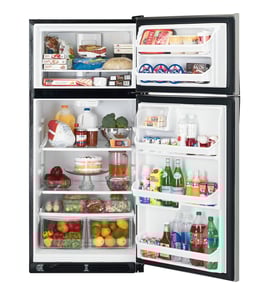


How many cubic feet is a Kenmore upright freezer model 25370623410?
Kenmore model 25370623410 is a top-mount refrigerator, not an upright freezer, so the cubic-foot capacity for an “upright freezer” does not apply to this model. For the exact capacity of your refrigerator, we recommend checking the product specifications in the 25370623410 owner's manual.
Capacity is listed as total cubic feet and may be broken out by refrigerator and freezer sections. Look for:
- “Capacity” or “Total capacity (cu. ft.)” in the specifications section
- Separate “Refrigerator capacity” and “Freezer capacity” values
- The full model number match: 25370623410
- Serial plate info (inside the refrigerator compartment) to confirm you have the right model
| Appliance type | What “cubic feet” describes | Typical use |
|---|---|---|
| Upright freezer | Freezer-only storage volume | Frozen food storage only |
| Top-mount refrigerator (25370623410) | Total fresh food + freezer volume | Everyday refrigeration plus a freezer section |
Using the correct appliance type prevents ordering the wrong parts and helps you set expectations for storage space, temperature performance, and features like ice service.
If you are troubleshooting display codes or control issues on Kenmore refrigerators, use Kenmore 253 series french door refrigerator error codes as a starting point for understanding common code formats and next steps.
Last updated: January 2026
What are the common problems with Kenmore Elite refrigerators?
Common Kenmore Elite refrigerator problems include not cooling well, frost or moisture buildup, doors that do not seal or close correctly, and unusual compressor or fan noises. On Kenmore model 25370623410, many of these symptoms trace back to airflow, door gaskets, or normal operating cycles described in the 25370623410 owner's manual.
- Not cooling or weak cooling: doors opened too often, door slightly open, or airflow issues (evaporator fan area)
- Runs too much: hot room conditions, frequent door openings, ice maker operation, or gasket leaks
- Frost or moisture inside: humid weather, door not sealing, open containers, or long door openings
- Door will not close: refrigerator not level, food blocking the door, or gasket fit issues
- Clicking/buzzing: often tied to compressor start components or fan motors
- Confirm the controls: adjust to a colder or warmer setting as needed, then allow 24 hours to stabilize.
- Check door seal and closure: make sure nothing blocks the door; close both doors gently.
- Level the refrigerator: a unit that rocks can cause door alignment and sealing problems.
- Expect normal cycles: defrost can run about 30 minutes periodically; cooling after being unplugged can take 8 to 12 hours.
If troubleshooting points to a failed component, these are common replacements for this model:
| Symptom | Likely area | Example part for 25370623410 |
|---|---|---|
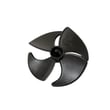
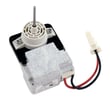
| Warm fridge/freezer, poor airflow | Evaporator fan system | Refrigerator evaporator motor 242077705 |
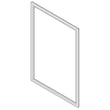
| Door not sealing, sweating, frost | Door gasket | Frigidaire refrigerator door gasket (white) 242193213 |
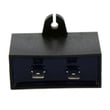
| Clicking at compressor, won’t start | Start components | Electrolux refrigerator compressor start relay 241941005 |
Cooling complaints are often caused by warm air leaking in through a door left slightly open or a worn gasket; that forces longer run times and can create moisture, frost, and temperature swings. Using the care and operating guidance in the manual helps you separate normal operation from a true failure.
Last updated: January 2026
What is the average lifespan of a Kenmore refrigerator?
Most Kenmore refrigerators last 12 to 15 years with normal household use; Kenmore model 25370623410 typically falls in that same range when temperatures are set correctly and routine care is kept up. Consistent maintenance (especially airflow and door sealing) is what most often determines whether you reach the high end of that lifespan.
- Condenser coil cleanliness: dirty coils make the compressor run hotter and longer.
- Door gasket condition: air leaks force longer run times and temperature swings.
- Room conditions: hot kitchens, tight cabinetry, and poor ventilation increase run time.
- Door habits: frequent openings add moisture and heat load.
- Defrost performance: automatic defrost cycles are normal; heavy frost points to an airflow or sealing issue.
- Vacuum condenser coils and the area around the condenser fan (typically every 6 to 12 months).
- Confirm the doors close and seal fully; clean the gasket and the mating surface.
- Keep vents inside the fresh food and freezer compartments unblocked.
- Set temperatures to typical targets: 37°F fresh food and 0°F freezer.
- If you have an ice maker, keep the fill area clear and turn it off during long vacations.
| What you notice | Usually normal | Usually needs service/repair |
|---|---|---|
| Longer run times | During hot weather or after loading groceries | Constant running with warm temps |
| Frost | Light, occasional frost | Heavy frost buildup or blocked airflow |
| Door closing | Slight resistance from gasket | Gaps, torn gasket, or door won’t stay shut |
A refrigerator that runs longer than necessary uses more energy and puts extra wear on the sealed system. Simple upkeep like cleaning coils and keeping a tight door seal is the most reliable way to hit the typical 12 to 15-year lifespan.
For model-specific operating and care guidance, use the 25370623410 owner’s manual.
Last updated: January 2026