 Error Codes




Why is my Crosley dishwasher soap dispenser not opening?
On your Crosley 905045720A dishwasher, the soap dispenser usually fails to open because the dispenser door is blocked, the latch or spring mechanism is sticking, or the dishwasher is not getting proper wash action to trigger the release. Start by checking for physical interference and a smooth door movement.
Quick checks (most common fixes)
- Make sure a tall pan, cutting board, or utensil is not blocking the dispenser door.
- Confirm the detergent cup is not overfilled; excess powder or gel can glue the door shut.
- Check for hardened detergent buildup around the dispenser door edges; clean it off.
- Verify the dispenser door closes and latches with a crisp click when pressed by hand.
- Run hot water at the sink until it is hot before starting the cycle; cooler water can slow dissolving and leave residue.
If the dishwasher is not washing strongly
Weak spray can prevent the dispenser from opening at the right time or leave detergent caked in place.
- Clean the sump screen and remove debris that restricts circulation.
- Check for standing water or slow draining that can affect overall wash performance.
- Listen for normal wash motor sound during the wash portion of the cycle.
Parts that commonly relate to wash and drain performance
| Symptom you notice | What it points to | Part on this model page |
|---|---|---|
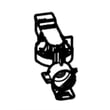
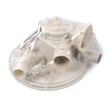
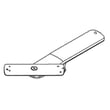
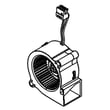
| Dishes still dirty, weak spray | Poor circulation | Crosley dishwasher circulation pump A10281701 |
| Water not draining well | Drain restriction or pump issue | Crosley dishwasher drain pump A00044328 |
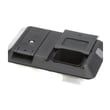
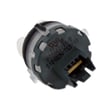
| Detergent clumps, odd wash results | Water quality sensing issues | Crosley dishwasher turbidity sensor A00040106 |
Why it matters
If the dispenser stays shut, detergent releases late or not at all, which causes poor cleaning, filming, and leftover grit. Fixing the root cause also helps protect the sump, spray system, and pump from detergent buildup.
Last updated: February 2026
Why is my Crosley dishwasher not draining?
For Crosley model 905045720A, a no-drain problem is usually caused by a blockage in the sump or drain path, a failed drain pump, or a drain hose issue. Start with simple clogs and installation checks, then move to testing or replacing the drain components.
Quick checks (fastest fixes first)
- Cancel the cycle and let the unit attempt a drain; listen for the drain pump running.
- Remove standing water (cup or wet/dry vac) so you can inspect the sump area.
- Check the sump screen for debris; clean the Crosley dishwasher sump screen 111917701.
- Inspect the drain hose for kinks, crushing, or a clogged air gap (if your setup has one); replace the Crosley dishwasher drain hose 807032601 if it is damaged.
- Verify the drain hose routing: it should have a high loop under the counter to help prevent backflow.
Parts that commonly cause a no-drain symptom
If the drain path is clear but the dishwasher still will not drain, these parts are the most common culprits on this type of dishwasher:
| Symptom you notice | Most likely cause | What to do next |
|---|---|---|
| Humming but little or no water movement | Drain pump jammed or failed | Check for debris; replace the Crosley dishwasher drain pump A00044328 if the impeller is damaged or the motor will not run |
| Drains slowly, leaves dirty water | Restricted sump or check valve issue | Clean sump area; inspect the Crosley dishwasher flapper valve A00053601 for sticking or damage |
| Water backs up after draining | Backflow/check valve or hose routing | Confirm high loop; inspect flapper valve and hose for restrictions |
Why it matters
A dishwasher that cannot drain can re-circulate dirty water, cause odors, and strain the pump and electronic control. Fixing the drain path early helps prevent repeat clogs and protects key components like the sump and pump.
Safety and troubleshooting tips
- Shut off power at the breaker before accessing wiring or removing the pump.
- Turn off the water supply if you disconnect hoses.
- If you need to check voltage or continuity, use a proper meter and follow safe testing practices; our how to use a multimeter to test electrical parts video is a good walkthrough.
Last updated: February 2026
What is the bottom piece of a dishwasher called?
The bottom piece of a dishwasher is most commonly called the tub (or tub bottom). In your Crosley 905045720A dishwasher, this is the base of the wash compartment where water collects and where key wash and drain components mount and seal.
What parts are located at the bottom (and what they do)
The tub bottom is more than just a “floor”; it supports the system that fills, circulates, filters, and drains water.
- Sump area: collects water so it can be pumped through the spray system
- Filter/screen: helps keep debris from reaching the pump
- Drain path: routes dirty water out through the drain hose
- Float or water-level sensing: helps prevent overfilling
- Pump mounting points: where the circulation and drain pumps connect
If you are referring to the removable screen at the bottom, that is typically the sump screen (filter screen), not the tub itself.
Common “bottom piece” terms (quick guide)
| What you see | Common name | What it affects |
|---|---|---|
| The dishwasher’s interior base | Tub (tub bottom) | Leaks, standing water, noise, wash performance |
| The low basin under the spray arms | Sump | Drainage and circulation |
| Removable mesh/plastic piece | Filter or sump screen | Clogs, odors, poor cleaning |
| Rubber flap in drain path | Check valve/flapper | Backflow, water returning to tub |
When the “bottom” points to a repairable part
If the issue is standing water, slow draining, or debris collecting at the bottom, these model-matched parts are common fixes:
- Dishwasher sump screen 111917701 (clogged or damaged screen)
- Dishwasher drain pump A00044328 (won’t pump water out)
- Dishwasher drain hose 807032601 (kinked, clogged, or leaking)
- Dishwasher flapper valve A00053601 (backflow or poor draining)
- Dishwasher sump 5304520660 (leaks or internal blockage)
Why it matters
Using the right term helps you get the right part the first time. “Tub” usually means the dishwasher body itself, while “sump,” “filter/screen,” and “drain pump” describe the serviceable components that most often cause bottom-of-dishwasher problems.
Last updated: February 2026
What are the parts of the dishwasher?
A Crosley dishwasher like model 905045720A is built around a wash system (water fill, circulation, spray, and drain), a door system (latch and seals), and controls. The exact layout varies by design, but these are the core parts you will see when troubleshooting leaks, no-drain, or poor cleaning.
Main dishwasher parts (what they do)
- Water inlet valve: lets water into the tub at the start of a cycle (see Crosley dishwasher water inlet valve 807445905).
- Circulation pump and sump: moves wash water through the spray system and collects it in the bottom basin.
- Spray system: spray arms and manifolds distribute water to dishes.
- Drain system: pushes used water out through the drain hose (see Crosley dishwasher drain pump A00044328 and Crosley dishwasher drain hose 807032601).
- Door system: latch keeps the door closed; seals prevent leaks (see Crosley dishwasher door latch assembly 111315040 and Crosley dishwasher door seal 117158011).
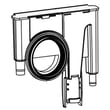
- Detergent dispenser: releases detergent and rinse aid at the right time (see dishwasher detergent dispenser A00130341).
Quick “part to symptom” guide
| Symptom | Parts to check first | Why |
|---|---|---|
| Won’t fill | Water inlet valve, water-level pressure switch | No water entering or fill not being sensed |
| Poor cleaning | Circulation pump, sump screen, spray manifold | Low spray pressure or restricted flow |
| Won’t drain | Drain pump, drain hose, flapper valve | Blockage or failed drain components |
| Leaks at door | Door seal, door latch assembly | Door not sealing or not closing tightly |
Why it matters
Knowing which system a symptom belongs to helps you diagnose faster. For example, a “standing water” issue is usually a drain pump or drain hose problem, while “cloudy dishes” often points to circulation flow, filtration, or detergent dispensing.
Parts on this model that match the major systems
- Crosley dishwasher drain pump A00044328
- Crosley dishwasher water inlet valve 807445905
- Crosley dishwasher door seal 117158011
- Dishwasher detergent dispenser A00130341
- Crosley dishwasher sump screen 111917701
Last updated: February 2026





