Owner’s manual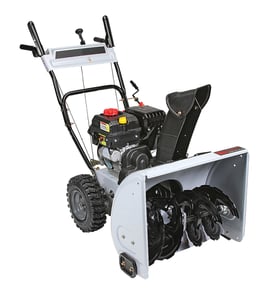



Can I use 5W30 instead of SAE 30 in my snowblower?
Yes. For Craftsman model 536887251, we recommend SAE 5W-30 engine oil; the operator’s manual notes 5W-30 can help with easier starting in consistently cold temperatures (around 20°F or lower) and it’s also the specified oil for this unit. See the 536887251 operator's manual.
For this 24-inch, 5.5-HP snow thrower, the manual lists 5W-30 motor oil and an oil capacity of 20 oz.
- Use SAE 5W-30 for normal operation and cold-weather performance
- Check oil level before starting and about every 5 hours of use
- Change oil every 25 hours or at least once per season
- Do not overfill; keep oil between the “Add” and “Full” marks on the dipstick
| Oil type | Cold starting | Typical best use | Notes |
|---|---|---|---|
| 5W-30 | Better | Winter operation | Recommended for this model; supports easier starts in cold temps |
| SAE 30 | Poorer | Warmer temps | Can thicken in cold weather and make starting harder |
Oil viscosity affects how quickly the engine lubricates on startup. In a snowblower, most starts happen in freezing conditions; using the correct oil helps reduce wear, improves starting, and supports consistent engine speed under load.
- Drain and refill when the engine is warm (oil drains faster)
- Use a clean funnel and a suitable drain pan
- Wipe spills off the engine and frame to reduce smoke and odor on startup
- If the engine smokes after an oil change, recheck for overfill
Last updated: January 2026
What is the typical lifespan of a gas snowblower?
A gas snowblower like the Craftsman 536887251 typically lasts 10 to 15 years with normal residential use and consistent maintenance. Units that get regular oil changes, belt checks, and proper off-season storage often reach 15 to 20 years before major drivetrain or engine wear becomes the deciding factor.
We see lifespan track closely with maintenance items called out in the 536887251 operator's manual.
- Change engine oil on schedule (the manual calls out 5W30 and routine oil changes)
- Keep the auger and controls clear of packed snow to prevent freeze-up
- Use fresh fuel and follow proper storage steps when the season ends
- Check and replace wear items early (belts, shear bolts, cables)
- Avoid overloading the machine in wet, heavy snow; slow ground speed instead of reducing throttle
Even when the engine is healthy, a snowblower can feel “worn out” when drive and auger components slip or stop engaging.
| Wear area | What you notice | Typical fix |
|---|---|---|
| Ground drive system | Unit will not move or slips under load | Inspect/replace drive belt or friction wheel; adjust cable |
| Auger drive system | Auger does not throw snow well | Inspect/replace auger belt; adjust belt/cable |
| Auger protection | Loud bang, auger stops turning after hitting object | Replace shear bolt/pin |
If you are already doing repairs, keeping a spare snowblower drive belt 1733324SM and kit shearbol 1501227MA on hand can reduce downtime during storms.
A realistic lifespan helps you decide whether to tune up, replace a few common parts, or plan for a replacement machine. On the Craftsman 536887251, routine maintenance and timely replacement of belts and shear pins usually costs far less than replacing the snow thrower.
Last updated: January 2026
Is it cheaper to repair or replace a snowblower?
For the Craftsman snow thrower model 536887251, it’s usually cheaper to repair when the fix is a common wear item (belts, shear bolts, cables). If the repair total is more than about 50% of the cost of a comparable new snowblower, replacement is typically the better value.
We look at whether the problem is a normal maintenance repair listed in the 536887251 operator’s manual versus a major drivetrain or engine issue.
Common “repair makes sense” situations:
- Auger will not throw snow because the auger belt is worn or loose
- Unit will not move because the ground drive belt is slipping
- Auger stops after hitting an object (shear bolt did its job)
- Controls feel loose due to cable stretch
- Chute components are worn but the engine and gearbox are solid
These issues often push you toward replacement because labor and teardown time add up:
- Engine internal problems (low compression, heavy smoking, hard starting after tune-up)
- Gearcase or major drivetrain damage
- Multiple systems failing at once (drive + auger + chute + rusted hardware)
- Severe corrosion on the auger housing or frame
On this model, many common fixes are straightforward and parts-based:
- Snowblower drive belt 1733324SM (ground drive belt)
- Snowblower gas belt 585416MA (auger drive belt)
- Kit shearbol 1501227MA (shear pin set)
| Scenario | Usually cheaper option | Why |
|---|---|---|
| Belt slipping, machine otherwise solid | Repair | Wear item, predictable fix |
| Shear bolt broken after jam | Repair | Designed to fail to protect auger |
| Engine or gearbox major failure | Replace | High labor and uncertainty |
A well-maintained 24-inch dual stage snowblower like the Craftsman 536887251 can stay reliable for years, but once repair costs approach the value of the machine, you risk spending money without improving long-term dependability.
Last updated: January 2026
What is the most common problem with snow blowers?
The most common problem we see on snow blowers, including the Craftsman 536887251 24-inch 5.5-HP snow thrower, is a no-start condition. In most cases it traces back to old fuel, a restricted carburetor, or ignition issues such as a worn spark plug, especially after off-season storage (see the troubleshooting and starting steps in the 536887251 operator's manual).
- Drain old fuel and refill with fresh, clean unleaded gasoline.
- Set controls correctly for cold starts: throttle to FAST, choke ON, then use the primer as directed.
- Check oil level; cold weather can make starting harder if oil is too thick.
- Inspect the spark plug condition and gap; replace if fouled.
- Make sure the ignition key is fully inserted and the operator controls are engaged properly.
| Symptom | Most likely cause | What to do first |
|---|---|---|
| Engine cranks but won’t fire | Stale fuel or carburetor varnish | Replace fuel; try fresh-start procedure |
| Starts then dies | Fuel restriction or choke setting | Recheck choke; verify fuel flow |
| Hard starting only in deep cold | Priming/choke technique or oil viscosity | Follow primer counts; use recommended oil |
| Electric start does nothing | Power cord or outlet issue | Inspect cord and outlet before deeper testing |
If the engine starts but the machine will not move or will not throw snow, the “problem” is usually not the engine. On model 536887251, common wear items include belts, cables, and shear pins.
- If it will not move forward or slips under load, inspect the ground drive belt: snowblower drive belt 1733324SM.
- If it will not discharge snow (auger not driving), inspect the auger drive belt: snowblower gas belt 585416MA.
- If the auger stops after hitting packed snow or debris, check for broken shear pins: kit shearbol 1501227MA.
A no-start issue is usually fuel- and storage-related, so fixing it early prevents repeat problems and reduces the chance of carburetor damage. For 536887251, following the manual’s storage and starting steps is the fastest way to keep winter reliability high.
Last updated: January 2026
Where is the serial number on a snowblower?
On the Craftsman snow thrower model 536887251, the serial number is printed on the machine’s product identification label (ID tag). The 536887251 operator's manual confirms the model family but does not identify a single, exact ID-tag mounting spot, so you will need to locate the label on the unit and copy the numbers exactly.
Because the label location can vary by production run, we recommend checking these common ID-tag areas on the machine (not the engine):
- Rear frame area near the handle mounting points
- Side of the chassis near the wheels or axle
- Frame area near the belt cover or service panel
- Auger housing frame (the main front bucket structure)
- Underside or back side of the main frame where debris is less likely to hit it
Write down every line exactly as shown; those numbers help us match the correct parts diagrams and any running changes.
- Model number (for this unit: 536887251)
- Serial number (unique to your machine)
- Code or date number (if present)
- Engine model/type/code (often on a separate label on the engine itself)
| Label/number | What it identifies | Used for |
|---|---|---|
| Model number | The snowblower design series | Finding correct parts lists and diagrams |
| Serial number | Your specific unit | Narrowing production variations |
| Engine model/type/code | The engine build | Ordering engine-specific parts |
Snowblower parts can vary within the same model number over time; having the model number plus the serial or code number helps us narrow to the correct belts, cables, and shear hardware for your exact Craftsman unit.
Last updated: January 2026