Owner’s manual


What is the capacity of Samsung WA456DRHDWR?
The Samsung WA456DRHDWR top-load washer has a 4.5 cu. ft. capacity. That capacity is the tub volume; loading to the right level helps the suspension and spin system stay balanced and helps clothes rinse and spin out properly. See the WA456DRHDWR owner's manual for loading guidance by cycle.
How to load a 4.5 cu. ft. top-load washer
- Load items loosely; do not pack or push clothes down.
- Keep the load below the top row of holes in the spin basket.
- Balance bulky items (blankets, jackets) evenly around the washplate.
- Wash 1 large bulky item at a time when possible; add a few small items to help balance.
- If the washer thumps or stops to rebalance, pause and redistribute the load.
Capacity vs. what you can wash (quick reference)
| Spec term | What it means | What you should do |
|---|---|---|
| Capacity (cu. ft.) | Interior tub volume | Use it to estimate load size and bulky-item suitability |
| Usable load size | Practical amount per cycle | Leave space for water flow and agitation |
| Bulky loads | Items that trap air and water | Choose the Bulky/Bedding cycle and keep loads smaller |
Why it matters
Overloading commonly causes out-of-balance spinning, longer cycle times, and poor cleaning. Loading correctly reduces strain on the drive motor, dampers, and spin basket so the washer runs smoother.
Last updated: February 2026
What is the most common problem with Samsung washing machines?
The most common issues we see with Samsung washers (including the Samsung WA456DRHDWR) are spin and drain problems: the washer shakes or stops mid-cycle, leaves clothes wet, or won’t drain fully. These symptoms are often tied to load balance, a restricted drain path, or worn suspension components.
Most common symptoms customers report
- Washer won’t spin out water; clothes are still soaked
- Excessive vibration, banging, or “walking” during spin
- Slow drain or no drain (cycle may pause or stop)
- Intermittent filling issues (long fill times or no fill)
- Error codes related to balance, draining, or filling (varies by model)
Quick checks that fix many “common problems”
- Rebalance the load: bulky items (blankets, towels) can clump and trigger out-of-balance behavior.
- Confirm the washer is level: adjust feet if needed; a slightly tilted cabinet amplifies vibration.
- Check the drain path: look for kinks in the drain hose and clogs in the pump filter/coin trap area.
- Verify water supply: make sure both hot and cold valves are fully open and inlet screens are not blocked.
- Run the model’s recommended maintenance/cleaning steps from the owner's manual.
Parts commonly involved when the issue is not load-related
If the washer consistently won’t drain, won’t fill, or shakes even with properly balanced loads, these parts are frequent suspects:
| Symptom | Common cause | Example part for WA456DRHDWR |
|---|---|---|
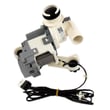
| Won’t drain / drains slowly | Clogged coin trap or weak pump | Washer pump coin trap DC61-03385A, washer drain pump DC31-00054D |
| Won’t fill / fills slowly | Inlet valve or restricted screens | Samsung washer water inlet valve DC97-15459G |
| Excessive vibration | Worn suspension/dampers or leveling issue | Washer damper DC97-16350E, washer leveling leg DC61-01722B |
Why it matters
Spin and drain problems are the issues that most directly affect results (wet clothes) and can also lead to secondary symptoms like odor, standing water, and repeated error codes. Fixing the root cause early helps prevent extra wear on the drive system and tub components.
Last updated: February 2026
Why is my Samsung washer taking 2 hours to wash?
Your Samsung washer model WA456DRHDWR can legitimately run close to 2 hours because it adjusts the cycle time based on load size, out-of-balance sensing, water temperature, and extra rinse or soak options. In most cases, the washer is working normally and extending time to wash and spin correctly.
Common reasons the cycle time gets longer
- Load sensing and rebalancing: the washer may pause and redistribute the load before or during spin.
- Cold water heating or temp stabilization: very cold incoming water can lengthen the wash portion.
- Extra options selected: extra rinse, soak, heavy soil, or sanitize-type options add time.
- Low water flow: slow fill can stretch the overall cycle (especially at the start and during rinses).
- Drain or spin interruptions: if the tub does not drain quickly, the washer may retry or slow the spin.
Quick checks that usually shorten the cycle
- Run a similar load with fewer options (skip extra rinse/soak) and compare time.
- Avoid overloading; load loosely so items can tumble and balance.
- Verify both hot and cold supply valves are fully open and hoses are not kinked.
- If you notice slow filling, inspect the inlet screens and consider the Samsung washer water inlet valve DC97-15459G.
- If you notice slow draining, check for debris and consider the washer pump coin trap DC61-03385A or a matching drain pump.
What “normal” looks like (typical ranges)
| Cycle type | Typical time range | What makes it longer |
|---|---|---|
| Normal / Eco-style | 45 to 90 min | load sensing, cold water, extra rinse |
| Heavy / Bedding | 75 to 120+ min | soak, high soil level, rebalancing |
| Deep rinse-heavy use | 90 to 150+ min | multiple rinses, slow fill |
Why it matters
Longer cycles are often the washer protecting your clothes and the machine by improving cleaning, balancing the spin basket, and preventing vibration. If the time keeps climbing and you also see poor draining, weak spinning, or repeated pauses, that points to a fill or drain issue worth addressing.
For cycle option details and what each setting adds, follow the cycle descriptions in the owner's manual.
Last updated: February 2026