Owner’s manual
 Error Codes



What is the average lifespan of a Samsung dryer?
A Samsung dryer typically lasts 10 to 15 years with normal household use. For your Samsung DV22K6800EW, consistent maintenance (especially airflow and lint control) and avoiding overloads are the biggest factors that push lifespan toward the high end; see the DV22K6800EW owner's manual for model-specific care and troubleshooting.
What affects dryer lifespan the most
- Airflow and lint control: clean the lint screen every load and keep the exhaust path clear.
- Load size: frequent overloading strains the drum, belt, and motor.
- Heat and cycle choices: high-heat cycles used constantly increase wear.
- Installation quality: crushed or long vent runs increase run time and stress components.
- Wear parts over time: rollers, belt, and bearings gradually wear with use.
Maintenance habits that extend life
- Clean the lint screen and check for lint buildup around the door opening.
- Periodically clean the venting system so drying times stay normal.
- Use Sensor Dry cycles when possible; the dryer shuts off when the target dryness is reached.
- If an information code appears, use Smart Care guidance and the troubleshooting tables in the manual.
Common wear items and what symptoms look like
| Symptom | Likely area | What it can lead to |
|---|---|---|
| Thumping or rumbling | Drum support rollers | Faster wear on belt and motor |
| Squealing or scraping | Drum bearing or roller area | Drum damage if ignored |
| Drum not turning | Belt or motor drive | No-dry condition, possible shutdown |
| Long dry times | Airflow restriction or sensor issues | Overheating risk, extra wear |
Why it matters
A dryer that runs longer than normal to dry a load racks up extra heat time and mechanical run time. Keeping drying times consistent is one of the simplest ways to protect the motor, drum support system, and temperature-sensing controls.
Last updated: February 2026
How to tell if a Samsung dryer heating element is bad?
On a Samsung dryer like model DV22K6800EW, a bad heating element typically shows up as no heat (or weak heat) even though the drum tumbles. The most reliable confirmation is a multimeter continuity/resistance test of the heater circuit after safely disconnecting power; also rule out airflow restrictions first using the DV22K6800EW owner's manual.
Quick symptoms that point to a heater problem
- Dryer runs but clothes stay cold and damp
- Cycle takes much longer than normal to dry
- Heat works briefly, then stops (often tied to overheating from restricted airflow)
- You see an HC heating-related information code on the display
- You see a tC code and the venting and lint screen are clear (temperature sensing issue can mimic heater failure)
How we test the heating element (safe, practical steps)
- Unplug the dryer (or switch off the breaker) before opening any panels.
- Check airflow first: clean the lint filter and make sure the exhaust duct is not restricted (restricted venting can cause “no heat” symptoms).
- Access the heater terminals (panel access varies by configuration; follow the DV22K6800EW owner's manual).
- Set your multimeter to ohms (Ω) or continuity.
- Test across the heating element terminals:
- Continuity present and a stable resistance reading indicates the coil is not open.
- No continuity (open circuit) indicates the element is failed.
- Test for a ground fault: check each terminal to the metal heater housing; you should read no continuity.
What the readings mean
| Test result | What it usually means | What to do next |
|---|---|---|
| No continuity across terminals | Heating coil is open | Replace the heating element assembly (or heater component as applicable) |
| Continuity to metal housing | Coil is shorted to ground | Replace the heating element assembly; do not run the dryer |
| Continuity is OK but still no heat | Not always the element | Check venting, power supply, thermostats, and the thermistor |
Don’t skip this airflow check
Good airflow prevents overheating and false “heater” symptoms.
- Clean the lint filter every load
- Inspect and clean the exhaust duct regularly
- Confirm the outside exhaust hood opens freely
- Plan on inspecting and cleaning ducting at least annually
Why it matters
A failed heater coil stops drying, but restricted venting can also shut heat down to protect the dryer. Confirming airflow and then testing with a meter prevents replacing the wrong part and helps restore normal drying performance.
Last updated: February 2026
How to find part number for Samsung dryer?
For your Samsung dryer model DV22K6800EW, we find the correct part number by matching the dryer’s model number first, then using the parts diagram list for that exact model. The model/serial tag is typically on the front frame behind the door; a backup tag is often on the rear panel.
Where to find the model number (so you get the right part)
Check these common locations on Samsung dryers:
- Front frame behind the door opening (most common)
- Rear panel (often a second label)
- Inside the door area near the opening (look along the frame)
- If the label is hard to read, take a photo and zoom in to confirm characters
Use the model number exactly as printed (letters and numbers). For this page, the model is DV22K6800EW.
How to find the correct part number once you have the model
We recommend this process because Samsung parts can look similar but fit differently by model series.
- Identify the symptom or the part location (door, drum, control panel, heat)
- Use the exploded-view diagrams and parts list in the DV22K6800EW owner's manual
- Match the part by name and location, then confirm the manufacturer part number
- If you are replacing a failure item, compare the old part’s markings to the listing
- Order using the exact part number shown for your model
Quick examples for DV22K6800EW
| What you’re fixing | Common part to check | Example part number |
|---|---|---|
| Dryer will not start when door closes | Door switch | DC64-00828B |
| Door will not stay shut | Door latch | DC66-00814A |
| Thumping or rumbling while tumbling | Drum support roller | DC97-16782A |
Why it matters
Using the exact model number prevents ordering a part that looks right but has different mounting points, wiring connectors, or sensor specs. That saves time, avoids returns, and gets your DV22K6800EW drying normally again.
Last updated: February 2026
How to tell if Samsung dryer thermal fuse is bad?
A bad thermal fuse in a Samsung DV22K6800EW dryer typically shows up as a dryer that will not start or will not heat. The reliable way to confirm it is a continuity test with a multimeter after unplugging the dryer; a blown fuse reads open (no continuity).
Quick symptoms to look for
- Dryer will not start even though the display lights up
- Dryer runs but produces no heat
- Cycle stops early and clothes stay damp (often alongside airflow problems)
- You recently had a clogged lint screen or restricted exhaust duct
How we test the thermal fuse (continuity test)
- Unplug the dryer (or switch off the breaker) and let it cool.
- Access the fuse location using the disassembly steps in the DV22K6800EW owner’s manual.
- Pull one wire off the fuse terminal (so you do not backfeed the circuit).
- Set your multimeter to continuity (beep) or lowest ohms.
- Touch a probe to each fuse terminal.
What the meter reading means
| Meter result | What it means | What to do next |
|---|---|---|
| Beep or near 0 Ω | Fuse is good | Check airflow, heating circuit, and sensors |
| No beep or OL/infinite | Fuse is blown | Replace the fuse and correct the overheating cause |
What to check next (common causes of a blown fuse)
Samsung’s troubleshooting guidance emphasizes airflow basics like cleaning the lint filter and exhaust duct, and inspecting the exhaust system regularly.
- Clean the lint filter before every load
- Clean the exhaust duct and confirm the outside hood opens freely
- Inspect for crushed, kinked, or overly long vent runs
- If you see a temperature-related code such as tC, check the sensor circuit; the dryer thermistor DC90-10128G is one common temperature-sensing part on this model
Why it matters
The thermal fuse is a one-time safety device; if it blows and you only replace it without fixing restricted airflow, the dryer can overheat again and repeat the failure.
Last updated: February 2026
Is it worth replacing a heating element in a Samsung dryer?
Yes; replacing the heating element is usually worth it when your Samsung dryer model DV22K6800EW tumbles but will not heat, because the repair cost is typically far less than replacing the dryer. Before buying parts, we recommend confirming the no-heat cause using the troubleshooting steps in the DV22K6800EW owner’s manual.
When replacement is the right call
A heating element replacement makes sense when the dryer runs but clothes stay cold or take much longer to dry, and airflow is good.
Common signs the heater circuit needs attention:
- Drum turns normally, but there is little or no heat
- Cycles finish, but loads are still damp
- You see a heating-related information code such as HC (heating temperature issue)
- You see tC (thermistor resistance issue) and the vent and lint screen are clear
- The dryer repeatedly shuts down due to overheating symptoms (often tied to restricted venting)
What to check first (saves time and money)
Many “bad heater” symptoms are caused by airflow or sensor issues, not the element itself.
Do these checks first:
- Clean the lint screen and confirm it seats correctly
- Inspect the exhaust duct for kinks, crushing, or heavy lint buildup
- Run a timed dry cycle and verify strong airflow at the outlet
- Review the display for information codes and follow the recommended actions
- If you have a multimeter, test the heater circuit components per the manual’s troubleshooting section
Cost and decision guide
| Situation | Usually worth repairing? | Why |
|---|---|---|
| Dryer is under ~10 years old and otherwise reliable | Yes | Extends life at a lower cost than replacement |
| No-heat plus multiple other failures (controls, motor, drum issues) | Sometimes | Total repair cost can add up quickly |
| Repeated overheating or long dry times due to vent restriction | Yes (after vent fix) | Fixing airflow prevents repeat failures |
Why it matters
A correct diagnosis prevents replacing the wrong part and helps protect the dryer from repeat overheating. The DV22K6800EW manual specifically points you to check the lint screen and venting when certain codes appear, because restricted airflow can mimic heater problems and create temperature faults.
Last updated: February 2026
What is the most common problem with Samsung dryers?
The most common issue we see with Samsung dryers like model DV22K6800EW is poor or no heat, which is often tied to restricted airflow (lint screen or venting) or a temperature-sensing problem that can trigger an information code such as tC. Start with airflow checks, then move to heat and sensor diagnostics using the DV22K6800EW owner's manual.
Quick checks that fix the most “no heat” complaints
- Clean the lint screen before every load; a clogged screen can also contribute to tC-type temperature sensing issues.
- Inspect the exhaust duct for kinks, crushing, or heavy lint buildup.
- Confirm the door closes fully; a door problem can stop operation and may show codes like dC.
- Avoid overloading; large loads dry unevenly and extend cycle time.
- Restart the cycle if you see a power-related code such as FC.
Common symptoms and the most likely causes
| Symptom | Most likely cause | What to check first |
|---|---|---|
| Runs but clothes stay damp | Restricted venting or lint blockage | Lint screen, exhaust duct, outside vent hood |
| Shows tC | Thermistor reading out of range, often with airflow restriction | Lint screen and vent restriction, then sensor circuit |
| Stops and shows dC | Door not fully closed or laundry caught | Door closure, door seal area |
| Loud thumping/squealing | Worn drum support components or belt path issues | Drum rollers, belt, idler area |
Parts that commonly relate to these problems on DV22K6800EW
If airflow is good and the dryer still struggles, these model-matched parts are often involved in heat, sensing, or noise complaints:
- Dryer thermistor DC90-10128G (temperature sensing; related to tC)
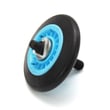
- Dryer drum support roller DC97-16782A (noise, thumping)
- Dryer drum belt 6602-001717 (drum not turning, squeal, intermittent tumbling)
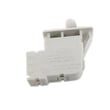
- Dryer door switch DC64-00828B (won’t run or stops when door circuit fails)
Why it matters
A restricted vent system does more than slow drying; it can push temperatures out of the normal range, trigger information codes, and increase wear on components like the drum belt and rollers. Keeping airflow clear is the fastest way to prevent repeat problems.
Last updated: February 2026