Owner’s manual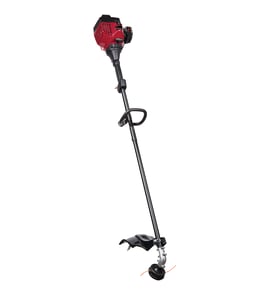



How to replace line on Craftsman gas trimmer?
To replace the trimming line on your Craftsman gas trimmer model 316731700, remove the old line, clean the cutting head, then feed a new line through the large holes until both ends come out evenly. Use only the line type listed in your owner's manual.
Steps to replace the trimming line
- Shut the engine off and let the cutting head stop completely.
- Remove any remaining old line from the cutting head.
- Wipe the cutting head clean with a cloth so the new line feeds smoothly.
- Insert both ends of the new line through the large circular holes on the side of the cutting head.
- Push the line through until both ends protrude from the positioning tunnels.
- Pull both ends until the line is tight against the head and the ends are the same length.
Line selection and safety rules
Using the correct line prevents overheating and reduces breakage.
- Use only the trimming line specified for this trimmer in the manual.
- Never use metal-reinforced line, wire, chain, or rope.
- Keep the cutting head shield installed while operating.
- Do not extend the line beyond the length of the shield.
- Keep bystanders at least 50 feet away when trimming.
Quick troubleshooting after reloading
| Symptom | Most likely cause | What to do |
|---|---|---|
| Line will not feed | Line not routed through positioning tunnels | Re-thread and pull ends even |
| Line breaks quickly | Wrong line type or line too long | Install correct line; trim to shield length |
| Excess vibration | Uneven line lengths | Pull and equalize both ends |
Why it matters
Correctly loading the cutting head keeps bump feeding reliable and helps protect the clutch, guard, and cutting head from extra stress.
Last updated: February 2026
How to unflood a string trimmer?
To unflood your Craftsman gas trimmer model 316731700, we clear excess fuel from the cylinder, dry the spark plug, and restart with the correct choke and throttle position. This restores the right air fuel mix so the engine can ignite and run normally (see starting steps in the owner's manual).
Quick unflood steps (works for most 2-cycle trimmers)
- Move the trimmer to a clear, well-ventilated area and set it on stable ground.
- Switch ON; set the choke to RUN/OFF CHOKE (or fully open).
- Hold the throttle wide open (this lets more air in).
- Pull the starter rope 8 to 12 times to purge excess fuel.
- If it still will not start, remove and dry the spark plug, then try again.
- Once it starts, let it idle briefly; the clutch should keep the cutting head stationary at idle.
If it still will not start: dry the spark plug and clear the cylinder
- Remove the spark plug.
- If the plug tip is wet, dry it completely; replace it if it is fouled or damaged.
- With the plug out, hold the throttle wide open and pull the starter rope 5 to 10 times to push fuel vapor out.
- Reinstall the plug and try starting again with the choke open.
If you need a replacement, use the model-matched spark plug 794-00082.
Air filter check (common cause of repeated flooding)
A restricted air filter makes the mixture too rich and can mimic flooding.
- Remove the air filter cover and inspect the filter.
- Clean and re-oil a foam-style filter as directed in the manual.
- Replace the filter if it is torn, brittle, or will not clean up.
A compatible replacement listed for this model is the mtd line trimmer air filter 751-12833.
What to expect after you unflood it
| Symptom after starting | Most likely cause | What we recommend |
|---|---|---|
| Starts, then dies when you squeeze throttle | Still too rich, dirty air filter | Recheck filter; restart with choke open |
| Strong fuel smell, plug keeps getting wet | Over-priming, incorrect start steps | Reduce priming; follow owner's manual start procedure |
| Cutting head spins at idle | Idle speed too high or clutch issue | Stop using and have it adjusted before operating |
Why it matters
Flooding washes fuel over the spark plug and reduces spark strength. Clearing the cylinder and restoring airflow prevents plug fouling, reduces hard starting, and helps protect the carburetor from repeated fuel loading.
Last updated: February 2026
Why is my Craftsman Weedeater not starting?
If your Craftsman gas trimmer model 316731700 will not start, the most common causes are stale fuel, incorrect starting steps (primer and choke positions), a clogged air filter, or a fouled spark plug. Start by following the exact start procedure in the 316731700 owner's manual, then check airflow and ignition.
Quick checks that fix most no-start problems
- Use fresh fuel; empty old fuel from the tank if it has been sitting.
- Confirm the oil level is correct (this is a 4-cycle trimmer).
- Press and release the primer bulb 10 times before starting.
- Set the choke lever to the correct position for a cold start, then move it as the engine warms.
- Make sure the cutting head is not contacting anything when you pull the starter rope.
Step-by-step: starting procedure basics (model 316731700)
We recommend matching these steps to the diagrams and choke positions shown in the manual:
| What to do | What you should see | What it means if you do not |
|---|---|---|
| Prime 10 times | Fuel visible moving through the primer bulb | Fuel is not reaching the carburetor; check fuel, lines, and primer action |
| Use choke positions correctly | Engine tries to fire, then runs as choke is opened | If it never fires, suspect spark or fuel delivery |
| Pull from a stable starting position | Smooth rope pull and consistent resistance | If rope slips or will not retract, inspect recoil starter parts |
Parts to inspect and replace first
A restricted air filter or weak spark can prevent starting even when fuel is good.
- Replace a dirty air filter with mtd line trimmer air filter 751-12833 (common low-cost fix).
- If the plug is wet, black, or damaged, replace it with spark plug 794-00082.
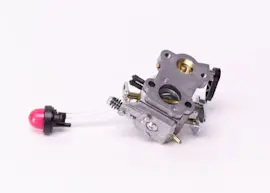
- If the engine only runs on choke or dies when you open the choke, the carburetor may need service; consider mtd line trimmer carburetor 753-08057.
Why it matters
A no-start condition is usually an air-fuel-spark imbalance. On the 316731700, the primer and choke steps are especially important; skipping them can leave the carburetor dry or overly rich, which prevents ignition.
Last updated: February 2026
What type of oil and gas for Craftsman 2-cycle 25cc 17 trimmer?
For the Craftsman 316731700 gas trimmer, use fresh unleaded gasoline and the correct engine oil for the engine type shown in the manual. The 316731700 owner's manual lists this model as an air-cooled 4-cycle engine that uses SAE 30 oil in the crankcase, not a 2-cycle oil and gas mix.
What to use (fuel and oil)
- Gasoline: fresh, clean unleaded gas
- Engine oil: SAE 30 (added to the crankcase)
- Oil and gas mix ratio: none (do not premix)
- Good practice: use fresh fuel and keep the oil at the proper level
Key specs to match (from the manual)
| Spec | Craftsman 316731700 |
|---|---|
| Engine type | Air-cooled, 4-cycle |
| Lubrication | SAE 30 oil |
| Crankcase oil capacity | 2.03 oz (60 ml) |
| Fuel tank capacity | 12 oz (355 ml) |
If you thought it was 2-cycle (common mix-up)
If you have been mixing oil into the gas, correct it before running the trimmer again.
- Drain the fuel tank and refill with fresh unleaded gas
- Check the crankcase oil level and fill with SAE 30 as needed (do not overfill)
- If it ran poorly, inspect the plug and replace if fouled: spark plug 753-05784
- Clean the air filter if it is dirty or oil-soaked: line trimmer air filter 751-12833
Why it matters
A 4-cycle trimmer relies on crankcase oil for lubrication; running the wrong fuel or oil setup can cause hard starting, plug fouling, smoking, and long-term engine wear.
Last updated: February 2026
What size fuel line for Craftsman leaf blower?
The page you are on is for the Craftsman gas line trimmer model 316731700, not a leaf blower; fuel line size is selected by the blower’s exact model number and the diameter of its tank grommet, fuel filter, primer bulb, and carburetor fittings. Use the blower’s model-specific parts diagram and the 316731700 owner's manual as a small-engine fuel-system reference.
How to get the correct fuel line size (the reliable method)
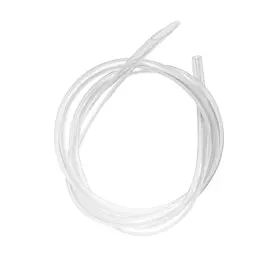
Fuel line is matched by inside diameter (ID) and outside diameter (OD). We recommend sizing from the old line and the fittings so the new line seals without clamps.
- Find the leaf blower model number on its housing tag (not the trimmer model)
- Remove the old fuel line and cut a short sample to measure
- Measure ID to match the carburetor and primer bulb nipples snugly
- Measure OD to match the fuel tank grommet or pass-through hole
- Replace any cracked grommet or in-tank fuel filter at the same time
Typical small-engine fuel line sizes you may see
These are common ranges for many Craftsman-style handheld engines; your blower may use one or two different sizes (supply and return).
| Common ID (inch) | Common use | What you’ll notice if it’s wrong |
|---|---|---|
| 3/32 | Primer return on some units | Won’t prime, loose fit, leaks |
| 1/8 | Supply line on many units | Hard starting, air leaks, stalling |
| 3/16 | Larger fittings on some units | Line won’t seat, kinks, flooding |
Installation tips that prevent hard-starting
- Cut line ends square; push fully past any barb
- Route smooth bends; avoid pinching under covers
- Prime and inspect for wet spots at the grommet and fittings
Why it matters
A slightly loose fuel line pulls air instead of fuel; that causes priming problems, lean running, and “starts then dies” symptoms on many small engines.
Last updated: February 2026