Owner’s manual


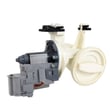
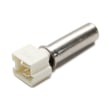
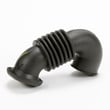
Where can I order Maytag washing machine parts?
You can order replacement parts for your Maytag washer model MHWZ600TW01 right here by matching the part to your model and choosing factory specified parts for the best fit and performance. Your MHWZ600TW01 owner's manual also explains how to get parts and service support.
Best ways to order the right part
- Confirm the full model number from the washer’s model/serial tag: MHWZ600TW01
- Use the parts list and diagrams to identify the exact part name and ID
- Choose factory specified parts so the replacement fits and works correctly
- If you are unsure, compare symptoms to common wear items (door boot, clamps, hoses)
- Keep your purchase date and model/serial number handy when contacting support
Common parts customers replace on MHWZ600TW01
These are examples of parts we commonly see replaced on this model:
| What you’re fixing | Part to check | Example part ID |
|---|---|---|
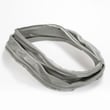
| Leaks at the door | Door seal | Washer door boot WPW10111435 |
| Poor draining or debris issues | Drain/pump filter area | Filter WPW10730972 |
| Dispenser leaks or siphoning issues | Dispenser plumbing | Washer dispenser hose W11366227 |
If you prefer phone ordering or service support
Our guidance for Maytag parts ordering is to use factory specified parts and have your model and serial number ready. The manual’s “Assistance or Service” section outlines the information to gather before you call. See the MHWZ600TW01 owner's manual for the exact support details.
Why it matters
Ordering by model number and matching the exact part ID reduces returns and downtime. It also helps ensure proper sealing, correct electrical connections, and reliable washer performance after the repair.
Last updated: February 2026
What's the average lifespan of a Maytag washer?
A Maytag washer typically lasts 10 to 13 years. For your Maytag MHWZ600TW01, lifespan depends most on load size, detergent use (HE detergent), and routine care like cleaning and checking hoses; our best maintenance steps are outlined in the MHWZ600TW01 owner's manual.
Typical lifespan and what affects it
Most washers reach their full service life when they are installed level, not overloaded, and kept clean.
- Usage volume: multiple loads per day shortens life faster than a few loads per week
- Overloading: strains the drive system, bearings, and suspension
- Water quality: hard water can increase scale and residue buildup
- Maintenance habits: cleaning the tub and gasket reduces odor, mold, and leaks
- Wear items: door boot, clamps, hoses, and filters often need attention before major components
What “end of life” usually looks like
These are the most common signs a front-load washer is nearing the end of its practical lifespan:
- Repeated leaks around the door opening
- Loud rumbling or grinding during spin
- Frequent drain problems or standing water
- Intermittent no power / no start symptoms
- Persistent odor even after cleaning
Quick care plan to help it reach 10 to 13 years
Use these habits to reduce stress on the motor, controls, and door seal.
| What to do | How often | Why it helps |
|---|---|---|
| Run a washer-clean cycle or hot cleaning cycle | Monthly | Cuts residue and odor buildup |
| Wipe the door boot dry after use | Weekly | Helps prevent mold and leaks |
| Check inlet hoses for bulges or seepage | Every 6 months | Prevents sudden hose failures |
| Keep loads balanced and sized correctly | Every load | Reduces vibration and bearing wear |
Why it matters
Knowing the typical lifespan helps you decide whether to repair or replace. If your MHWZ600TW01 is already near the 10 to 13 year range, investing in major parts like an electronic control can make less sense than fixing common wear items first.
Last updated: February 2026
What is the most common problem with a Maytag washer?
The most common Maytag washer problem is a drain or spin failure, usually tied to a restricted drain path (kinked or clogged drain hose), excessive suds from non-HE detergent, or an out-of-balance load. On the Maytag MHWZ600TW01, the display may show an F21 drain error; follow the troubleshooting steps in the MHWZ600TW01 owner’s manual.
What we see most often (and what to check first)
- Washer will not drain or won’t spin: check for a kinked hose, a clog, or a standpipe that is too high.
- F21 drain problem: cancel the cycle, disconnect power, then inspect the drain hose routing and clogs.
- Excessive suds: switch to HE detergent and reduce the amount; too many suds can extend the cycle and affect draining.
- Vibration or off-balance: redistribute bulky items; confirm the washer is level and all four feet are firmly on the floor.
- Normal “new” sounds: splashing, brief pauses, and pump gurgling at the end of draining can be normal operation.
Quick limits that matter for MHWZ600TW01
| Item to verify | What “good” looks like | What it causes when wrong |
|---|---|---|
| Drain hose height | End of hose is 96 in. (2.4 m) or less above the floor | No drain, slow drain, F21 |
| Drain hose setup | Not sealed with tape; has an air gap | Poor draining, siphoning issues |
| Leveling | Feet installed, nuts tightened, solid floor contact | Vibration, walking, off-balance |
When a part is commonly involved
If the washer drains slowly, leaves water behind, or repeatedly triggers drain-related symptoms after you correct the hose and suds issues, the drain system may need service. For this model, a commonly replaced item tied to drain flow is the filter WPW10730972 (depending on the exact configuration and symptom).
Why it matters
Drain and spin problems can look like a “bad washer,” but they are often caused by installation details (hose height, kinks, air gap), detergent choice (HE vs. non-HE), or load balance. Fixing those first prevents repeat errors and reduces wear on the pump and motor.
Last updated: February 2026
Is it worth fixing a Maytag washer?
Yes, it’s usually worth fixing a Maytag washer when the repair is a common wear item or a single failed part and the total repair cost stays well below the price of a comparable replacement. For the Maytag MHWZ600TW01, repairs are most cost-effective when the machine is otherwise running smoothly and not needing repeated service.
Quick decision checklist (what we use)
- Repair cost target: keep the total repair under about 50% of replacement cost.
- Failure type: one clear problem (leak, no drain, door seal issue) is a good repair candidate.
- Repeat breakdowns: multiple recent failures usually point toward replacement.
- Core component failure: major drive or control issues can be expensive.
- Condition factors: heavy rust, strong odor that returns, or excessive vibration can shorten the payoff.
Common “worth fixing” repairs on MHWZ600TW01
These are typical front-load washer fixes that often restore reliable operation:
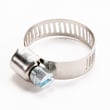
- Fixing leaks at the door seal (replace the washer door boot WPW10111435 and, if needed, the washer door boot spring clamp WP8540108).
- Clearing or servicing the drain system (check the pump filter and drain path; see the MHWZ600TW01 owner’s manual for model-specific access and steps).
- Replacing a failed control when symptoms are consistent and verified (for example, the washer electronic control board WPW10163007).
When replacement makes more sense
| Situation | What it usually means | Typical best choice |
|---|---|---|
| Multiple expensive parts needed | Costs stack quickly | Replace |
| Repeated service calls in a short time | Underlying wear across systems | Replace |
| Major motor or basket-related issues | Labor and parts can be high | Compare costs carefully |
Why it matters
A front-load washer like the Maytag MHWZ600TW01 can be very economical to keep running when you’re addressing a single, known failure (door boot leak, clamp, hose, filter). Once repairs become frequent or involve multiple high-cost components, replacement usually delivers a better long-term cost per load.
Last updated: February 2026