
How big of an AC unit is needed for a 2000 sq ft house?
For a 2,000 sq ft house, most homes need a 3 to 4 ton central air conditioner (about 36,000 to 48,000 BTU/hr). The correct size depends on climate, insulation, windows, and ductwork; we size it using a load calculation instead of square footage alone.
Quick sizing rule of thumb (and why it varies)
A common starting point is 18 to 24 BTU per sq ft, then adjust for real-world conditions.
- Hotter climates and heavy sun exposure need more capacity
- Older homes with less insulation need more capacity
- Tight, well-insulated homes need less capacity
- High ceilings increase the air volume that must be cooled
- Leaky or undersized ducts reduce delivered cooling
What “oversized” and “undersized” look like
Sizing affects comfort, humidity control, and wear on the outdoor condenser.
| If the AC is... | What you notice | What it causes |
|---|---|---|
| Undersized | Runs for long periods, struggles on hot days | Higher run time, uneven comfort |
| Oversized | Short cycles (frequent on/off) | Poor humidity removal, more cycling wear |
| Properly sized | Longer steady cycles | Better comfort and humidity control |
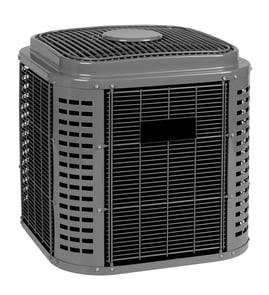
How this relates to your Icp CA5036VKB1 condenser
Your Icp CA5036VKB1 is the outdoor cooling condenser. If you are troubleshooting performance (not keeping up, short cycling, fan not running), common service parts on this model include the central air conditioner condenser fan motor, 1/3-hp 1050703 and the capacitor 12969.
Before you assume the unit is the wrong size
- Replace the indoor air filter and confirm supply registers are open
- Clear debris from the outdoor coil; keep at least 18 to 24 inches of clearance
- Confirm the condenser fan runs smoothly and the fan blade is intact
- Verify the indoor blower is operating and the thermostat is set correctly
- Use safe electrical testing practices; follow how to use a multimeter to test electrical parts video
Why it matters
Correct sizing improves comfort and humidity control and reduces stress on key components like the condenser fan motor and capacitor.
Last updated: February 2026
What is the average cost to replace a central AC unit?
Most central AC replacements cost about $6,000 installed, with many homes falling in a $1,500 to $12,500 total range depending on system size (tons), efficiency (SEER2), ductwork condition, and local labor rates. For Icp model CA5036VKB1, installation scope typically drives the total more than individual part prices.
What drives the total replacement price
- System size and load calculation (larger capacity costs more)
- Efficiency level (SEER2) and any required equipment upgrades
- Ductwork repairs or modifications (leaks, resizing, adding returns)
- Electrical work (disconnect, whip, breaker, grounding)
- Refrigerant line set work (flush, replace, or resize)
- Permits and inspections required in your area
Repair vs. replace: quick decision guide
If your CA5036VKB1 is not starting, is noisy, or is overheating, a targeted repair is often far less expensive than replacing the entire system when the issue is limited to common electrical or fan components.
| Symptom | Usually makes sense to… | Common cause |
|---|---|---|
| Outdoor unit will not start | Repair | Capacitor or contactor problem |
| Fan not spinning, compressor runs or hums | Repair | Fan motor or fan blade issue |
| Repeated major failures or very old system | Replace | Repair costs stack up quickly |
Common lower-cost repairs (parts often involved)
These parts are commonly involved when the condenser will not run, runs loudly, or overheats:
- Central air conditioner condenser fan motor, 1/3-hp 1050703 (moves air across the condenser coil)
- Central air conditioner condenser fan motor 1050892 (fan motor option used on some builds)
- Fan blade 1087331 (damaged blades can cause vibration and poor airflow)
- Capacitor 12969 (helps start and run motors)
Why it matters
A properly sized, correctly installed central air conditioner runs longer, steadier cycles, controls humidity better, and reduces strain on high-cost components like the compressor. Comparing repair cost to replacement cost helps you put money into reliability and comfort.
Last updated: February 2026
What is the average lifespan of a central air conditioning unit?
Most central air conditioning units last 15 to 20 years with normal use and regular maintenance. For an Icp CA5036VKB1 cooling condenser, keeping airflow strong and electrical components healthy is what most directly protects long-term reliability.
Typical lifespan ranges (what to expect)
- 15 to 20 years: Typical for a properly sized, maintained central AC system
- 10 to 12 years: Common when maintenance is skipped or the unit runs under heavy strain (dirty coils, low airflow, frequent cycling)
- 20+ years: Achievable when the system is kept clean, correctly charged, and repaired promptly
What shortens lifespan fastest
- Dirty outdoor condenser coil and restricted airflow
- Overheating from a failing condenser fan motor or damaged fan blade
- Electrical wear (pitted contacts, weak start/run components)
- Frequent short-cycling (often tied to airflow, controls, or sizing issues)
- Corrosion and vibration that loosen wiring and mounts
Parts that commonly affect longevity on CA5036VKB1
If your outdoor unit is noisy, the fan is slow, or the system struggles to start, these are common wear items to check and replace as needed:
Quick symptom-to-part guide
| Symptom | Most likely area | Common part type |
|---|---|---|
| Outdoor fan not spinning | Fan circuit | Capacitor, fan motor |
| Buzzing or clicking at start | Electrical switching | Contactor, capacitor |
| Loud vibration or wobble | Air-moving hardware | Fan blade, motor mount |
Why it matters
A central AC that is kept within its normal operating temperatures and starts smoothly puts less stress on the compressor and electrical system. Replacing a weak capacitor, worn fan motor, or damaged fan blade early often prevents bigger failures and helps the unit reach the full 15 to 20 year lifespan.
Last updated: February 2026
What is the most expensive part to replace on an AC unit?
On most central AC systems (including the Icp CA5036VKB1 outdoor condenser), the compressor is typically the most expensive single component to replace because it is the sealed, labor-intensive “heart” of the refrigerant system. When a compressor fails, repair costs often rival the value of older equipment.
What usually costs the most (and why)
The compressor is expensive due to the part cost, refrigerant handling, and the amount of labor involved. Other parts can be pricey, but they are usually far less than a compressor.
Common high-cost items on a central air conditioner:
- Compressor (most expensive in most cases)
- Outdoor condenser coil (can be costly if replacement is possible for the unit)
- Control board (on some systems)
- Refrigerant-related repairs (leak search, repair, evacuation, recharge)
How this compares to common CA5036VKB1 repairs
Many frequent “no cool” or “won’t start” problems are caused by electrical or fan-side parts that cost much less than a compressor.
| Part or repair area | Typical symptom | Relative cost vs. compressor |
|---|---|---|
| Central air conditioner condenser fan motor, 1/3-hp 1050703 | Outdoor fan not spinning, unit overheats | Lower |
| Capacitor 12969 | Hums, hard start, fan struggles | Much lower |
| Contactor | Clicking, won’t run, intermittent start | Much lower |
When compressor replacement makes sense
We see compressor replacement chosen most often when the rest of the system is in good condition and the unit is not near end-of-life.
Use these decision checks:
- The condenser fan motor and fan blade are in good shape
- The electrical compartment shows no burned wiring or repeated contactor failures
- The system does not have a known refrigerant leak history
- The overall unit condition (coil, cabinet, vibration) supports a major repair
Why it matters
Knowing the compressor is usually the top-cost repair helps you prioritize diagnosis. It also explains why technicians often test the capacitor, contactor, and condenser fan motor first; those failures can mimic compressor problems but are far cheaper to fix.
Last updated: February 2026