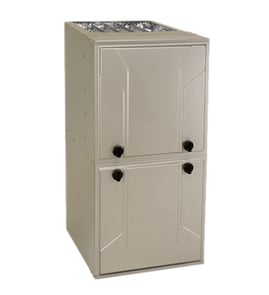

Who makes Evcon furnace?
Evcon furnaces are made under the Coleman and York family of HVAC brands; your Coleman Evcon BGU10016A is part of that same manufacturer group and parts ecosystem. For the most accurate match, we use the exact model number (BGU10016A) when identifying the correct furnace parts.
What “Evcon” means for your furnace
Evcon is a brand name used on certain gas furnaces and HVAC equipment that are commonly associated with the Coleman and York product lines.
- Evcon is a brand label, not a separate furnace type
- Many Evcon units share design and parts families with Coleman and York models
- The model number is the key to matching the right replacement parts
- The rating plate on the furnace cabinet confirms the exact model and serial
How to confirm what you have (fast checklist)
Use these quick checks on your Coleman Evcon BGU10016A furnace:
- Find the data tag/rating plate inside the burner compartment or on the cabinet panel
- Confirm the model reads BGU10016A (match character-for-character)
- Note whether the unit is natural gas or LP (propane) if listed
- Record the serial number for age and production details
- Match parts by model on the parts list first, then broaden your search if needed
Brand vs. model number: what matters most
| What you’re checking | Example for this furnace | Why it matters |
|---|---|---|
| Brand | Coleman Evcon | Helps narrow the product family |
| Model number | BGU10016A | Determines the correct parts list |
| Serial number | (varies) | Helps identify production run details |
Why it matters
Evcon-branded furnaces can look similar across different production runs, but small differences (gas valve style, igniter type, control board revisions) can change which parts fit. Using BGU10016A prevents ordering the wrong component.
Ordering parts
We recommend starting with the parts list for your Coleman Evcon BGU10016A; if you need to search more broadly by model number, we also support that on Sears PartsDirect.
Last updated: February 2026
Why is my furnace turning on but not heating?
If your Coleman Evcon BGU10016A furnace turns on (you hear it run or the blower starts) but it is not heating, the most common cause is that the ignition sequence is failing or the burners will not stay lit. In many homes, this comes down to airflow problems (dirty filter), a dirty flame sensor, or a safety limit opening from overheating.
Quick checks we recommend first
- Confirm the thermostat is set to HEAT and the setpoint is above room temperature.
- Replace the air filter if it is dirty or overdue.
- Make sure the furnace service switch is on and the circuit breaker is not tripped.
- If you have a gas shutoff valve near the furnace, verify it is open (handle parallel to the pipe).
- Watch a start-up cycle through the sight glass or burner area (do not touch anything): you are looking for ignition, then steady flame.
What the symptoms usually mean
| What you observe | What it often points to | What you can do safely |
|---|---|---|
| Blower runs, but no flame ever lights | Ignition not happening (igniter issue, gas off, control lockout) | Check thermostat, power, gas shutoff; reset power once |
| Flame lights briefly, then shuts off | Dirty flame sensor or flame proving issue | Clean flame sensor (if you are comfortable) or schedule service |
| Furnace starts, then shuts down and restarts | Overheating, restricted airflow, limit switch opening | Replace filter; open supply registers; check return air grilles |
| Outdoor venting/air intake blocked (high-efficiency units) | Pressure switch or venting problem | Clear obvious obstructions around terminations |
Why it matters
A furnace that runs without heat is often cycling through safety controls to prevent unsafe operation. Fixing airflow first protects the heat exchanger, reduces nuisance shutdowns, and helps the burners stay lit consistently.
When to stop and get service
- You smell gas, see soot, or hear repeated ignition attempts.
- The burners light and go out repeatedly after you have replaced the filter.
- You suspect a failed gas valve, control board, pressure switch, or wiring issue.
For parts lookup and model-based diagrams, start with the parts list for BGU10016A, or search by model number on Sears PartsDirect. For safe electrical testing basics, we also recommend how to use a multimeter to test electrical parts video.
Last updated: February 2026
What is the most expensive part to fix on a furnace?
On a Coleman Evcon gas furnace like model BGU10016A, the most expensive repair is typically the heat exchanger because it is labor-intensive and often drives the total cost into the “replace the furnace” decision range. Other high-cost repairs include the blower motor and control board.
Most expensive furnace repairs (typical cost drivers)
These repairs cost the most because they combine a high-priced component with significant diagnostic time and labor.
- Heat exchanger: major disassembly, combustion setup checks, and safety verification
- Blower motor (circulating/indoor fan): motor cost plus time to access and set up
- Control board (furnace control): diagnosis is critical because multiple symptoms can look similar
- Draft inducer motor: venting and pressure-switch related checks add labor
- Gas valve: requires careful testing and leak checks after replacement
Quick comparison: what makes a repair “expensive”
| Component | Why it gets expensive | What you usually notice |
|---|---|---|
| Heat exchanger | Highest labor and safety checks | Furnace may run but shut down, odd smells, repeated lockouts |
| Blower motor | Part cost plus access time | Weak airflow, overheating trips, loud humming/squeal |
| Control board | Diagnosis time plus part | No heat, intermittent operation, no response to thermostat |
| Inducer motor | Venting/pressure diagnostics | Starts then stops, pressure switch errors, rattling |
Why it matters (and what we recommend)
When the heat exchanger is involved, the repair decision is less about the part alone and more about total labor, age of the furnace, and overall condition of the burners, inducer, and blower assembly. For any suspected heat exchanger or gas-related issue, we recommend using a qualified technician for diagnosis and repair.
How to keep repair costs down
These steps reduce strain on the most expensive components.
- Replace the furnace filter on schedule to protect the blower and prevent overheating
- Keep supply and return vents open to maintain proper airflow
- Address unusual noises early (blower or inducer issues get worse fast)
- If the furnace short-cycles, have it diagnosed before repeated overheating damages parts
- Use the model number BGU10016A when searching parts diagrams and replacements on Sears PartsDirect
Last updated: February 2026
What is the most common part to fail on a furnace?
On a Coleman Evcon gas furnace (model BGU10016A), the most common “failure point” is usually not a single part; it is a maintenance-related airflow or flame-proving issue. In real-world service, a dirty air filter and a dirty flame sensor are the two most frequent causes of no-heat or short-cycling symptoms.
Most common culprits (in order we see most often)
- Air filter: A clogged filter restricts airflow, overheats the furnace, and trips safety limits.
- Flame sensor: A dirty sensor fails to prove flame, so the control board shuts the gas off.
- Ignition system (hot surface igniter or spark igniter): Wear or cracking prevents ignition.
- Thermostat or thermostat wiring: No call for heat, intermittent calls, or wrong settings.
- Door switch: If the blower door is not seated, the furnace will not run.
- Limit switch / rollout switch: Trips from overheating or flame rollout conditions.
Quick checks you can do safely (before replacing parts)
- Set thermostat to HEAT and raise the setpoint 3 to 5 degrees.
- Replace the air filter and make sure all supply registers are open.
- Verify power: furnace switch on, breaker on, and blower door fully closed.
- If the furnace starts then shuts off quickly, suspect the flame sensor first.
- If you are comfortable testing, use a meter to confirm voltage and continuity (see how to use a multimeter to test electrical parts video).
Symptom-to-part cheat sheet
| Symptom | Most likely cause | What we do next |
|---|---|---|
| Blower runs, no heat | Flame sensor, igniter, gas supply issue | Inspect flame sensor, check igniter glow/spark |
| Starts then shuts off in seconds | Flame sensor | Clean sensor, verify flame signal |
| Runs a few minutes then stops | Dirty filter, limit switch trip | Replace filter, check airflow and vents |
| Completely dead | Power issue, door switch, control issue | Check breaker, switch, door seating |
Why it matters
On BGU-series furnaces like the BGU10016A, many “bad part” calls are actually safety shutdowns caused by restricted airflow or a flame-proving problem. Fixing the root cause first prevents repeat failures and protects major components like the control board and inducer.
Getting the right replacement
We match furnace parts by exact model number and the part’s location in the diagram. Start with the parts list for BGU10016A, or search by model on Sears PartsDirect to find the correct Coleman Evcon furnace parts.
Last updated: February 2026
Why is the red light blinking on my EVCON furnace?
A blinking red light on your Coleman EVCON BGU10016A furnace is a diagnostic fault code from the control board. The flash pattern (number of blinks, then a pause) points to the problem area, most often ignition, flame sensing, airflow limit, or pressure switch venting.
What to do first (safe, quick checks)
Turn off power at the furnace switch or breaker before removing panels.
- Count the flashes for one full cycle; confirm it repeats the same way
- Make sure the thermostat is set to Heat and calling for heat
- Replace or clean the air filter; restricted airflow commonly trips a limit
- Verify the blower door is fully seated (door switch must close)
- Check intake and exhaust terminations outside for blockage (if applicable)
Common blink-code problem areas
These are the most common categories the red LED points to:
- Ignition failure (no flame established)
- Flame sensed when it should not be
- Pressure switch open (inducer, venting, condensate, or tubing issue)
- High limit or rollout open (overheat or burner safety)
- Low voltage or control power issue
Symptom guide while you confirm the code
| What you observe | Likely cause | Practical next step |
|---|---|---|
| Inducer starts, then stops; no ignition | Pressure switch or venting | Inspect venting and pressure-switch tubing for blockage or water |
| Ignitor glows; burners never light | Gas supply or valve control | Confirm gas shutoff is open; cycle power once |
| Burners light, then shut off quickly | Flame sensor issue | Clean flame sensor; check for steady flame |
| Runs, then shuts down; blower keeps running | Overheating/high limit | Replace filter; open registers; check for duct restriction |
Why it matters
The blinking red LED is a safety lockout indicator; fixing the underlying airflow, ignition, or venting issue restores reliable heat and prevents repeated shutdowns.
For model-specific parts lookup, search BGU10016A on Sears PartsDirect. For electrical checks, use how to use a multimeter to test electrical parts video.
Last updated: February 2026