
Where to find model number on Craftsman Wet Dry Vac?
On a Craftsman wet/dry vacuum like model 75817821, the model number is usually printed on the product rating label (often a gray or silver sticker) on the lid/top cover or on the rear of the tank near the power cord. Look for a line labeled “MOD” or “Model”.
- Top lid or motor head (near the handle or latches)
- Back of the tank/canister (near the cord wrap)
- Bottom of the tank (flip the unit carefully and look for a label)
- Near the on/off switch area
- On the cart/dolly frame (less common)
Most Craftsman wet/dry vac labels include several fields. Use the model number field for parts lookup.
| Label field | What it means | What to use for parts |
|---|---|---|
| Model / MOD | The vacuum’s model number | Use this |
| Serial / S/N | Unique unit identifier | Not needed for most parts |
| Volts / Amps | Electrical rating | Helpful for troubleshooting |
| Gallons / Peak HP | Capacity or marketing rating | Not used for parts matching |
We match parts to the exact model because Craftsman wet/dry vacuums can use different motors, switches, hoses, filters, and latches even when they look similar. Using the correct model number helps you avoid ordering the wrong replacement part.
- Clean the area with a damp cloth and mild soap; let it dry fully before plugging the vacuum back in.
- Use a flashlight at an angle; faded printing often becomes easier to read.
- Check for a second label on the tank if the lid label is damaged.
- If you still cannot read it, use our guide: how to find your appliance model number (and what it means for parts).
Last updated: February 2026
Why is my Craftsman vacuum not suctioning?
Low or no suction on your Craftsman 75817821 wet/dry vacuum is almost always caused by restricted airflow. In most cases, a clogged filter, a blockage in the hose or inlet, or an air leak at the lid or hose connection prevents the motor from moving enough air.
- Unplug the vacuum; then remove the hose and check for a clog at the hose ends and the inlet port.
- Inspect the filter; if it is packed with fine dust, clean or replace it (a caked filter can stop airflow).
- Empty the tank; overfilling can pull debris into the filter and reduce airflow.
- Reseat the lid and latches; a lid that is not sealed lets air leak in and kills suction.
- Check the hose for splits, crushed sections, or loose cuffs.
- If you used it for wet pickup, confirm the filter and tank are set up for wet use and fully dried afterward.
- With the unit unplugged, remove the hose from the vacuum.
- Look into the inlet and feel for packed debris; clear it.
- Remove the filter and check suction briefly (only for a moment and only if your setup allows safe operation); strong suction here points to a dirty filter or clogged hose.
- Reinstall a clean, dry filter and retest with the hose attached.
| What you notice | Most likely cause | What to do next |
|---|---|---|
| Suction improves with hose removed | Hose or nozzle blockage | Clear hose/nozzle; replace damaged hose |
| Suction improves with filter removed | Filter restriction | Clean or replace filter |
| Suction is weak everywhere | Air leak or motor issue | Check lid seal, latches, hose fit; then inspect power cord and switch |
Wet/dry vacuums rely on high airflow. A dirty filter, a clogged hose, or a small air leak can drop airflow enough that the vacuum sounds like it is running but will not pick up debris.
For safe electrical checks (cord, switch, motor circuit), use our guide: how to use a multimeter to test electrical parts video.
Last updated: February 2026
What is the list of vacuum cleaner parts?
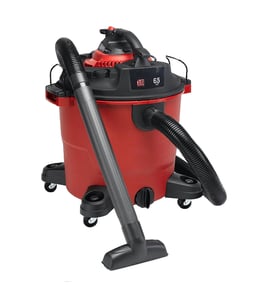
For the Craftsman 75817821 wet/dry vacuum, the parts list typically includes the suction and airflow components (motor and fan), filtration parts (filter and float/cage), the collection container (tank and lid), and the cleaning path parts (hose, wands, nozzles, and casters) that let the vacuum pick up wet or dry debris.
Most Craftsman wet/dry vacuums use a similar set of serviceable parts. When you review a parts diagram, these are the items we expect to find:
- Motor head assembly (motor, fan/impeller, motor housing)
- Power cord and switch (sometimes with a cord wrap or strain relief)
- Filter (cartridge or foam sleeve, depending on pickup type)
- Float and float cage (helps prevent liquid from reaching the motor)
- Tank (collection drum) and lid latches
- Hose (often with a locking end) and hose adapter/inlet
- Extension wands and floor nozzle, utility nozzle, or crevice tool
- Casters/wheels and axle hardware (mobility parts)
| Part group | What it does | Common symptom when it fails |
|---|---|---|
| Filter and float system | Protects the motor and controls airflow | Weak suction, debris blow-by, liquid shutoff issues |
| Hose, wands, nozzles | Carries airflow and debris to the tank | Clogs, air leaks, poor pickup |
| Motor and fan | Creates suction | No start, loud noise, burning smell, low suction |
| Tank, lid, seals | Holds debris and maintains vacuum seal | Dust leaks, whistling, suction loss |
- Match parts by the full model number: 75817821.
- Compare the part shape and mounting points to your original (especially hoses, latches, and casters).
- For suction problems, check the filter condition and tank seal before replacing the motor.
- For “won’t start,” inspect the cord, switch, and internal wiring connections.
- For wet pickup, confirm the correct wet-use filter/foam and that the float moves freely.
Wet/dry vacuums depend on airtight seals and unrestricted airflow. A small air leak at the lid, a clogged filter, or a cracked hose can reduce suction as much as a failing motor, so identifying the correct part group saves time and avoids unnecessary replacements.
For help confirming the exact part category to shop first, use our model-number tips in how to find your appliance model number (and what it means for parts).
Last updated: February 2026
Can I wash a wet dry vac filter?
Yes, you can wash a wet/dry vac filter only when it is a washable foam style made for wet pickup. For the Craftsman model 75817821, match the cleaning method to the filter material you have in hand; washing pleated paper or HEPA-style media ruins airflow and suction.
Use these quick checks before you clean it:
- Foam sleeve or foam ring: washable; used for wet pickup
- Pleated paper cartridge: dry-clean only; used for dry debris
- HEPA or fine-dust cartridge: dry-clean only; used for fine dust
- Any filter with glued pleats or paper-like media: do not wash
- Labeling that says “washable” or “foam”: wash is OK
- Unplug the vacuum and remove the filter
- Rinse with cool to lukewarm water
- Use a small amount of mild dish soap for oily dirt
- Rinse until water runs clear
- Gently squeeze out water (do not wring hard)
- Air-dry completely before reinstalling
- Tap gently to knock off loose debris
- Brush between pleats with a soft brush
- Vacuum the outside with a brush attachment
- Replace the filter if it is torn, deformed, or stays clogged
| Filter material | Wash it? | Best cleaning method |
|---|---|---|
| Foam (wet pickup) | Yes | Rinse, mild soap, air-dry fully |
| Pleated paper | No | Tap, brush, vacuum; replace if clogged |
| HEPA/fine dust | No | Tap/brush gently; replace when restricted |
A wet filter that is not fully dried can cause musty odors and moisture issues; a washed paper or HEPA-style filter permanently restricts airflow, reducing suction and making the motor work harder.
For help locating the correct replacement filter by model number, use how to find your appliance model number (and what it means for parts).
Last updated: February 2026