Owner’s manual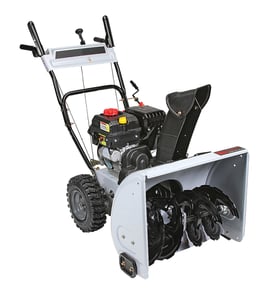




How do I tell what year my snowblower is?
To tell the year of your Craftsman gas snow thrower model 536887751, we use the date code on the ID tag or engine label: the first digit is the year within a decade, and the remaining digits are the day of the year it was built. Confirm the exact label location and format in the 536887751 owner's manual.
Where to find the date code
Most Craftsman snow throwers have an ID tag on the frame, and the engine may also have its own model and date information.
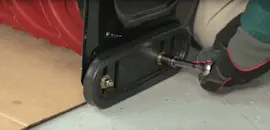
- Check the model and serial tag on the snowblower frame (often near the rear frame, axle area, or handle support)
- Check the engine shroud/blower housing label for engine identification numbers
- Wipe off dirt and oil so all digits are readable
- Write the full code down before interpreting it
How to decode it (common format)
A common Craftsman-style date code looks like YDDD.
- Y = year within the decade
- DDD = sequential day of the year (001 to 365, or 366 in leap years)
Example
If the date code is 5240:
| Code | Meaning | Result |
|---|---|---|
| 5 | Year digit | Could be 1995, 2005, 2015 (depends on model era) |
| 240 | Day of year | 240th day of the year |
In that example, if the decade is the 1990s, day 240 is August 28, 1995.
How to choose the correct decade
Because the first digit repeats every 10 years, we narrow it down using what we know about the machine.
- Compare the snowblower’s overall design and controls to the diagrams in the 536887751 owner's manual
- Use the engine model family and parts style (carburetor, primer, ignition) as a time clue
- If your unit has newer replacement wear items (belts, scraper), that does not change the build year
Why it matters
Knowing the build date helps us match the correct parts and specs for maintenance items like belts, friction wheel adjustments, and tune-up parts.
Last updated: January 2026
What is the typical lifespan of a gas snowblower?
A gas snowblower like Craftsman model 536887751 typically lasts 10 to 15 years with normal residential use. With consistent maintenance (oil changes, lubrication, belt checks, and proper off-season storage), it commonly reaches 15 to 20 years of service.
What most affects lifespan
- Maintenance frequency: lubrication, tune-ups, and fastener checks prevent premature wear.
- Fuel care: stale fuel and ethanol-related moisture cause carburetor and engine issues.
- Usage load: heavy, wet snow and long run times increase stress on belts, auger, and impeller.
- Storage habits: corrosion and freeze-up damage are common when stored wet or with untreated fuel.
- Wear items replaced on time: belts, spark plug, and shear bolts are designed to wear out.
Maintenance habits that add years
Use the schedule and procedures in the 536887751 owner's manual. Key habits include:
- After each job, clear moisture and reduce freeze-up risk by cycling controls and pulling the recoil starter rope several times.
- Check for loose or damaged parts; tighten fasteners and replace worn components promptly.
- Lubricate the auger shaft fittings about every 10 hours of operation; grease again whenever a shear bolt is replaced.
- Plan a yearly tune-up to keep performance consistent season to season.
- For storage longer than 30 days, run the tank dry or treat fuel with stabilizer to prevent gum and acid formation.
Typical lifespan expectations (quick guide)
| Use and care level | Typical lifespan | What you usually see first |
|---|---|---|
| Light use, basic upkeep | 10 to 15 years | Belts, friction drive wear, carb issues |
| Regular use, strong upkeep | 15 to 20 years | Normal wear items replaced periodically |
| Heavy use, minimal upkeep | 5 to 10 years | Drive problems, corrosion, engine starting issues |
Why it matters
A snow thrower’s engine and drivetrain can run for many seasons, but small maintenance steps (fuel management, lubrication, and replacing wear parts) prevent the most common failures that shorten lifespan.
Last updated: January 2026
Is it cheaper to repair or replace a snowblower?
Repairing a Craftsman gas snow thrower model 536887751 is usually cheaper when the problem is normal wear (belts, springs, adjustments, tune-up items). Replacing the machine makes more sense when the repair total approaches about half the cost of a comparable new snowblower, or when major drivetrain or engine issues keep returning.
Quick decision checklist
- Repair if the issue is isolated (no-start tune-up, belt slip, chute hardware, minor cable/spring problems).
- Repair if the machine is structurally solid (auger housing and frame not badly rusted or cracked).
- Replace if multiple major systems are failing (engine plus drive system plus auger/impeller).
- Replace if you need parts and labor that add up to roughly 50% or more of a new unit.
- Replace if it has frequent breakdowns and you are losing reliability during storms.
Common “repair-first” fixes on this model
The owner’s manual calls out belt replacement as a standard service task (disconnect spark plug wire, remove bottom panel and belt cover, then replace and adjust). See the 536887751 owner’s manual.
Typical repair-first items include:
- Auger drive belt replacement (snow won’t discharge well when the auger belt is damaged).
- Traction/ground drive belt replacement (machine won’t move or slips under load).
- Idler pulley or spring issues that prevent proper belt tension.
Parts that often make repair economical
| Symptom | Likely area | Example part for this model |
|---|---|---|
| Won’t move forward / slips | Traction drive belt, idler tension | Snowblower drive belt 1733324SM |
| Auger won’t spin / won’t throw snow | Auger drive belt, belt guide, idler | Snowblower gas belt 585416MA |
| Belt won’t stay tensioned | Idler pulley / linkage | Idler pulley 1502120MA |
Why it matters
A snowblower is a seasonal “must-run” machine. Fixing a belt, pulley, or spring is usually fast and cost-effective, and it restores performance. Replacing the whole unit is typically the better value only when you are paying for repeated major repairs or the machine has significant structural wear.
Last updated: January 2026
What is the most common problem with snow blowers?
The most common problem we see with snow blowers like the Craftsman 536887751 is a no-start or hard-start condition, usually tied to fuel and basic tune-up items. Close behind are chute clogs and drive or auger issues caused by wear, ice buildup, or damaged hardware.
Most common issues (and what to check first)
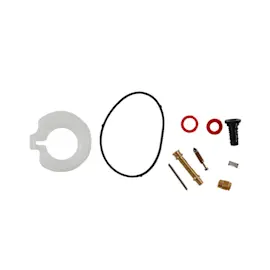
- Won’t start / runs poorly: old fuel, restricted fuel flow, dirty carburetor, fouled spark plug
- Clogged discharge chute: wet snow, ice buildup, packed snow in the auger or chute
- Auger or impeller not moving: shear bolts/pins damaged, belt slipping, clutch/cable out of adjustment
- Poor traction or won’t drive: worn drive belt, idler pulley problems, friction drive contamination
- Abnormal vibration: damage after striking an object; stop and inspect before continuing
Quick safety steps before troubleshooting
The manual is clear that you should stop the engine and prevent accidental starting before clearing jams or inspecting moving parts.
- Release the auger drive lever and disengage controls
- Move the throttle to STOP
- Remove the ignition key
- Disconnect the spark plug wire and keep it away from the plug
- Clear packed snow with a tool (not your hands)
For the full procedure and operating tips, use the 536887751 owner’s manual.
Common “symptom to likely cause” guide
| Symptom | Most likely cause | Typical fix |
|---|---|---|
| Engine won’t start | Stale fuel or spark issue | Drain/refill fuel, service spark plug, clean fuel system |
| Chute keeps clogging | Wet snow, low ground speed, ice | Run at full throttle, slow ground speed, clear buildup safely |
| Auger won’t turn | Belt slipping or drive not engaging | Inspect/adjust belt and linkage; replace worn belt |
| Unit won’t move | Ground drive belt worn | Replace the drive belt |
Parts that commonly wear
If your snowblower drives poorly or the auger engagement feels weak, worn belts are a frequent root cause.
- Snowblower drive belt 1733324SM (traction/ground drive)
- Snowblower gas belt 585416MA (auger drive)
- Idler pulley 1502120MA (belt tension and engagement)
Why it matters
Catching the common problems early prevents bigger failures. For example, continuing to run with abnormal vibration or a slipping belt can damage pulleys, cables, and the drive system, and it reduces throwing performance.
Last updated: January 2026