 Installation guide
 Owner’s manual
 Error Codes



Is GSD3300K00WW stackable?
No. The GE GSD3300K00WW is a built-in dishwasher, so it is not designed to be stacked like a washer and dryer. It installs under a countertop and must be secured in the cabinet opening using the mounting method shown in the installation guide.
What “stackable” means (and what applies here)
Dishwashers are installed in a fixed opening and connect to a water supply, drain hose, and electrical supply. For the GSD3300K00WW, the practical equivalent of “stackable” is whether it can be safely secured under different countertop materials.
- It installs under a countertop, not on top of another appliance.
- It must be anchored to prevent tipping when racks are pulled out.
- Water line, drain hose, and wiring must be routed to avoid interference under the unit.
- Countertop material affects which mounting brackets you use.
Installation notes that matter for this model
The installation instructions call out specific mounting guidance and routing clearances.
| Situation | What to do | Why it matters |
|---|---|---|
| Wood or woodlike countertop | Use the standard mounting method | Provides a solid screw base for anchoring |
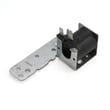
| Granite or similar non-wood countertop | Use a side-mount bracket kit (GPF65) | Prevents failed anchoring into stone |
| Drain hose length needs exceed the supplied hose | Use an approved longer hose option | Helps prevent kinks and poor draining |
Why it matters
A dishwasher that is not properly secured can shift forward, strain the fill hose or drain hose, and cause leaks or poor draining. Correct anchoring also helps the door latch and racks operate smoothly over time.
Last updated: February 2026
What is the average life expectancy of a GE dishwasher?
A GE dishwasher typically lasts 10 to 12 years. With consistent care (good water temperature, correct detergent, and routine cleaning), many units reach the upper end of that range; heavy daily use and poor maintenance shorten service life.
What affects lifespan the most
- Water quality and mineral buildup: hard water speeds up scale and valve wear.
- Inlet water temperature: GE guidance is at least 120°F for proper washing and drying performance.
- Detergent and rinse aid use: using dishwasher-specific detergent and a rinse agent helps reduce film and spotting.
- Cleaning and maintenance habits: keeping the tub, spray paths, and sump area clean reduces strain on the pump.
- Load and cycle choices: chronic overloading and always using heavy cycles increases wear.
Maintenance checklist for longer life (GSD3300K00WW)
Use the care and cleaning steps in the owner's manual.
- Run hot water at the sink before starting a cycle so the dishwasher fills with hotter water.
- Use only automatic dishwasher detergent; keep it fresh and dry.
- If you have hard water, adjust detergent amount and consider a water softener to reduce scale.
- Use a rinse agent and keep the dispenser filled.
- Periodically remove mineral deposits (citric acid cleaning is commonly used for hard-water film).
Typical lifespan ranges (what to expect)
| Usage and care level | Typical service life |
|---|---|
| Light use, good maintenance | 12 years |
| Average household use | 10 to 12 years |
| Heavy use, poor maintenance | 6 to 8 years |
Why it matters
Knowing the expected lifespan helps you decide when a repair makes sense. If your GSD3300K00WW is near the 10 to 12-year mark and you are seeing multiple issues (leaks, poor cleaning, or draining problems), targeted maintenance and replacing a worn part can restore performance and delay replacement.
Last updated: February 2026
What is the capacity of the GSD3300K00WW?
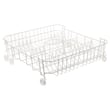
GE dishwasher model GSD3300K00WW is a standard built-in 24-inch dishwasher; capacity is measured in place settings, not cubic feet. Most 24-inch built-in dishwashers hold about 12 to 14 place settings, depending on rack layout and how you load it. For the exact loading guidance for your unit, use the GSD3300K00WW owner's manual.
How to estimate capacity (place settings)
We recommend using place settings because it matches how dishwashers are designed and tested.
- Count a “place setting” as a dinner plate, salad plate, bowl, cup, saucer, plus flatware
- Load plates and bowls in the lower rack; keep spray paths open
- Put cups, glasses, and small bowls in the upper rack
- Avoid blocking the detergent cup and spray arms
- If items come out dirty, reduce the load and re-check spray arm movement
What we know for this model
The installation specs confirm this is a 24-inch built-in GE dishwasher platform, which aligns with typical 12 to 14 place-setting capacity.
| Spec type | What to use | Typical for 24-inch built-in dishwashers |
|---|---|---|
| Capacity | Place settings | 12 to 14 |
| Fit size (opening) | Cabinet opening | 24 in wide, 24 in deep, 34-1/2 in high |
Why it matters
Using place settings helps you load efficiently without overfilling. Overloading can block the spray pattern, reduce wash performance, and leave detergent undissolved.
Last updated: February 2026
What is the most common problem with GE dishwashers?
The most common GE dishwasher problems are no-start, no-drain, and poor cleaning. On the GE GSD3300K00WW, these symptoms are usually tied to simple causes first (door not fully latched, wrong detergent causing suds, or a drain restriction) before a part failure is involved.
Most common symptoms and what they usually mean
- Won’t start or seems dead: door latch not fully engaged, control selection timing issue, or a power supply problem.
- Won’t drain: drain path restriction (air gap, disposer, sink drain) or a drain component issue.
- Not cleaning well: loading issues, low water temperature, hard water, or spray arm circulation problems.
- Too many suds: using the wrong detergent type (hand dish soap or non-automatic detergent).
- Not drying: low inlet water temperature, heated dry not selected, or rinse aid empty.
Quick checks we recommend first (fast, no tools)
Use these steps in order because they solve the majority of “common problem” complaints:
- Confirm the door closes firmly and latches; relatch if needed.
- Use only automatic dishwasher detergent (wrong detergent can create suds and stop proper washing).
- If it will not drain, clean the air gap (if installed) and make sure the sink drains well.
- If the dishwasher drains into a disposer, run the disposer to clear it.
- Make sure inlet water is hot enough; for drying and performance, the manual calls out at least 120°F.
When it’s likely a part problem on GSD3300K00WW
If the quick checks do not fix it, these parts commonly relate to the top symptoms:
| Symptom | Common part to inspect | Example part for this model |
|---|---|---|
| Won’t drain | Drain solenoid or drain hose restriction | GE dishwasher drain solenoid assembly WD21X10268, dishwasher drain hose WD24X10014 |
| Poor wash / weak spray | Pump and motor or circulation pump issue | GE dishwasher pump and motor assembly WD26X10051, dishwasher circulation pump WD19X10020 |
| Leaks at the door | Door seal worn or mis-seated | Dishwasher door seal WD08X10057 |
Why it matters
No-start, no-drain, and poor cleaning often share the same root causes (latching, water temperature, drain restrictions, and detergent choice). Fixing the basic setup issues first prevents unnecessary part replacement and helps the dishwasher run more reliably.
Helpful references for this model
- Use the owner's manual troubleshooting charts for symptom-based checks (draining, suds, drying, and control behavior).
- If your unit has electronic indicators, match symptoms to codes using GE dishwasher error codes.
Last updated: February 2026





