




Is a higher mph or CFM better for a leaf blower?
For the Weed Eater 2595 electric leaf blower, higher CFM is better for moving lots of dry leaves fast, while higher MPH is better for breaking loose wet, stuck, or heavier debris. The best choice depends on what you’re clearing and how tight the spaces are.
Quick way to choose (CFM vs. MPH)
- Choose higher CFM when you want to move a larger volume of leaves across lawns, driveways, and open areas.
- Choose higher MPH when you need more “punch” to dislodge wet leaves, pine needles, or debris packed into cracks.
- Balance matters: a blower with strong CFM and decent MPH usually feels more effective than one number alone.
- Nozzle shape affects results: a narrower outlet typically increases airspeed (MPH), while a wider outlet can help move more air (CFM).
- Attachments can change performance: adding or removing tubes can affect how concentrated the airflow feels.
What the numbers mean
| Spec | What it tells you | Best for |
|---|---|---|
| CFM (cubic feet per minute) | How much air the blower moves | Clearing big piles and covering more area quickly |
| MPH (miles per hour) | How fast the air exits the nozzle | Wet leaves, matted debris, and tight corners |
Why it matters for real yard cleanup
CFM is your “productivity” number; it helps you finish faster in open spaces. MPH is your “stubborn debris” number; it helps you peel debris off surfaces and out of crevices. For many homeowners, the most noticeable improvement comes from better airflow control at the nozzle.
Tips to get better performance from your blower
- Keep the air path clear and make sure tubes fit tightly so air is not leaking.
- Use smooth, overlapping passes; don’t aim straight down into the pile.
- For corners and cracks, work at a shallow angle to lift debris, then push it away.
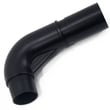
- If your tube is cracked or won’t lock in securely, replace it with the correct part for this model, such as the leaf blower attachment kit extension tube 530094425.
Last updated: February 2026
What should you not do with a leaf blower?
You should not use a Weed Eater 2595 electric leaf blower in unsafe conditions or in ways that can injure people, damage property, or overload the motor. Avoid unstable footing, unsafe debris, and any use that puts the cord, intake, or discharge at risk.
Safety rules we recommend following
- Do not let children operate the leaf blower.
- Do not use it while on a ladder, roof, tree, or any unstable surface.
- Do not use it when you are tired, sick, or impaired (including alcohol, drugs, or sedating medication).
- Do not point the airflow at people, pets, open windows, or vehicles.
- Do not use it near flammable vapors, gasoline, or smoldering debris.
- Do not run it with damaged wiring, a damaged plug, or a cut extension cord.
Do not use a leaf blower to clean up these materials
Avoid blowing or vacuuming anything that can become a projectile, clog the airflow path, or create a health hazard:
| Material | Why it is a problem | Better approach |
|---|---|---|
| Rocks, gravel, mulch | Can become high-speed projectiles | Rake or shovel first |
| Wet leaves, mud | Clogs tubes and strains the motor | Let debris dry, then blow |
| Ashes, soot, fine dust | Respiratory hazard; can spread indoors | Use a sealed shop vacuum with proper filter |
| Glass, metal scraps | Injury risk; can tear bags/tubes | Pick up by hand with gloves |
Cord and electrical “don’ts” (electric blower specific)
- Do not pull the blower by the cord or unplug it by yanking the cord.
- Do not run the cord where it can be cut by edges, pinched by doors, or caught by the intake.
- Do not use an undersized extension cord; most electric blowers run best on a heavy-duty outdoor cord (commonly 14 AWG or 12 AWG depending on length).
- Do not keep running the blower if it repeatedly trips a breaker or overheats; inspect the cord, outlet, and airflow path.
If you need to replace worn or missing attachments that affect airflow control, use the correct fit for your model, such as the leaf blower attachment kit extension tube 530094425.
Why it matters
Unsafe use can cause eye injuries, hearing damage, electrical shock, and motor failure. Keeping the intake and discharge clear, using stable footing, and protecting the power cord helps your Weed Eater 2595 run cooler and last longer.
Last updated: February 2026
What is the life expectancy of a leaf blower?
Most leaf blowers last 8 to 12 years with normal homeowner use and basic care. For the Weed Eater 2595 electric leaf blower, lifespan is driven mainly by motor health, switch/cord condition, and keeping airflow paths clear; replacing worn attachments can also extend usable life.
Typical lifespan by blower type
| Blower type | Typical life expectancy | What usually ends its life |
|---|---|---|
| Corded electric (like model 2595) | 8 to 12 years | Worn motor bearings, failed switch, damaged cord, overheating from clogs |
| Battery cordless | 5 to 10 years | Battery capacity loss, charger issues, electronics failure |
| Gas | 10 to 15 years | Fuel system issues, carburetor wear, compression loss |
What makes a leaf blower last longer
- Keep intake vents and the tube path clear so the motor can cool properly.
- Avoid running it continuously at full load when the tube is partially blocked.
- Inspect the power cord and plug before each use; stop using it if insulation is nicked.
- Store it dry and clean; moisture and debris shorten switch and motor life.
- Replace worn or cracked tubes and bags so airflow stays strong.
Parts that commonly extend the usable life
If your blower still runs but performance is poor, worn attachments are often the easiest fix.
- If the tube is loose, cracked, or missing sections, replace the leaf blower attachment kit extension tube 530094425.
- If you use the vacuum function and the bag is torn or won’t seal, replace the craftsman, poulan leaf blower vacuum bag 530402533.
Quick “is it worth fixing?” checklist
| Symptom | Most likely cause | Usually worth fixing? |
|---|---|---|
| Runs but weak airflow | Clog, leaking tube, worn attachment | Yes |
| Stops after a few minutes | Overheating from blockage, restricted vents | Yes |
| Won’t start at all | Switch/cord/motor issue | Sometimes |
Why it matters
A leaf blower that is partially clogged or leaking air works harder than it should. That extra load raises motor temperature and shortens life, even if the blower still “sounds normal.”
Last updated: February 2026
Do electric leaf blowers use a lot of electricity?
Most electric leaf blowers do not use a lot of electricity for typical yard cleanup; they usually draw about 500 to 1,500 watts while running. For a Weed Eater 2595, your actual cost depends on the blower’s wattage (or amps) and how long you run it.
What that power draw means in real use
Electricity use is easiest to compare in kilowatt-hours (kWh):
- 500W blower = 0.5 kWh per hour of run time
- 1,000W blower = 1.0 kWh per hour of run time
- 1,500W blower = 1.5 kWh per hour of run time
If you run the blower for 20 to 30 minutes at a time, the energy used is typically a fraction of a kWh to about 0.75 kWh.
Quick estimate table
Use this to estimate energy use (multiply by your electric rate to estimate cost):
| Blower power | 30 minutes of use | 1 hour of use |
|---|---|---|
| 500W | 0.25 kWh | 0.50 kWh |
| 1,000W | 0.50 kWh | 1.00 kWh |
| 1,500W | 0.75 kWh | 1.50 kWh |
How to find the wattage (or amps) on your blower
Check the rating label on the blower housing or near the handle. You may see amps instead of watts.
- Look for amps (A) or watts (W) on the label
- If you only have amps, estimate watts as: watts = volts × amps
- Most corded blowers in the U.S. run on 120V
- If the cord or plug gets hot, stop using it and inspect the cord and outlet
For electrical troubleshooting basics, we recommend how to use a multimeter to test electrical parts video.
Why it matters
Knowing the approximate wattage helps you estimate operating cost and also helps you choose a safe extension cord (undersized cords can cause voltage drop and overheating).
Related parts that can affect performance
A clogged or restricted airflow path can make cleanup take longer (more run time), which increases total energy used. If you need to restore proper airflow or vacuuming setup, these model-related parts are common:
- Leaf blower attachment kit extension tube 530094425
- Craftsman, poulan leaf blower vacuum bag 530402533
Last updated: February 2026
Are electric leaf blowers strong enough?
Yes. Electric leaf blowers are strong enough for routine cleanup on patios, driveways, garages, and small to medium yards; they clear dry leaves and light debris quickly. For heavy, wet piles or large areas, gas models deliver higher sustained output and faster clearing.
What “strong enough” means for a Weed Eater 2595
For the Weed Eater 2595, “strong enough” comes down to matching airflow and airspeed to the job, then using good technique so you keep debris moving in one direction.
- Dry leaves on hard surfaces: strong performance
- Wet leaves or matted piles: slower progress, closer nozzle distance
- Mulch and gravel beds: use more distance to avoid scattering
- Long sessions: cord reach and cord management become the main limiter
- Tight corners: a properly fitted tube improves control and efficiency
Quick comparison: electric vs gas
| Factor | Electric leaf blower | Gas leaf blower |
|---|---|---|
| Best for | Frequent, routine cleanup | Heavy piles, large areas |
| Power delivery | Strong bursts, consistent on cord | High sustained output |
| Runtime | Limited by cord reach | Refuel and keep going |
| Maintenance | Low | Higher |
| Handling | Often lighter, less vibration | Often heavier |
Tips to get the most power from your blower
- Blow when debris is dry; it reduces sticking and clumping.
- Work in passes; start at edges and push into one main pile.
- Keep the tube low and angled; avoid lifting leaves into the air.
- Fix air leaks and loose connections; they reduce effective airflow.
- Replace cracked or loose tubes for better reach and control with the leaf blower attachment kit extension tube 530094425.
- If you use a vacuum setup, replace a torn or clogged bag to maintain airflow with the craftsman, poulan leaf blower vacuum bag 530402533.
Why it matters
Using the right tool for the debris type saves time. Electric blowers excel for quick, regular cleanups; gas blowers are the better choice when you need maximum sustained clearing in tough, wet conditions.
Last updated: February 2026