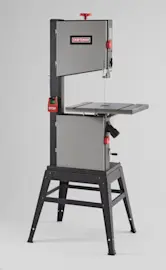
Owner’s manual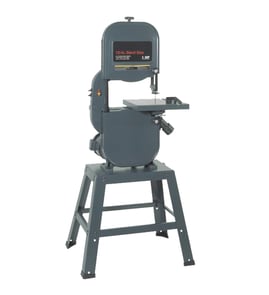




How do I know the size of my bandsaw blade?
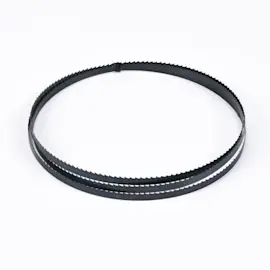
For your Craftsman 113247440 12-inch electric band saw, blade size is identified by three basics: length, width, and TPI (teeth per inch). This model comes equipped with a 1/4-inch wide blade and accepts blade widths from 1/8-inch to 1/2-inch; confirm the exact blade length and setup details in the owner's manual.
What “blade size” means (and what to measure)
Measure these three items so you can buy the correct replacement blade and set the guides correctly:
- Blade length: the total length of the loop (measured around the entire blade)
- Blade width: measured across the blade body (not including tooth set)
- TPI: count teeth over 1 inch (or count 1/2 inch and double it)
| Measurement | What it affects | Quick tip |
|---|---|---|
| Length | Whether the blade fits around both wheels | If it will not reach both wheels, tension is too high or the blade is the wrong length |
| Width | What the saw can support and how tight you can turn | This saw supports 1/8-inch to 1/2-inch widths |
| TPI | Cut speed and finish quality | Higher TPI for smoother cuts; lower TPI for faster, rougher cuts |
How to measure blade length (best method)
We recommend measuring the blade itself if you already have one that fits correctly.
- Unplug the saw and remove the switch key before opening guards or handling the blade.
- Carefully remove the blade and uncoil it at arm’s length while wearing eye protection.
- Lay the blade flat and use a tape measure to measure the full loop length.
How to confirm blade width on this model
This Craftsman band saw:
- Comes with a 1/4-inch blade
- Uses blades from 1/8-inch to 1/2-inch wide
- Needs guide and bearing adjustments whenever you change to a different blade width
Why it matters
Using the correct blade length prevents fit and tension problems; using a supported blade width helps the blade track properly and reduces twisting, breakage, and poor cut quality.
Last updated: February 2026
What is the 4 inch rule for bandsaw?
The 4-inch rule for a band saw means we keep our hands and fingers at least 4 inches away from the moving blade during a cut. On the Craftsman 113247440 12-inch electric band saw, we plan hand placement so a slip cannot pull fingers into the blade, and we use push devices when needed.
How to follow the 4-inch rule on the Craftsman 113247440
Use these habits every time you cut to reduce the chance of accidental blade contact:
- Adjust the upper blade guide and blade guard to just clear the workpiece (this maximizes blade support and reduces exposed blade).
- Plan your grip before starting the cut; keep fingers out of the “line of cut” and away from where a sudden slip would go.
- Use a push stick, push block, or auxiliary fence for narrow stock so your hands stay back.
- Keep the blade properly tracked, tensioned, and supported by the guides and thrust bearings.
- Turn the saw off, remove the switch key, and unplug before changing blades or making adjustments.
Quick safety checklist (before you cut)
These steps align with the safety guidance in the owner's manual:
| Check | What we’re looking for | Why it helps |
|---|---|---|
| Blade direction | Teeth point downward toward the table | Prevents climbing and grabbing |
| Guide height | Guard just clears the workpiece | Less exposed blade, better control |
| Guide spacing | Guides set close without pinching the blade | Reduces twisting and drift |
| Work support | Stable stance, supported stock | Prevents slips and binding |
Why it matters
Most band saw injuries happen during a momentary slip or when cutting small pieces. Keeping a 4-inch buffer forces safer technique, encourages push tools, and works together with proper guide and guard adjustment to reduce blade contact risk.
Last updated: February 2026
What is the 3-tooth rule for bandsaws?
The 3-tooth rule means you choose a blade pitch (TPI) so at least three blade teeth are in the cut at all times. On a Craftsman 113247440 12-inch electric band saw, this reduces tooth snagging, improves control, and helps the blade cut smoother and last longer.
How to apply the 3-tooth rule (quick method)
- Measure the material thickness where the blade is cutting.
- Pick a blade TPI so 3 or more teeth span that thickness.
A simple way to think about it:
- Thin stock needs higher TPI (more, smaller teeth)
- Thick stock needs lower TPI (fewer, larger teeth)
Practical TPI guide (typical)
| Material thickness | Typical blade pitch to meet 3-tooth rule | Best use |
|---|---|---|
| 1/8 to 1/4 inch | 14 to 24 TPI | Thin wood, plastics, veneers |
| 1/4 to 3/4 inch | 6 to 10 TPI | General wood cutting |
| 3/4 to 3 inches | 3 to 6 TPI | Thick stock, resawing |
Why it matters on this Craftsman band saw
When too few teeth are engaged, the blade tends to grab and chatter. When too many teeth are engaged, sawdust packs in the gullets and the blade overheats and dulls faster. The manual also emphasizes choosing the right blade for the material and cut, keeping teeth pointed downward toward the table, and setting the blade guides correctly (about 1/32 inch from the deepest part of the teeth gullets). See the owner's manual.
Related setup checks that protect the blade
- Unplug the saw and remove the switch key before adjustments
- Set blade tension correctly before cutting
- Adjust upper blade guide and guard to just clear the workpiece
- Confirm tracking stays centered on the wheel tire
- Set guides so teeth do not contact the guides
Last updated: February 2026
What is the specs of the Craftsman 12 inch bandsaw 113247440?
The Craftsman 113247440 is a 12-inch electronic band saw designed for general woodworking cuts with a tilting table and an electronic control panel for blade speed/tension functions. For the exact factory specifications (capacities, speeds, and adjustments), we use the owner's manual.
Key specs and features to expect
These are the core specs customers typically look for on a 12-inch Craftsman vertical band saw like model 113247440:
- Cutting capacity: throat depth and maximum cutting height (varies by setup)
- Table function: table supports bevel/tilt for angled cuts
- Blade system: band saw blade, upper and lower wheel tires, blade tension knob/screw
- Speed control: electronic display/encoder used for blade speed and tension functions
- Stand/base: base components and optional leg set/leveling feet (depending on configuration)
What the manual confirms for this model
From the documentation for the Craftsman 12-inch electronic band saw model 113247440, we can confirm these model-specific details:
| Spec area | What we can state for 113247440 |
|---|---|
| Product type | 12-inch electronic band saw |
| Controls | Electronic control panel with an encoder/display used for functions like blade speed/tension |
| Blade speed reference | Documentation references blade speed values in FPM (feet per minute) |
| Major assemblies | Drive assembly, base components, and a leg set are shown in the parts list |
How to find the exact numbers fast
Use these spots in the documentation to get the precise values you need (capacity, blade length, speed range, table size, motor rating):
- Look for the specifications section near the front of the owner's manual
- Check the setup/adjustment pages for blade tension, tracking, and table bevel
- Use the parts list diagrams to identify the correct assembly names when ordering parts
Why it matters
Band saw specs directly affect what you can cut safely and accurately. Matching the correct blade length, speed range (FPM), and tension method helps prevent blade breakage, poor tracking, and rough cuts.
Last updated: February 2026