Owner’s manual
 Error Codes


What is the life expectancy of a Whirlpool refrigerator?
A Whirlpool refrigerator typically lasts 10 to 18 years. For your Whirlpool WRS571CIHB04 side-by-side refrigerator, consistent maintenance (especially cleaning and proper airflow) is what most often determines whether you land closer to 10 years or closer to 18.
Typical lifespan and what affects it most
Most refrigerators fail early due to heat stress, airflow restrictions, or neglected wear items. We see the biggest impact from:
- Condenser coil cleanliness (dust and pet hair make the compressor run hotter)
- Door seal condition (air leaks cause long run times and frost issues)
- Stable temperatures (avoid frequent warm-ups from propped doors)
- Water system upkeep (filter changes and good water pressure help the ice maker and dispenser)
- Leveling and door alignment (prevents seal gaps and door slamming)
For model-specific care and leveling steps, follow the WRS571CIHB04 owner's manual.
Maintenance checklist that helps you reach the high end of the range
Use this as a simple routine:
- Vacuum and brush the condenser area regularly
- Keep vents inside the fresh food and freezer sections unblocked
- Confirm doors close on their own and seal all the way around
- Replace the water filter on schedule and flush air after changes
- Clean spills promptly to prevent odors and sticky door gaskets
Quick guide: symptoms that shorten lifespan
| What you notice | Common cause | What to do first |
|---|---|---|
| Runs almost constantly | Dirty condenser, warm room, door leak | Clean coils, check gasket seal |
| Frost buildup or warm spots | Door not sealing, airflow blocked | Re-seat food, inspect gasket |
| Weak ice production | Filter restriction, water supply issue | Change filter, verify supply |
| Water under fridge | Defrost drain issue, leak | Inspect for clogs and leaks |
Why it matters
A refrigerator that runs longer than it should uses more electricity and wears out major components faster. Basic care protects the sealed system and helps parts like the ice maker, evaporator fan, and door gaskets last longer.
Last updated: February 2026
What is the most common problem with a Whirlpool refrigerator?
The most common Whirlpool refrigerator problem is a cooling complaint (refrigerator warm, freezer warm, or temps swinging). On the Whirlpool WRS571CIHB04 side-by-side, the most frequent root causes are airflow restrictions (dirty condenser coils, blocked vents), evaporator fan issues, and defrost drain clogs that can also lead to leaks; use the WRS571CIHB04 owner's manual for model-specific checks.
Most common symptoms we see
- Refrigerator section is warm but freezer seems OK
- Freezer is warm and ice production slows or stops
- Frost buildup on the freezer back wall
- Water under the crisper drawers or on the floor
- Clicking, buzzing, or a fan noise that changes when doors open
Quick checks that fix many “no cool” calls
- Confirm airflow: Make sure food packages are not blocking return vents in either compartment.
- Clean the condenser area: Dust buildup reduces heat removal and causes longer run times.
- Listen for the evaporator fan: If the freezer door is open, the fan may pause; closing the door switch can help you confirm operation.
- Check for ice or water at the bottom of the freezer: This often points to a defrost drain issue.
- Verify door closing and alignment: A refrigerator that is not level can have sealing issues; the manual describes leveling feet and alignment steps.
Parts that commonly solve the underlying issue
| Problem area | What fails | Example part for WRS571CIHB04 |
|---|---|---|
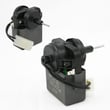
| Poor airflow in freezer | Evaporator fan motor | Refrigerator evaporator fan motor WP2315549 |
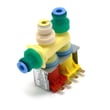
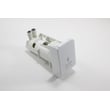
| Water dispenser or ice maker not filling | Water inlet valve | Refrigerator water inlet valve WPW10341320 |
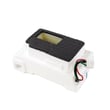
| Ice maker not producing | Ice maker assembly | Refrigerator ice maker W10873791 |
Why it matters
Cooling problems usually start small (longer run times, soft ice, minor frost) and then turn into food spoilage or repeated ice maker and water dispenser complaints. Fixing airflow, leveling, and water supply issues early prevents bigger failures.
When an error code is involved
If the display shows a code or unusual indicator, use Whirlpool refrigerator error codes to match the code to the most likely cause before replacing parts.
Last updated: February 2026
Why is my Whirlpool side by side refrigerator icemaker not making ice?
If your Whirlpool WRS571CIHB04 ice maker is not making ice, the usual causes are the ice maker being turned off, the ice bin not pushed in fully, warm freezer temperatures, or a water supply problem. After corrections, allow 24 hours for first ice and 72 hours for full production.
Quick checks we recommend first
- Confirm the ice maker is On (wire shutoff arm down, or the On/Off switch set to On).
- Close the freezer door firmly; dispensing and ice functions can stop when a door is open.
- Push the ice storage bin all the way in; if it is not seated, the dispenser may not work.
- Make sure the household water shutoff valve is fully open and the water line is not kinked.
- If the refrigerator was just installed or restarted, wait through the full cool-down period.
Ice maker On/Off: match what you see
| Ice maker style | Ice making ON | Ice making OFF |
|---|---|---|
| Wire shutoff arm | Arm down | Arm up (or bin full lifts arm) |
| On/Off switch | Switch to On (right) | Switch to Off (left) |
For the exact On/Off and bin-removal steps for your ice maker style, use the WRS571CIHB04 owner's manual.
When a part is likely involved
If the freezer is cold, the ice maker is On, and water supply is good but you still get no ice, check these common failure points:
- Ice maker not cycling or harvesting: refrigerator ice maker W10873791
- No water filling the ice maker: refrigerator water inlet valve WPW10341320
- Weak water flow (small or hollow cubes): replace the water filter and verify supply pressure
Why it matters
Ice production depends on three basics: cold freezer temps, a closed door with the bin seated correctly, and steady water flow. Verifying those first restores ice faster and prevents unnecessary part replacement.
Last updated: February 2026