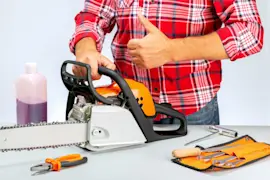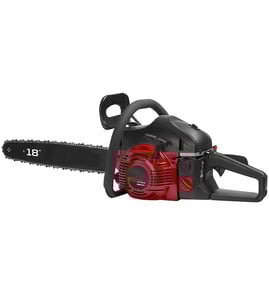

How big of a tree can you cut with a 16-inch chainsaw?
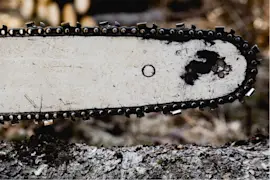
With a Homelite Z3350-16 (16-inch bar) chainsaw, we typically recommend cutting trees and logs up to about 12 to 16 inches in diameter. For the safest, smoothest single-pass cuts, a 10 to 14 inch trunk is the practical sweet spot.
Practical cutting limits (single pass vs. working both sides)
A 16-inch guide bar does not mean you should routinely cut 16-inch trees in one pass. You need room for safe control, proper chain speed, and a clean hinge when felling.
- Best range (fast, controlled cuts): 10 to 14 inch diameter
- Upper practical range: 12 to 16 inch diameter (slower, more technique-dependent)
- Over 16 inches: plan to cut from both sides (or use a longer bar)
- Over 20 inches: a longer bar and higher-power saw is the better choice
Quick guide: diameter vs. approach
| Tree/log diameter | What to expect with a 16-inch bar | Recommended approach |
|---|---|---|
| Up to 10 in. | Easy, efficient | Single-pass cuts |
| 10 to 14 in. | Ideal workload | Single-pass cuts |
| 14 to 16 in. | Doable but slower | Careful single-pass or reposition |
| 16 to 20 in. | More effort, more risk | Cut from both sides, take your time |
| Over 20 in. | Inefficient | Use a longer bar saw |
What affects the maximum size you can cut
Even with the same 16-inch chainsaw, real-world capacity changes a lot based on conditions.
- Wood hardness: hardwoods cut slower than softwoods
- Chain sharpness: a dull chain makes big cuts feel impossible
- Bar and chain condition: worn components reduce cutting speed and control
- Operator technique: keeping the bar straight and avoiding pinch matters
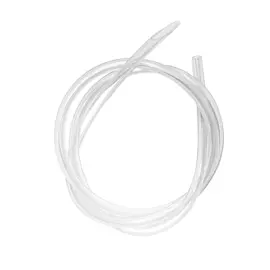
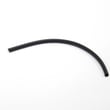
- Saw tune and fuel delivery: poor fuel flow can cause bogging under load (a cracked fuel line 0745416 is a common culprit)
Why it matters
Pushing a 16-inch saw into oversized wood increases the chance of binding, kickback, and overheating. Staying in the 10 to 14 inch range keeps cuts faster, safer, and easier on the clutch, bar, and chain.
For more safety and technique basics before felling larger material, use our guide: how to prevent chainsaw injuries.
Last updated: February 2026
What old chainsaws are worth money?
Older chainsaws are worth the most money when they are desirable to collectors and easy to verify as original, complete, and in good condition. Even if you are working with a Homelite Z3350-16, value still comes down to brand reputation, rarity, condition, and whether it runs and oils the bar properly.
What makes an old chainsaw valuable
Collectors typically pay more for saws that are complete, clean, and mechanically sound.
- Rare or short-production models (harder to find in any condition)
- “New old stock” or near-new condition (original packaging, minimal wear)
- Fully running saws with strong compression and stable idle
- Complete saws with correct covers, fasteners, and intact chain brake/hand guard
- Popular vintage brands and pro-grade lines (Homelite, Stihl, Husqvarna, etc.)
- Documented history (original receipt, manual, or known provenance)
Quick value tiers (typical)
These ranges are a practical way to think about pricing before you list or restore a saw.
| Condition | What it usually means | Typical value outcome |
|---|---|---|
| Parts-only | Missing parts, seized engine, heavy damage | Low; often sold for parts |
| Non-running but complete | Pulls over, looks intact, needs fuel/ignition work | Moderate if model is desirable |
| Running user-grade | Starts, idles, cuts, oils bar | Moderate to high |
| Collector-grade | Very clean, original, rare, or NOS | High; can be premium-priced |
How to check your saw’s “sellability” fast
These checks help you decide whether to sell as-is or invest in a tune-up.
- Confirm the exact model number and any serial tag markings
- Check compression feel (firm resistance when pulling the starter)
- Verify bar oiling (a dry bar lowers value quickly)
- Inspect fuel system for cracks or leaks; replace a brittle line with the correct fuel line 0745416
- Look for stripped or mismatched fasteners; correct hardware improves buyer confidence
- Evaluate safety features: chain brake, throttle lockout, and hand guard condition
Why it matters
Most “worth money” vintage chainsaws are the ones that a buyer can trust to be safe, complete, and either ready to run or straightforward to restore. Small fixes like addressing fuel delivery issues often move a saw from “parts-only” to “project” or “runner,” which raises value.
Last updated: February 2026
What is the most reliable gas chainsaw brand?
Husqvarna, Stihl, and Echo are widely regarded as the most reliable gas chainsaw brands because they consistently deliver strong power-to-weight, durable engine components, and long-term parts support. For a Homelite Z3350-16, reliability also depends on correct fuel mix, sharp chain, and keeping the fuel system sealed and clean.
What “reliable” means for a gas chainsaw
Reliability is mostly about starting easily, holding a steady idle, oiling the bar and chain correctly, and not developing fuel leaks or air leaks.
Key reliability factors we look for:
- Proven engine design and consistent carburetor performance
- Strong anti-vibration and solid handle mounting
- Easy access to routine service items (filtering, fuel lines, fasteners)
- Good parts availability for wear items (fuel system, ignition, clutch-side components)
- Stable tuning across temperature and altitude changes
Brand comparison (quick guide)
| Brand | Best fit | Typical strengths | Typical tradeoffs |
|---|---|---|---|
| Stihl | Frequent use, demanding cutting | Excellent durability, strong dealer-grade line | Often higher upfront cost |
| Husqvarna | Homeowner to ranch use | Great power-to-weight, broad model range | Some models are more “tune sensitive” |
| Echo | Value plus longevity | Strong reliability for the price, solid homeowner/pro options | Fewer high-end pro choices than Stihl |
How to make your Homelite Z3350-16 more reliable
Even a good saw becomes “unreliable” when it runs lean from an air leak or fuel restriction. These steps prevent the most common no-start and rough-running issues:
- Replace cracked or hardened fuel tubing; use the correct fuel line 0745416
- Keep the fuel clean and fresh; avoid old fuel sitting between seasons
- Check for loose fasteners that can cause air leaks or vibration issues
- Clean/inspect the fuel filter and tank vent if starting becomes inconsistent
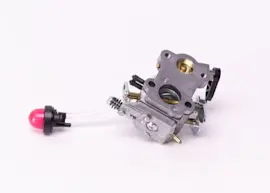
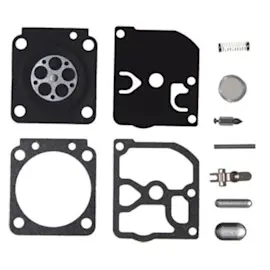
- If it surges, won’t idle, or only runs on choke, inspect the carburetor and consider the chainsaw carburetor assembly 06839
Why it matters
A “reliable brand” helps, but day-to-day reliability is usually decided by fuel delivery, carburetion, and basic maintenance. Fixing small fuel-system problems early prevents hard starting, lean running, and premature engine wear.
For step-by-step troubleshooting, use our tips for a hard to start chainsaw guide.
Last updated: February 2026
Is 40 1 or 50 1 better for chainsaws?
For your Homelite Z3350-16 chainsaw, the better mix is the ratio specified for the engine; in general, 50:1 is the standard for many modern 2-cycle saws with quality 2-cycle oil, while 40:1 adds more oil for extra lubrication but can increase smoke and carbon buildup. If you are troubleshooting a hard-start or rough-running saw, fix the fuel system issue first instead of changing ratios.
What the ratios mean (and what changes)
A lower number (40:1) means more oil in the gas.
- 40:1: more lubrication; more smoke; higher chance of carbon deposits and spark plug fouling
- 50:1: cleaner running; less exhaust smoke; commonly recommended for today’s oils and engines
- Using too much oil can make a saw run “loaded up” at idle and may reduce performance
- Using too little oil risks accelerated wear and scoring in the cylinder
Practical guidance for the Z3350-16
Because we do not have model-specific fuel-mix documentation for the Z3350-16 here, we treat this as a small-engine best practice: run fresh, properly measured fuel and a high-quality 2-cycle oil at the ratio intended for the saw.
If the saw is acting like it “needs” a different ratio, the cause is usually fuel delivery or air leaks.
- Replace cracked or soft fuel tubing (common on older saws) with the fuel line 0745416
- If it surges, won’t idle, or only runs on choke, service the carburetor; the chainsaw carburetor assembly 06839 is a common fix
- Check the fuel filter and air filter condition (restricted filters mimic a bad mix)
- Drain old fuel; ethanol-blended fuel that sits can cause hard starting and lean running
Quick comparison
| Mix ratio | Lubrication | Clean running | Best use case | |---|---|---| | 40:1 | Higher | Lower | Heavy load, hot conditions, extra margin (with correct tuning) | | 50:1 | Standard | Higher | Everyday cutting with modern 2-cycle oil |
Why it matters
Two-cycle chainsaw engines rely on the oil in the fuel for crankshaft and cylinder lubrication. The right ratio protects the cylinder assembly, keeps the spark plug cleaner, and helps the carburetor stay tuned consistently.
For more starting and fuel-system tips, use our tips for a hard to start chainsaw guide.
Last updated: February 2026
Can you still get parts for Homelite chainsaws?
Yes. We still offer replacement parts for Homelite chainsaws, including the Homelite Z3350-16 gas chainsaw, as long as the part is available for your exact model. The most reliable way to match fit is to shop by model number and compare the part name and part ID.
How to find the right part for your Homelite Z3350-16
Use your model number (Z3350-16) to narrow the parts list, then match what you see on the saw to the listing.
- Confirm the model tag reads Z3350-16 (not just “Z3350”)
- Identify the system you’re repairing: fuel, carburetion, clutch, or handle/guard
- Match the part name and part ID (not just a description)
- Replace wear items in pairs when it makes sense (for example, cracked fuel line plus a dirty filter)
- If the saw is leaking fuel, stop using it until the leak is fixed
Commonly needed parts we stock for this model
These are examples of parts currently listed for the Z3350-16 that customers often need for no-start, rough running, or fuel leak symptoms:
| Symptom | What to check first | Example part on this model |
|---|---|---|
| Gas smell or wet area near tank/carb | Cracked or loose fuel line | Fuel line 0745416 |
| Hard starting, surging, won’t idle | Carburetor condition and mounting screws | Chainsaw carburetor assembly 06839 |
| Runs rough, loses power | Air/fuel restriction | Filter 49422 |
Why it matters
Homelite chainsaws are sensitive to air leaks and fuel delivery issues. A small crack in a fuel line or a carburetor problem can cause hard starting, stalling, or unsafe operation, so using the correct Z3350-16 parts helps restore proper fuel flow and engine performance.
Helpful DIY guidance
For step-by-step troubleshooting and repair help, we use these guides often:
- Tips for a hard to start chainsaw
- How to replace chainsaw fuel lines
- How to replace a chainsaw carburetor
- Chainsaw leaking gas
Last updated: February 2026