Owner’s manual
 Error Codes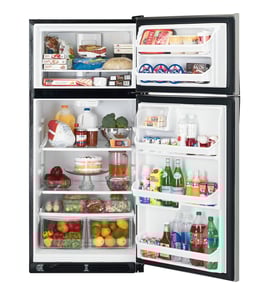


What are the advantages of a top mount fridge?
A top-mount refrigerator like the Hotpoint HPS15BTHMLWW puts the freezer on top and the fresh-food section below. This layout typically gives you strong value for the price, straightforward storage, and simpler access to frozen foods at about chest to eye level. See the HPS15BTHMLWW owner's manual for feature details and setup guidance.
Key advantages most owners notice
- Easy freezer access: Frozen items are higher up, so you bend less to reach them.
- Good usable refrigerator space: The fresh-food compartment often has wide, simple shelf layouts.
- Traditional, familiar layout: Many households prefer the classic top-freezer design.
- Usually lower purchase and repair costs: Fewer complex features than many bottom-freezer or French-door designs.
- Simple temperature control: Many top-mount models use a straightforward dial-style control.
Top-mount vs. bottom-freezer: quick comparison
| Feature | Top-mount (top freezer) | Bottom-freezer |
|---|---|---|
| Freezer access | Higher, easier reach | Lower, more bending |
| Fresh-food access | Lower, more bending | Higher, easier reach |
| Typical complexity | Simpler | Often more complex |
| Best for | Frozen-food heavy households | Fresh-food heavy households |
Setup tips that help you get the most from a top-mount
- Level the refrigerator so doors close easily; front should sit slightly higher than the back.
- Leave airflow clearance around the cabinet (sides, top, and back) to help cooling performance.
- Avoid overpacking shelves; good airflow helps maintain even temperatures.
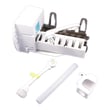
- If you add an ice maker later, follow the water line installation steps in the manual.
Why it matters
Choosing a top-mount refrigerator is often about practicality: you get a proven layout, efficient day-to-day use, and easier freezer access. Proper leveling and clearances also help reduce temperature swings and door-seal wear over time.
Last updated: January 2026
How tall is a 15 cubic foot refrigerator?
Most 15 cu. ft. top-freezer refrigerators are about 60 to 67 inches tall. For your Hotpoint HPS15BTHMLWW, the exact height depends on the cabinet design and whether the leveling legs are adjusted; confirm the published dimensions in the HPS15BTHMLWW owner's manual.
What to measure (so you get the right fit)
Use a tape measure and check these points:
- Overall height: floor to the top of the cabinet (and to the top hinge cover if it sits higher)
- Height with leveling legs: raising the front legs can add a small amount of height
- Door swing clearance: make sure the top door can open without hitting cabinets
- Ventilation clearance: allow space around the refrigerator for airflow
The installation instructions for this style of refrigerator call for typical clearances of 3/4 inch on each side, 1 inch on top, and 2 inches at the back.
Typical size range for a 15 cu. ft. top-freezer refrigerator
These are common ranges across many brands (including Hotpoint and GE-style top-freezer designs):
| Measurement | Typical range |
|---|---|
| Height | 60 to 67 in. |
| Width | 28 to 30 in. |
| Depth (cabinet) | 28 to 34 in. |
Why it matters
A refrigerator that is even 1 inch too tall can prevent proper installation under cabinets, and missing the recommended clearances can reduce cooling performance. Leveling also matters because the front should be raised slightly so the doors close easily.
Quick install tip for height and door closing
If the refrigerator rocks or the doors do not self-close smoothly:
- Turn the front leveling legs clockwise to raise the front
- Re-check height after leveling
- Confirm the refrigerator is stable and not rolling on the front rollers
Last updated: January 2026
What is the upper part of a fridge called?
On the Hotpoint HPS15BTHMLWW top-mount refrigerator, the upper section is the freezer compartment. It’s the colder area designed to keep foods frozen, and on some setups it can also support an automatic ice maker.
What you’ll find in the upper (freezer) compartment
Most top-mount freezers are built around cold-air circulation and storage features. Common items include:
- Freezer shelves or shelf supports for organizing frozen foods
- An ice tray area, or space for an optional ice maker
- A freezer door gasket that seals in cold air
- Air vents that move cold air between compartments
- A temperature control system that affects cooling in both sections
For feature locations and operating details specific to this model, use the HPS15BTHMLWW owner’s manual.
Freezer vs. fresh food compartment (quick comparison)
| Section | Main purpose | Typical temperature range |
|---|---|---|
| Freezer compartment (upper) | Long-term frozen storage, ice making | 0°F to 5°F |
| Fresh food compartment (lower) | Refrigerated foods and drinks | 34°F to 40°F |
Why it matters
Knowing the correct name helps when you’re ordering parts, troubleshooting cooling problems, or describing an issue like frost buildup, warm freezer temps, or a door that will not seal.
Related parts customers often ask about
If the “upper part” question is coming from a problem (no ice, frost, warm temps), these model-matched parts are commonly involved:
- G.e. refrigerator ice maker kit WR30X10093 (ice production issues)
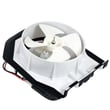
- Refrigerator evaporator fan motor WR60X31522 (poor airflow, warm freezer or fridge)
- Refrigerator freezer door gasket (white) WR14X29358 (air leaks, frost, temperature swings)
Last updated: January 2026
What is the difference between top mount and bottom mount refrigerators?
A top-mount refrigerator like the Hotpoint HPS15BTHMLWW has the freezer on top and the fresh-food section below; a bottom-mount flips that layout. The biggest day-to-day difference is ergonomics: bottom-mount puts refrigerated foods at eye level, while top-mount puts frozen foods at eye level.
Quick comparison
| Feature | Top mount (top-freezer) | Bottom mount (bottom-freezer) |
|---|---|---|
| Freezer location | Top | Bottom |
| Most-used items (fresh food) | Lower, you bend more | Higher, easier access |
| Freezer access | Easier, less bending | More bending (unless drawer style) |
| Typical cost and complexity | Often lower, simpler | Often higher, more features |
How to choose for your kitchen and habits
- Choose top mount if you use the freezer often, want a simpler layout, or prefer a typically lower purchase and repair complexity.
- Choose bottom mount if you cook with fresh ingredients daily and want the refrigerator shelves and crisper drawers closer to eye level.
- If you have limited space, compare door swing and clearance needs; the HPS15BTHMLWW manual lists typical installation clearances (sides, top, back) that help you plan placement.
What stays the same (either style)
Both styles rely on the same core cooling system and maintenance basics:
- Keep door gaskets sealing well to prevent warm air leaks.
- Maintain good airflow around the cabinet for proper cooling.
- Set temperatures correctly and allow time for changes to stabilize.
- Clean spills and manage odors to keep food fresh.
Why it matters
The freezer location changes how often you bend, what you see first when you open the doors, and how you organize groceries. Picking the layout that matches your routine usually improves food visibility, reduces door-open time, and helps the refrigerator hold steady temperatures.
For model-specific features and setup details (temperature control, shelves, drawers, and optional ice maker information), use the HPS15BTHMLWW owner's manual.
Last updated: January 2026