Error Codes


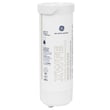


How to remove and replace GE RPWFE water filter?
To remove and replace the water filter on your GE GYE21JYMBFFS bottom-mount refrigerator, rotate the old filter to the right until it stops, then pull it straight out; install the new filter by pushing it in and rotating it back to lock, then flush the dispenser to clear air and carbon fines.
Step-by-step: remove and replace the filter
- Dispense a little water first to relieve pressure, then open the filter compartment.
- Grip the filter and swing/rotate it all the way to the right until it stops (this is the release position).
- Pull the filter straight out.
- Insert the new filter fully, then rotate it back to the locked position.
- Run water to purge air and rinse the new filter media.
Which filter to use for this model
For the GYE21JYMBFFS, match the replacement to the filter type your refrigerator accepts. If your unit uses the XWFE style, use the exact replacement listed for this model: GE refrigerator water filter XWFE.
| Item | What it does | When to use it |
|---|---|---|
| Water filter | Reduces taste/odor and sediment in dispenser water and ice | Normal operation with a filter installed |
| Filter bypass plug | Allows water flow without a filter installed | Temporary use for troubleshooting or when waiting on a filter |
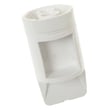
If you need to run the refrigerator without a filter temporarily, use the correct bypass for this model: refrigerator water filter bypass WR17X33825.
After installation: flush and reset
- Dispense and discard several minutes of water (or multiple large containers) until flow is steady.
- If the dispenser sputters, keep dispensing to purge trapped air.
- Reset the filter indicator on the control panel if your model has one.
Why it matters
A properly installed filter prevents leaks at the filter head, keeps dispenser flow strong, and helps protect the water system components from sediment buildup.
For more model-specific tips on filter styles and replacement basics, use our guide: how to replace the water filter in a GE refrigerator.
Last updated: February 2026
How to remove bottom grille on GE refrigerator?
On the GE GYE21JYMBFFS bottom-mount refrigerator, the bottom grille (base grille/toe grille) typically comes off by releasing its retaining clips and pulling the grille straight out from the cabinet. If your grille uses screws, remove the screws first, then pull the grille forward to disengage the tabs.
Quick steps to remove the bottom grille
- Unplug the refrigerator or switch off power at the breaker (safer around fans and wiring).
- Open both fresh food doors for better access.
- Look along the top edge of the grille for clip points; press the grille inward slightly, then pull outward.
- If you see screws (often Phillips), remove them first, then pull the grille straight toward you.
- Lift slightly to clear lower tabs (if present), then remove the grille.
- Set the grille aside flat to avoid cracking the plastic.
What to check if it will not come off
- Hidden screws: Some versions have screws at the ends or underneath.
- Stuck clips: Work from one corner to the other; do not yank from the center.
- Floor interference: If the grille is rubbing the floor, raise the front leveling legs slightly, then retry.
- Ice buildup or debris: Vacuum dust and pet hair along the bottom edge before pulling.
Reinstall tips (so it snaps in correctly)
| Grille style | What you do | What “correct” feels like |
|---|---|---|
| Clip-in grille | Align tabs, push evenly across | Firm snap, even gaps |
| Screw-retained grille | Start tabs, then install screws | No bowing, no rattles |
Why it matters
We remove the bottom grille to access the condenser area for cleaning, leveling adjustments, and inspection. A grille that is not seated correctly can rattle, restrict airflow, and contribute to warmer temperatures.
For related GE guidance, use our how to reset the door alarm on a GE refrigerator article if the alarm starts sounding while you work with the doors open.
Last updated: February 2026
What happens if I don't change the water filter in my refrigerator?
If you do not change the water filter in your GE GYE21JYMBFFS bottom-mount refrigerator, water flow usually slows down and the water and ice can start tasting or smelling off. Over time, an overloaded filter can stop reducing contaminants effectively, which also increases the chance of dispenser and ice maker performance problems.
What you will notice first
- Slower water dispensing (reduced flow)
- Smaller or hollow ice cubes
- Cloudy ice or odd-tasting water
- New odors in water (chlorine, musty, metallic)
- More frequent “replace filter” reminders (if your model tracks filter life)
Why it matters
A refrigerator water filter is designed to trap sediment and reduce taste and odor issues. Once it is saturated, it can restrict water supply to the dispenser and ice maker, and it may stop improving water quality. Keeping up with filter changes helps protect everyday drinking water quality and keeps the water system working normally.
What we recommend for this model
For the GYE21JYMBFFS, use the correct GE filter and replace it on schedule (many households do this about every 6 months, sooner with heavy use or poor water quality).
| Situation | What it can cause | What to do |
|---|---|---|
| Slow dispenser flow | Filter media clogged | Replace GE refrigerator water filter XWFE |
| Bad taste or odor | Filter no longer reducing taste/odor | Replace filter; flush several gallons |
| Cloudy ice | Restricted flow or old filter | Replace filter; dump first batches of ice |
| You are on well water or have sediment | Filter plugs faster | Replace more often; consider pre-filtration |
After you replace the filter
- Dispense and discard several gallons of water to flush carbon fines and air
- Dump the first 1 to 2 bins of ice after the change
- If you need help with the steps, follow how to replace the water filter in a GE refrigerator
If you are not ready to replace the filter
If you need water flow for the dispenser and ice maker but do not want filtration temporarily, a bypass plug can be used on compatible setups. For this model, check refrigerator water filter bypass WR17X33825.
Last updated: February 2026
What is the most common problem with a GE refrigerator?
The most common problem we see on GE refrigerators like model GYE21JYMBFFS is a cooling complaint (fresh food too warm, freezer too warm, or temperature swings). The most frequent causes are restricted airflow from dirty condenser coils, a failing evaporator fan system, or a defrost issue; ice maker and water filter complaints are also very common.
Most common symptoms and what they usually point to
- Fridge warm but freezer OK: airflow issue, evaporator fan problem, blocked vents
- Freezer warm and fridge warm: condenser coils clogged, condenser fan issue, sealed system/compressor issue
- Frost buildup on rear freezer panel: defrost problem (heater, defrost thermostat, sensor)
- Ice maker slow or not making ice: water supply, filter restriction, ice maker failure
- Runs a lot or noisy: dirty coils, fan motor/blade issues, door not sealing
Quick checks you can do first (no parts swapping)
- Set temps to typical targets: 37°F fresh food, 0°F freezer
- Make sure vents are not blocked by food packages
- Clean condenser coils and confirm the condenser area has good airflow
- Listen for the evaporator fan in the freezer (it should run when cooling)
- If you have a dispenser, replace the water filter on schedule and fully flush it
Parts that commonly relate to these problems on GYE21JYMBFFS
| Problem area | What fails most often | Example part for this model |
|---|---|---|
| Temperature sensing | Sensor reads wrong, causes warm temps or swings | GE profile refrigerator temperature sensor WR55X10025 |
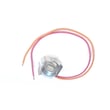
| Defrost control | Frost buildup reduces airflow | Refrigerator defrost bi-metal thermostat WR50X10069 |
| Evaporator airflow | Fan system issues reduce cooling to fresh food | Evaporator cover & fan WR49X40247 |
| Water and ice performance | Restricted flow, poor taste, slow ice | GE refrigerator water filter XWFE |
Why it matters
Cooling and airflow problems usually get worse over time; catching them early helps protect food, reduces compressor run time, and prevents frost buildup that can block vents and stop proper circulation.
Helpful GE troubleshooting resources
- GE refrigerator error codes
- How to fix your evaporator cooling fan
- How to replace the water filter in a GE refrigerator
Last updated: February 2026