Installation guide
 Owner’s manual
 Error Codes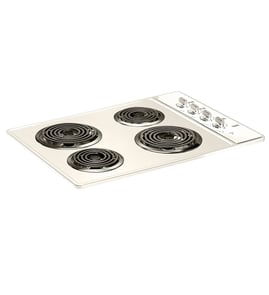



Who makes a 32 in electric cooktop?
A true “32-inch” electric cooktop is usually made by major cooking-appliance brands such as Frigidaire, GE, and Whirlpool, but many are marketed as “32-in” even when the actual width is slightly different. For Kenmore model 79042732403, the installation guide focuses on 30-inch and 36-inch ceramic cooktop sizing, not a 32-inch platform; use the cutout specs in the 79042732403 installation guide to match your countertop opening.
When retailers say “32-inch,” they often mean a common size that fits a typical cabinet/cutout range.
- Compare actual cooktop width (overall outside edge)
- Compare cutout width and cutout depth (this is what must match your countertop)
- Confirm voltage (most electric cooktops are 240/208V)
- Check minimum clearance to cabinets and combustibles
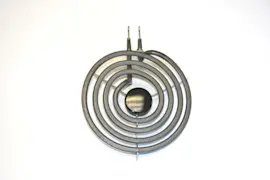
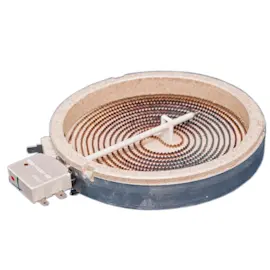
- Verify element type (radiant glass top vs coil)
Use this table to avoid a countertop mismatch.
| What you measure | Why it matters | Where to find it |
|---|---|---|
| Actual cooktop width | Determines if the unit physically fits the opening area | Spec sheet or 79042732403 installation guide |
| Cutout width/depth | Determines if the countertop opening is correct | Installation guide cutout diagram |
| Clearance to cabinets | Prevents heat damage and code issues | Installation guide clearance section |
Cooktops are installed by cutout dimensions, not the “common” size label. A cooktop sold as “32-in” can be slightly over or under 32 inches, and the cutout requirements are what decide whether it installs safely and cleanly.
Last updated: January 2026
What is the standard size of an electric cooktop?
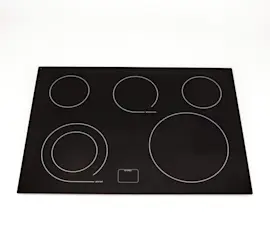
Most electric cooktops are built to fit 30-inch or 36-inch base cabinets. For Kenmore model 79042732403, the installation guide covers both 30-inch and 36-inch ceramic cooktop sizes, along with the required cutout dimensions and clearances; see the 79042732403 installation guide.
- 30-inch cooktops: most common in standard kitchens
- 36-inch cooktops: common in larger kitchens and remodels
- Other widths (less common): 15-inch to 24-inch compact units, and 45-inch to 48-inch specialty units
The cooktop’s outside size and the countertop cutout size are not the same. The cutout must match the cooktop’s mounting system and allow room for the junction box and wiring.
| What you’re measuring | What it means | Why it matters |
|---|---|---|
| Cooktop width (overall) | Outside edge-to-edge size | Confirms it fits the countertop space |
| Cutout width and depth | Hole in the countertop | Determines whether the cooktop can be installed |
| Clearance to cabinets | Space above and around | Helps prevent heat damage and improves safety |
Based on the installation instructions for this Kenmore cooktop series:
- Electric cooktops typically use a 240/208V, 60 Hz supply (single-phase)
- Plan for space below the cooktop to route the electrical cable and place the junction box
- Minimum overhead clearance is typically 30 inches to an unprotected cabinet (or 24 inches if properly protected)
Choosing “30-inch” or “36-inch” by name is only the first step. The countertop cutout size and required clearances determine whether the cooktop installs correctly and whether the wiring and junction box can be positioned safely.
Last updated: January 2026
How much is it to replace an electric stove top?
Replacing the stovetop surface on a Kenmore electric cooktop like model 79042732403 typically runs $300 to $1,100 total, depending on whether you’re replacing a radiant element, the glass main top, or the entire cooktop, and whether you hire a qualified installer (recommended for 240/208V wiring). See the 79042732403 installation guide for electrical and cutout requirements.
Here are common price ranges customers see for electric cooktop repairs and replacements:
- Radiant surface element replacement: $200 to $500 total (part + labor)
- Control switch replacement: $200 to $450 total (part + labor)
- Glass main top replacement: $900 to $1,400 total (part + labor)
- Full cooktop replacement: $500 to $1,800+ total (unit + installation)
If only one burner is failing, replacing a single component is usually far cheaper than replacing the whole cooktop.
| Repair scenario | Common part type | Example part for this model | What you’re paying for |
|---|---|---|---|
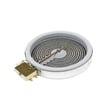
| One burner will not heat | Radiant element | Element 316555800 | Restores heat on that cooking zone |
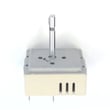
| Burner heats erratically | Surface element control switch | Switch 318293824 | Restores proper temperature control |
| Cracked or heavily scratched glass | Main top | (varies by configuration) | Restores safe, flat cooking surface |
- What failed: one element or switch vs. the entire glass top
- Cooktop type: coil is usually cheapest; smooth radiant and induction cost more
- Labor and access: built-in cooktops take longer to remove and reinstall
- Electrical work: these cooktops use 240/208V supply; correcting wiring issues adds cost
- Cutout fit: cabinet cutout and clearances must match installation specs
A cooktop that is hardwired and built into the counter can be expensive to “replace” when the real issue is a single radiant element or control switch. Pricing the repair first often saves hundreds compared to replacing the full unit.
Last updated: January 2026
Which brand of electric cooktop is best?
There is no single “best” brand for everyone; the best electric cooktop is the one that fits your cooking style, budget, and installation needs. For a Kenmore cooktop like model 79042732403, we recommend comparing features (radiant vs. induction), control layout, serviceability, and cutout requirements using the 79042732403 owner's manual and 79042732403 installation guide.
When customers ask “best brand,” we focus on what affects day-to-day performance and long-term ownership.
- Cooking technology: radiant electric (common, durable) vs. induction (fast, precise, requires magnetic cookware)
- Reliability and parts support: availability of elements, switches, knobs, and indicator lights
- Ease of service: access to the wiring harness, control switches, and burner box
- Fit and installation: cutout size, cabinet clearances, and electrical requirements
- Features you will actually use: dual elements, hot surface indicator light, control lock, bridge element (model dependent)
Different brands tend to excel in different priorities.
| What you want most | What to look for in a brand/model | Typical tradeoff |
|---|---|---|
| Best value | Simple radiant layout, common parts | Fewer premium features |
| Best performance | Induction, strong power management | Higher cost, cookware requirements |
| Best design options | Sleek glass top, premium controls | Repairs can cost more |
| Best serviceability | Widely available switches/elements | May be fewer “luxury” features |
Even a top-rated cooktop will disappoint if it does not fit your countertop cutout or electrical setup. Many electric cooktops use a 240/208V supply and require specific clearances to cabinets and overhead surfaces; confirming these details before you buy prevents expensive rework.
If your goal is “best” as in “most dependable,” we recommend prioritizing a model with readily available wear parts such as a surface element and control switch. For example, common repairs on electric cooktops involve parts like the indicator light 318044827 or a surface element.
Last updated: January 2026