Owner’s manual
 View engine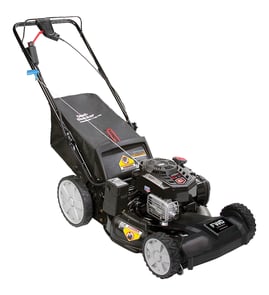



How to find Craftsman model number?
On Craftsman walk-behind mowers like model 917372750, the model number is typically printed on an ID sticker or plate on the mower deck. For this style, it’s commonly found on the back of the deck, between the lower handle mounts; confirm the exact location using the 917372750 owner’s manual.
Where to look on the mower
Check these common ID-tag locations first:
- Back of the deck, between the lower handle mounts (most common)
- Rear of the deck near the discharge opening or bagger mount
- Side of the deck near a wheel height adjuster
- Under the rear flap or near the grass bag door area
- On the handle support bracket (less common)
What you should write down
We recommend recording these details exactly as shown:
- Model number (example format: 917.XXXXXX or 917XXXXXX)
- Product number (if listed)
- Serial number
- Engine model/type/code (often on the engine shroud)
Why it matters
The model number is how we match the correct parts and diagrams for your mower. Even small differences can change fitment for items like a blade, grass bag, or discharge components.
Quick part examples that depend on the model
| Part type | Example for this model page | Why the model number matters |
|---|---|---|
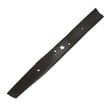
| Blade | 22-inch deck 3-in-1 blade 532421825 | Deck size and blade adapter patterns vary |
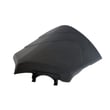
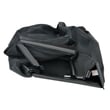
| Grass bag | Grass bag 580943401 | Frame style and door fit differ by deck design |
| Clipping deflector | Clipping deflector 532426129 | Mounting holes and spring style vary |
Last updated: January 2026
Should I use 87 or 91 gas for lawn mower?
For the Craftsman walk-behind mower model 917372750, we recommend using 87 octane (regular unleaded) in normal conditions; higher octane (like 91) does not add power or protection in a typical small mower engine and is usually unnecessary. For fuel and maintenance details, follow the 917372750 owner's manual.
What octane really changes (and what it does not)
Octane is mainly about resistance to knock in high-compression engines. Most walk-behind mower engines are designed to run correctly on regular fuel.
- 87 octane: best everyday choice for starting, performance, and cost
- 91 octane: not harmful by itself, but it typically provides no benefit in a mower designed for 87
- Freshness matters more than octane: old fuel is a top cause of hard starting and rough running
- Ethanol content matters: avoid stale E10 and never use E15/E85 unless your manual explicitly allows it
Best fuel practices for a gas walk-behind mower
Use these habits to reduce carburetor problems, surging, and no-start issues:
- Buy fuel in small quantities you can use within 30 days
- Store gas in an approved container, tightly sealed
- Add fuel stabilizer if the mower will sit more than a few weeks
- Keep the fuel cap area clean so debris does not fall into the tank
- If the mower ran fine and suddenly will not start, drain old fuel and refill with fresh 87
Quick comparison
| Fuel choice | When to use it | What to expect |
|---|---|---|
| 87 octane (regular) | Normal mowing, most conditions | Correct performance for this mower type |
| 91 octane (premium) | Only if your manual specifically calls for it | Usually no improvement in starting or power |
| Fresh 87 + stabilizer | Storage or infrequent use | Fewer fuel-system issues |
Why it matters
Using the right fuel helps prevent varnish and deposits that can restrict the carburetor jets, which is a common reason a mower will surge, stall, or refuse to start.
If you are also servicing the cutting system, match the correct blade to the deck; the husqvarna lawn mower 22-inch deck 3-in-1 blade 532421825 is a listed blade option for this model.
Last updated: January 2026
What is the average lifespan of 917372750?
A Craftsman walk-behind mower like model 917372750 typically lasts 8 to 12 years with normal residential use and routine maintenance. Lifespan is driven most by engine care, blade and deck condition, and how well the drive system is kept adjusted and clean; see the owner's manual for the maintenance schedule.
What affects lifespan the most
- Oil changes and air filtration: clean oil and a clean air filter prevent premature engine wear.
- Blade condition and balance: a bent or unbalanced blade increases vibration and stresses the crankshaft.
- Deck corrosion and buildup: wet grass and packed clippings accelerate rust and reduce airflow.
- Drive system wear (self-propelled models): cables, pulleys, and transmission wear faster on hills.
- Storage habits: dry storage and stabilized fuel reduce carburetor and fuel-system problems.
Maintenance targets that extend service life
Use these as practical intervals for most gas walk-behind mowers:
| Item | Typical interval | Why it matters |
|---|---|---|
| Engine oil | Every 25 to 50 hours or each season | Prevents internal wear |
| Blade inspection/sharpening | Every 10 to 25 hours | Cleaner cut, less vibration |
| Deck cleaning | After heavy mowing or wet grass | Prevents rust and clogging |
| Drive check (belt/cable/pulleys) | Each season | Maintains traction and speed |
Parts that commonly wear first on this model
Replacing wear items on time prevents secondary damage and keeps the mower cutting and bagging correctly.
- Husqvarna lawn mower 22-inch deck 3-in-1 blade 532421825 (cut quality and vibration)
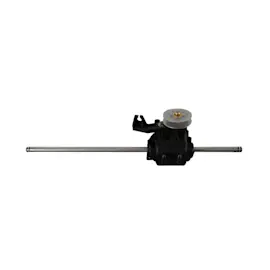
- Poulan lawn mower transmission assembly 581680801 (loss of self-propel drive)
- Lawn mower zone control cable 581952101 (engine control and safety shutoff)
- Lawn mower grass bag 580943401 (bagging performance)
Why it matters
A mower that is maintained to spec usually reaches its full service life; neglected blades, dirty decks, and old fuel shorten life quickly and can turn a small repair into a major engine or drive-system failure.
Last updated: March 2026