 Installation guide
 Owner’s manual



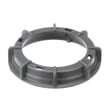
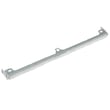
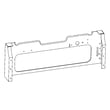
Can I replace dishwasher parts myself?
Yes, for a GE PDW1800N00WW dishwasher, we can replace many common parts ourselves if we shut off power and water first and follow the safety steps in the PDW1800N00WW owner’s manual. Simple items like filters, rack hardware, and dispenser caps are usually DIY-friendly.
What’s typically DIY-friendly
These repairs are usually straightforward with basic hand tools:
- Clean and reinstall the filter assembly (monthly cleaning helps performance)
- Replace rack rollers and end caps
- Replace a rinse-aid cap
- Clear a drain air gap (if your installation has one)
- Basic checks for “won’t run” (door fully closed, wall switch on, breaker reset)
Helpful parts for common DIY fixes on this model include:
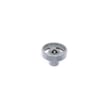
- Dishwasher dishrack track roller assembly WD12X10231
- Haier dishwasher fine filter WD12X10286
- Haier dishwasher rinse-aid dispenser cap WD12X10122
Repairs that usually need extra caution
The manual warns against repairing or replacing parts unless the procedure is specifically recommended; it also notes that turning the dishwasher off does not disconnect power. For these jobs, we treat them as advanced DIY or technician work:
- Electrical components and wiring in the junction box
- Water supply components (leak risk)
- Heating circuit components
| Repair type | Main risk | Best practice |
|---|---|---|
| Filter and rack hardware | Low | Power off at breaker; verify racks roll smoothly |
| Water inlet and hoses | Medium | Shut off water; check for leaks during test run |
| Electrical/heating parts | Higher | Disconnect power at breaker; use proper grounding |
Why it matters
Dishwashers combine electricity, hot water, and moving parts. Following the manual’s disconnect and grounding guidance prevents shock hazards and helps avoid leaks that can damage cabinets and flooring.
Quick safety checklist before you start
- Turn off power at the circuit breaker (not just the control panel)
- Shut off the water supply valve under the sink
- Protect the floor with towels or a shallow pan
- Take a photo of wire and hose routing before removal
- Run a short test cycle and check for leaks afterward
Last updated: February 2026
What is the average lifespan of a GE dishwasher?
A GE dishwasher typically lasts 10 to 12 years. For your GE PDW1800N00WW, consistent cleaning, correct loading, and keeping the wash system (filters, spray arms, and seals) clear of debris are the biggest factors that help it reach that average.
Typical lifespan range (what to expect)
Most residential dishwashers fall into a predictable range based on use and care.
| Usage and care level | Typical lifespan | What usually ends it |
|---|---|---|
| Heavy use, minimal maintenance | 8 to 10 years | Leaks, poor wash performance, electrical issues |
| Average use, basic maintenance | 10 to 12 years | Pump/motor wear, heater or control problems |
| Light use, strong maintenance | 12 to 15 years | Age-related wear, rack and door seal deterioration |
What extends the life of a GE dishwasher
We see the longest-lasting units follow a few simple habits:
- Clean the filter area regularly; remove food soil before it recirculates
- Use the right detergent amount; too much can cause buildup, too little can reduce cleaning
- Keep the spray arms turning freely; don’t block them with tall pans
- Run hot water at the sink before starting so the dishwasher fills with hotter water
- Check and refill rinse aid as needed for better drying and less spotting
For model-specific operating and care steps, follow the PDW1800N00WW owner’s manual.
Signs your dishwasher is nearing end-of-life
These symptoms often show up more frequently as the dishwasher ages:
- Dishes stay gritty or cloudy even after cleaning the filter and spray arms
- Water is left in the bottom or draining becomes inconsistent
- Drying performance drops (especially plastics)
- Door doesn’t close smoothly or you notice new leaks
- Cycles become noisy or stop mid-cycle
Why it matters
Knowing the expected lifespan helps you decide whether to repair or replace. If your PDW1800N00WW is near the 10 to 12 year mark, investing in maintenance and a targeted part replacement can restore performance and delay replacement.
Last updated: February 2026
What is the most common problem with GE dishwashers?
The most common GE dishwasher problem is a “won’t run” or “won’t start” condition caused by a power interruption, a door that is not fully latched, or a shut-off water valve. On the GE PDW1800N00WW, we start by checking power, the door latch, and the supply valve, then move to draining and cleaning items.
Quick checks we recommend first
- Confirm the dishwasher door is firmly closed and latched.
- Check the home breaker or fuse; reset/replace if needed.
- If your installation uses a wall switch for dishwasher power, make sure it is ON.
- Reboot the control by turning power OFF for 30 seconds, then back ON (breaker or wall switch).
- Verify the water shut-off valve under the sink is fully open.
Other very common GE dishwasher issues (and what they point to)
| Symptom | Most common cause | What to do next |
|---|---|---|
| Not draining | Food debris in filter area, drain path restriction | Clean the filter area and check the drain hose/air gap; use dishwasher not draining video. |
| Not cleaning well | Loading, detergent, or spray path issue | Improve loading, use fresh detergent, and keep the filter clean; see PDW1800N00WW owner’s manual. |
| Not drying | Rinse aid empty, heater or venting issue | Fill rinse aid and confirm heated dry settings; if still poor, test the heater circuit. |
| Leaking | Door seal area, over-sudsing, or fill issues | Inspect door area for debris, use correct detergent, and confirm proper fill. |
Parts that commonly relate to these symptoms
If troubleshooting points to a failed component, these are frequent suspects on dishwashers like the PDW1800N00WW:
- Water fill problems: dishwasher water inlet valve WD15X23665
- Poor drying or water not heating: dishwasher heating element WD05X23638
- Poor wash performance from debris recirculation: haier dishwasher fine filter WD12X10286
Why it matters
A dishwasher that will not run is often a simple latch or power issue, and a dishwasher that cleans poorly is often a filter, loading, or detergent issue. Fixing the basics first prevents unnecessary part replacement and helps avoid problems like flooding from a stuck-open fill valve.
Last updated: February 2026





