Owner’s manual
 Error Codes


What is the capacity of the wtw5600sq0?
The Whirlpool WTW5600SQ0 washer has a typical capacity of about 3.2 cu. ft. Capacity is the usable tub volume for clothing and water; it helps you choose load size and cycle settings that clean well without overloading.
How to confirm capacity for your exact washer
We recommend checking the model-specific specs section in the WTW5600SQ0 owner's manual. That is the best place to verify capacity and any load-size guidance for this Whirlpool top-load washer.
What 3.2 cu. ft. means for everyday loads
A 3.2 cu. ft. top-load washer is generally sized for everyday family laundry. For best results, loads should move freely during washing and not be packed down.
- Fill the basket loosely; do not compress items.
- Mix large and small items to help balance the load.
- Keep bulky items (blankets, jackets) to one or two at a time.
- If the washer shakes or thumps, pause and redistribute the load.
- Use the correct water level (if your model has a selector) for the load size.
Quick load-size guide (practical examples)
| Load type | What it usually looks like | Goal |
|---|---|---|
| Small | A few shirts and light items | Items tumble and circulate easily |
| Medium | A typical mixed hamper | No tight packing; even distribution |
| Large | Towels/jeans or bulky items | Still able to move freely; balanced |
Why it matters
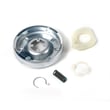
Matching load size to capacity helps prevent poor cleaning, out-of-balance spinning, and extra wear on drive components such as the clutch and motor coupling.
Last updated: January 2026
What is the life expectancy of a whirlpool washing machine?
A Whirlpool washing machine like model WTW5600SQ0 typically lasts 14 to 18 years in normal single-family household use when it’s operated and maintained as described in the WTW5600SQ0 owner's manual.
Typical lifespan for a Whirlpool washer
Most Whirlpool top-load washers in this class land in this range:
| Usage pattern | Typical life expectancy |
|---|---|
| Light use (few loads/week) | 16 to 18 years |
| Average use (several loads/week) | 14 to 16 years |
| Heavy use (daily loads) | 10 to 14 years |
What shortens washer life fastest
We see these issues reduce lifespan more than anything else:
- Overloading the basket so clothes cannot move freely
- Running consistently unbalanced loads (shaking and banging)
- Using too much detergent or frequent undiluted bleach contact with fabrics
- Poor water quality (sediment buildup) and clogged inlet screens
- Ignoring early symptoms like slow drain, burning smell, or intermittent spin
Maintenance habits that help WTW5600SQ0 reach the high end of the range
These steps are simple and make a measurable difference:
- Keep loads balanced; mix items and avoid washing single heavy pieces alone
- Use the correct amount of HE detergent (even in many non-HE cycles, less is usually better)
- Leave the lid open between loads to reduce moisture and odor
- Check fill hoses periodically and replace aging hoses before they burst
- Address small problems early (for example, a slow drain can point to a weakening pump)
Why it matters
Washer life expectancy is mostly about wear on the drive system, suspension, and drain components. Preventing overloads and imbalance reduces stress on parts that are expensive and labor-intensive to replace.
Last updated: January 2026
What is the most common problem with whirlpool washers?
The most common Whirlpool washer complaint is a no-spin or no-drain condition, often caused by an unbalanced load, a lid switch issue, a drain restriction, or excess suds. On the Whirlpool WTW5600SQ0, start with the quick checks in the WTW5600SQ0 owner's manual.
Most common symptoms we see (and what to check first)
- Washer won't drain or spin: confirm the lid is fully closed; the washer will not agitate or spin with the lid open.
- Noisy operation: level the washer and rebalance the load; normal gear engagement sounds can occur between drain and spin.
- Leaking: verify fill hoses are tight and the hose washers are seated correctly.
- Won't fill or fills slowly: check for kinked inlet hoses and clogged inlet valve screens.
- Stops or pauses mid-cycle: some cycles pause for about 2 minutes; let the cycle continue.
Quick diagnostic checklist (WTW5600SQ0)
- Lid closed test: close the lid firmly; if the washer still will not spin, inspect the lid switch circuit.
- Drain height and clogs: make sure the drain hose is not clogged and the end of the hose is not higher than 96 in. above the floor.
- Suds check: reduce detergent if you see heavy suds, especially with soft water.
- Water supply: confirm both hot and cold faucets are on; clean inlet screens if flow is weak.
- Leveling and load size: level the cabinet and avoid overloading.
Parts that commonly solve “won’t spin” or “won’t drain”
| Symptom | Common cause | Part to consider |
|---|---|---|
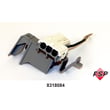
| Won’t spin with lid closed | Lid switch not sensing closed lid | Washer lid switch assembly WP8318084 |
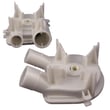
| Won’t drain, hums, or leaves water | Pump jam or weak pump | Washer drain pump WP3363394 |
| Agitates poorly, top agitator slips | Worn agitator dogs | Agitator dog 80040 |
Why it matters
A washer that will not drain or spin can leave clothes soaking wet and can strain the drive system. Fixing the root cause early (lid switch, drain path, or suds) helps prevent bigger repairs like clutch or gearcase wear.
Last updated: January 2026