 Installation guide
 Owner’s manual


Where can I find my Frigidaire dryer model number?
On your Frigidaire dryer model FFQE5000QW1, the model number is printed on the serial plate located inside the door opening. Open the dryer door and look around the door frame area for the rating label with the model and serial numbers (use the FFQE5000QW1 owner's manual as a visual reference).
Quick steps to locate the label
- Open the dryer door fully.
- Look along the inside edge of the door opening (door frame area).
- Find the serial plate or rating label.
- Record the model number and serial number exactly as shown.
- Keep the numbers with your purchase records for parts lookup and service.
What the label typically includes
| Label item | What it’s used for |
|---|---|
| Model number (FFQE5000QW1) | Matching the correct parts and diagrams |
| Serial number | Identifying production details for service |
| Electrical or gas info | Confirming power or fuel requirements |
Why it matters
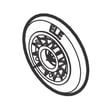
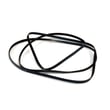
We use the exact model number to match the right Frigidaire dryer parts (for example, a door switch, drum belt, or thermostat). Even small model-number differences can change which parts fit.
Last updated: February 2026
What does code e64 mean on a Frigidaire dryer?
On the Frigidaire dryer model FFQE5000QW1, error code E64 points to a heating circuit problem, most commonly a failed heating element or an open in the heater wiring. Start with safe power-off checks, then test the heater circuit components per the FFQE5000QW1 owner's manual.
What to check first (safe, high-value steps)
- Unplug the dryer (or switch off the breaker) before removing any panels.
- Confirm the dryer is on a proper 240V supply (electric dryers can run but not heat on a partial power leg).
- Clean lint buildup and confirm strong airflow; restricted venting can overheat the heater circuit.
- Inspect heater wiring for burn marks, loose terminals, or broken connectors.
- If the dryer overheated, check safety devices such as the high-limit thermostat.
Parts commonly involved with E64
E64 is usually tied to the heater circuit; these parts are frequent suspects on dryers like FFQE5000QW1:
| Symptom you notice | Most likely area | What it usually means |
|---|---|---|
| Runs but no heat | Heating element circuit | Element open, wiring open, or power supply issue |
| Heats briefly then stops | Overheat protection | High-limit thermostat opened due to overheating or airflow restriction |
| Intermittent heat | Connections/sensors | Loose heater terminals, temperature sensing issue |
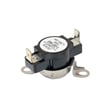
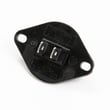
If you’re diagnosing an overheat or heater shutdown condition, the dryer high-limit thermostat 3204267 is one of the heater-safety parts that can be involved.
Why it matters
When the heater circuit is compromised, the dryer can tumble normally but fail to dry, or it can overheat and shut down heat for safety. Fixing airflow issues (lint screen, vent duct, vent hood) prevents repeat failures and improves drying time.
Quick airflow reminders (installation-related)
From a safety and performance standpoint, we recommend:
- Use 4-inch rigid or semi-rigid ducting with minimal turns
- Avoid foil or plastic flexible venting
- Make sure the vent hood exhausts outdoors and stays clear of lint
Last updated: February 2026
Is Frigidaire a good brand for dryers?
Frigidaire is a solid, dependable dryer brand for most homes; we typically see good day-to-day drying performance, straightforward controls, and widely available replacement parts. For your Frigidaire FFQE5000QW1 dryer, following the care and venting guidance in the FFQE5000QW1 owner's manual helps keep performance consistent.
What “good” looks like in real use
A dryer brand is “good” when it dries evenly, runs safely, and stays serviceable over time.
- Consistent heat and airflow for normal loads
- Reasonable noise and vibration when level
- Common wear parts are replaceable (belt, rollers, thermostats)
- Clear maintenance routine (lint screen, venting)
- Practical features that reduce overdrying (timed or auto/sensor cycles)
What matters most for drying performance (brand aside)
Even the best dryer struggles if airflow is restricted. We recommend these basics:
- Clean the lint screen before every load
- Use rigid or semi-rigid metal venting (avoid flexible plastic or foil)
- Keep the vent run short with minimal elbows
- Do not overload; leave room for tumbling
- If the drum turns but clothes stay damp, check airflow first, then heat
Common “wear items” that affect reliability
These parts are normal maintenance items on many dryers, including Frigidaire models:
| Symptom | Likely wear area | Example part for FFQE5000QW1 |
|---|---|---|
| Drum not turning or squealing | Belt/rollers | White-westinghouse dryer drum belt 134719300, dryer drum support roller 5304523152 |
| Overheating or shutting down | Temperature safety parts | Kelvinator dryer high-limit thermostat 3204267 |
| Poor temperature control | Sensor/thermistor | Dryer thermistor 134587700 |
Why it matters
A “good” dryer is as much about installation and upkeep as the logo on the front. Proper venting and routine lint removal reduce dry times, lower energy use, and help prevent overheating issues.
Last updated: February 2026
How much does it cost to replace a heating element in a Frigidaire dryer?
For a Frigidaire FFQE5000QW1 dryer, replacing a heating element typically costs $200 to $450 total (part plus labor). If you hire a technician, labor is usually the bigger share; if you DIY, your cost is mainly the heating element assembly.
Typical cost breakdown
Costs vary by your location, whether the dryer is electric or gas, and whether other heat-related parts are replaced at the same time.
- Heating element assembly (electric dryers): commonly $80 to $250
- Service call and labor: commonly $120 to $250
- Extra parts sometimes needed: $15 to $120 (thermal cut-off, high-limit thermostat, wiring repair)
- DIY tools/supplies: $0 to $30 (nut driver, vacuum, gloves)
| Scenario | What you pay for | Typical total |
|---|---|---|
| DIY replacement | Part only | $80 to $250 |
| Pro repair (straightforward) | Part + labor | $200 to $450 |
| Pro repair (heat issue plus airflow problem) | Part + labor + vent cleaning/extra parts | $300 to $600 |
Before you replace the element (saves money)
A “no heat” complaint is often caused by power supply or airflow issues, not the element itself.
- Confirm the dryer has full power; many electric dryers need two house fuses/breakers for heat
- Clean the lint screen and check for waxy buildup that restricts airflow
- Make sure the exhaust duct is not crushed, kinked, or packed with lint
- If the dryer overheated, a safety device can trip and must be corrected before parts are replaced
Parts that commonly get replaced with heat problems
If your FFQE5000QW1 is overheating or cycling heat incorrectly, these parts are often involved:
Why it matters
A failed heating element is often a symptom of restricted airflow. Fixing the venting and lint buildup helps the new element last longer, improves drying time, and reduces overheating.
For model-specific safety steps (disconnecting power before service, airflow and maintenance guidance), follow the FFQE5000QW1 owner's manual and the FFQE5000QW1 installation guide.
Last updated: February 2026





