Owner’s manual
 Error Codes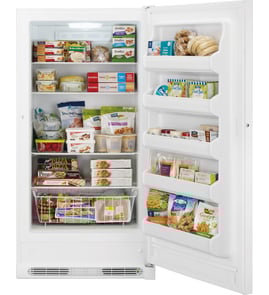


What is the average lifespan of a Kenmore Elite refrigerator?
Most Kenmore Elite refrigerators last 10 to 15 years with normal household use and basic maintenance. For Kenmore Elite model 25328092801 (an upright freezer), the same 10 to 15 year lifespan range is a solid expectation for the refrigeration system when the unit is installed and maintained per the 25328092801 use and care guide.
What affects lifespan the most
A refrigerator or freezer typically fails early from heat, airflow restrictions, or electrical stress. These factors have the biggest impact:
- Condenser airflow and cleanliness (dust and pet hair make the compressor run hotter)
- Door seal condition (warm air leaks cause longer run times and frost)
- Room temperature and ventilation clearance around the cabinet
- Power quality (frequent outages or low voltage can stress the compressor and controls)
- Usage habits (frequent door openings, overloading shelves, blocking vents)
Quick maintenance checklist (high impact, low effort)
We recommend these routine steps to help your Kenmore Elite unit reach the full lifespan range:
- Keep the freezer level so the door closes consistently
- Confirm the door closes tightly; replace a worn gasket if you feel air leaks
- Avoid using extension cords; plug into a grounded outlet (per the manual)
- Defrost and clean safely; unplug first before defrosting (per the manual)
- Keep stored items from blocking interior airflow paths
Common “wear” items vs. major system parts
| Category | Examples | Typical impact on lifespan |
|---|---|---|
| Wear and sealing | Door gasket, handle hardware | Prevents air leaks and excess run time |
| Defrost system | Defrost heater, defrost thermostat | Prevents heavy frost that reduces cooling |
| Major cooling system | Compressor, evaporator, condenser coil | Drives the actual cooling performance |
Why it matters
A unit that runs longer to maintain temperature uses more energy and puts more hours on the compressor. Fixing airflow issues and door sealing problems early often prevents the cascade that leads to sealed-system strain.
Last updated: February 2026
What is the cubic foot of my Kenmore refrigerator model 25328092801?
Kenmore Elite model 25328092801 is an upright freezer, not a refrigerator; its exact cubic-foot capacity is listed on the model’s specification information in the 25328092801 use and care guide. Model-number digit rules are not a reliable way to determine capacity for this freezer.
How to find the capacity for model 25328092801
We recommend using the documentation for your exact model because it ties capacity to the correct cabinet size and configuration.
- Check the specifications/features section in the guide
- Look for wording such as “capacity” or “total capacity (cu. ft.)”
- If you have the rating label info handy, record the model and serial for reference
- Use the freezer only as instructed in the guide (helps avoid performance issues that can look like “low capacity”)
Why model-number “digit decoding” is not dependable
Some online charts try to infer cubic feet from digits in the model number. For Kenmore 253-prefix products, those patterns vary by product line and year, and they do not consistently map to a single capacity.
| Method | What you get | Accuracy for 25328092801 |
|---|---|---|
| Use & care guide specs | Model-specific capacity | High |
| Model-number digit decoding | A guess based on patterns | Low |
| Measuring interior space | Rough usable space estimate | Medium |
Why it matters
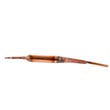
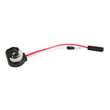
Capacity affects how you load the freezer, how quickly it recovers temperature after door openings, and whether symptoms like warm spots or frost buildup are actually airflow or defrost issues instead of “small capacity.” If you are troubleshooting cooling or frost, common related parts include the Defrost heater 216730700 and Chest freezer defrost thermostat 297216600.
Last updated: February 2026
Where are the condenser coils on a Kenmore upright freezer?
On the Kenmore Elite upright freezer model 25328092801, the condenser coils are typically located in the machine compartment where the unit dumps heat, not in the food storage area. On most upright freezers, that means behind the lower front toe grille or on the back near the bottom; confirm the exact access points in the 25328092801 use and care guide.
Quick ways to find them
- Look for a warm area while the compressor is running (that is where heat is being rejected).
- Check behind the lower front grille (toe kick area) for a coil and a condenser fan.
- Check the rear lower panel for a coil or tubing grid.
- Follow the compressor; the condenser tubing is connected to it.
- If you see a flat “wire grid” on the back, that is the condenser on some designs.
What you should do once you locate the coils
Keeping condenser coils clean helps the freezer cool efficiently and reduces run time.
- Unplug the freezer.
- Vacuum loose dust with a brush attachment.
- Use a coil brush to loosen packed lint and pet hair.
- Clean the floor area under and behind the cabinet.
- Restore power and verify the freezer returns to normal temperature.
Coil location and what it usually looks like
| Common location | What you will see | Why it matters |
|---|---|---|
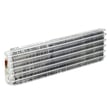
| Behind lower front grille | Small radiator-like coil, sometimes a fan | Most common service access point |
| Rear lower area | Coil and tubing near compressor | Easy to clog with dust |
| Back “wire grid” | Exposed black grid | Radiates heat into room air |
Why it matters
The condenser is where your freezer releases heat removed from inside the cabinet. If airflow is blocked by dust, the compressor can run longer, temperatures can drift warmer, and frost issues can become more noticeable.
Last updated: February 2026
Where to find the model number on a Kenmore upright freezer?
On Kenmore upright freezer model 25328092801, the model and serial number plate is typically on the upper left wall inside the freezer compartment. We recommend writing both numbers down before ordering parts or scheduling service; they identify the exact version of your freezer. See the 25328092801 owner's manual.
Most common label locations to check
Look for a paper or metal plate, usually near the door opening:
- Upper left interior wall (most common for upright models)
- Side wall inside the cabinet, near the front
- Ceiling area inside the freezer (some upright designs)
- Behind the lower kick plate or base grille
- Back exterior panel (less common, but worth checking)
Quick steps to find it fast
- Open the freezer door and use a flashlight.
- Check the upper left interior wall first.
- If you do not see it, scan the side walls and the ceiling area.
- Remove the lower kick plate (if equipped) and look for a label behind it.
- Record both the model number and serial number exactly as shown.
What the plate looks like (and what to copy)
| Item on the label | Why we need it | Example format |
|---|---|---|
| Model number | Matches parts to your exact freezer design | 25328092801 |
| Serial number | Identifies production run and revisions | Letters and numbers |
| Purchase date (optional) | Helpful for maintenance records | Month/Year |
Why it matters
Kenmore upright freezers can have multiple versions that look similar. Using the exact model number helps us match the correct parts (like a door gasket, control board, or defrost components) and avoid returns due to fit or wiring differences.
Last updated: February 2026
Why is my Kenmore Elite freezer not freezing?
If your Kenmore Elite 25328092801 upright freezer is running but not freezing, the most common causes are incorrect temperature control settings, poor airflow from frequent door openings or a door that is not sealing, or a cooling-system problem such as a failed compressor or control issue. Use the 25328092801 owner's manual troubleshooting steps first.
Quick checks we recommend first
- Confirm the temperature control is not set to OFF (OFF stops the compressor but does not fully disconnect power).
- Make sure the freezer is fully plugged in and the outlet and breaker are OK.
- Limit door openings for several hours; warm food loads can temporarily raise temps.
- Check that the cabinet is level so the door closes and seals correctly.
- Inspect the door gasket for dirt, gaps, cracks, or looseness.
- Allow space around the cabinet for air circulation, especially in warm rooms.
Door seal and airflow: the most common “not freezing” drivers
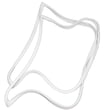
A slightly open door or a leaking gasket lets warm, moist air in; that forces long run times and can still leave food soft. If the gasket is torn or won’t seal after cleaning and warming it into shape, replacement is the fix. For this model, the correct gasket is the freezer door gasket 5304507199.
Why leveling matters
When the freezer is not level, the door can misalign and not close or seal properly, which leads to cooling and frost problems.
When it points to a failed part
If the freezer has power, the control is set correctly, the door seals, and temperatures still will not pull down, we focus on the cooling and defrost systems.
| Symptom | What it usually indicates | Common next step |
|---|---|---|
| Runs constantly, still warm | Air leak, dirty condenser area, weak sealed system | Check gasket and airflow; then test components |
| Frost buildup, weak cooling | Defrost system issue | Test defrost thermostat and heater |
| No fan sound inside, warm temps | Evaporator fan problem | Check fan motor and blade |
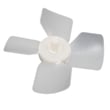
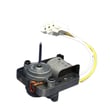
Model-matched parts that often apply in these cases include the freezer evaporator fan motor 297309000, blade 5308000010, chest freezer defrost thermostat 297216600, and defrost heater 216730700.
Why it matters
A freezer that cannot maintain temperature can lead to food spoilage and can overwork the compressor, increasing energy use and the chance of a bigger repair.
Last updated: February 2026