Owner’s manual
 Error Codes




What is the life expectancy of an electric water heater?
Most tank-style electric water heaters, including the American E2F30HD045V, typically last 10 to 15 years. Regular maintenance (especially inspecting the anode rod and flushing sediment) helps the tank resist corrosion and can extend service life.
Here are realistic expectations for electric water heaters:
| Water heater type | Typical life expectancy | What usually ends its life |
|---|---|---|
| Electric tank water heater | 10 to 15 years | Tank corrosion and leaks |
| Electric tank water heater (hard water, heavy use) | 8 to 12 years | Accelerated sediment buildup and corrosion |
| Electric tank water heater (well maintained) | 12 to 15 years | Normal wear, eventual tank failure |
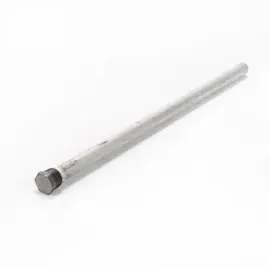
Your owner's manual explains key care items. For this model, the anode rod is the biggest “life extender” because it protects the glass-lined tank from corrosion.
- Inspect the anode rod about every 3 years; replace it if it is more than 50% depleted.
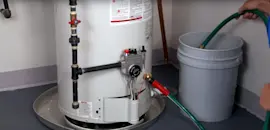
- Flush the tank periodically to reduce sediment that can overheat elements and reduce efficiency.
- Keep thermostat settings reasonable (many homes use about 120°F) to reduce stress and scald risk.
- Watch for early warning signs: rusty water, popping/rumbling sounds, or moisture around the base.
- Replace failed heating controls promptly to avoid overheating or inconsistent temperatures.
Replacing wear parts can restore performance even when the tank is still in good shape.
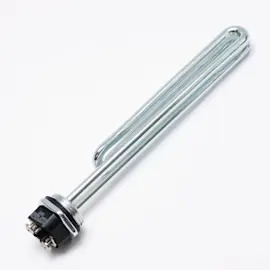
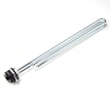
- Heating element: element 100108290
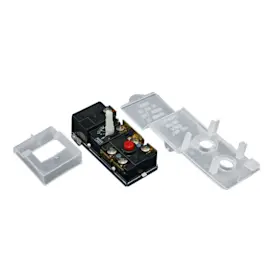
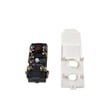
- Upper thermostat: top t-stat 100108683
- Lower thermostat: lwr t-stat 100108421
Once the anode rod is depleted, the tank begins to corrode and eventually develops a leak. Staying ahead of anode rod wear and sediment buildup is the most practical way to get the full expected lifespan from an electric tank water heater.
Last updated: February 2026
What is the cost to replace a 50 gallon electric water heater?
Replacing a 50-gallon electric water heater typically runs about $1,000 to $3,000 total (unit plus installation). Your final price depends on the heater type (standard electric vs. hybrid/heat pump), local labor rates, and whether the job is a straightforward swap or requires plumbing and electrical updates; use the owner's manual to confirm requirements before scheduling work.
- Standard electric tank (50-gallon): commonly $500 to $1,000+ for the unit
- Hybrid/heat pump (50-gallon): commonly $2,000 to $3,500 for the unit
- Labor and installation: commonly $500 to $1,500+
- Extra materials: shutoff valve, fittings, expansion tank, drain pan, electrical whip (varies)
- Permits and disposal: varies by area and installer
| Cost item | Typical range | What drives it |
|---|---|---|
| Water heater unit | $500 to $3,500 | Standard vs. hybrid, efficiency, warranty tier |
| Labor/installation | $500 to $1,500+ | Access, code updates, complexity |
| Materials/incidentals | $50 to $400+ | Valves, piping, electrical parts |
| Permits/disposal | Varies | Local requirements |
Your American E2F30HD045V is a 30-gallon electric model, so a like-for-like replacement is usually less than a 50-gallon job. If you are upsizing to 50 gallons, plan for possible changes to:
- Physical space (height/diameter clearance)
- Electrical requirements (breaker size, wire gauge, element wattage)
- Plumbing connections (pipe alignment, shutoff placement)
- Drain pan and discharge routing
A replacement quote is mostly about installation complexity and code compliance, not just the tank price. Confirming electrical and piping requirements up front helps avoid change orders and repeat trips.
- Verify tank size and voltage requirements in the owner's manual
- Take photos of the existing electrical connection and plumbing hookups
- Ask whether the quote includes permits, haul-away, and new fittings
- If you have temperature issues rather than a failed tank, consider repair parts first (for example, a failed heating element or thermostat)
Last updated: February 2026
What is usually the most common water heater problem?
The most common problem we see with the American E2F30HD045V electric water heater is sediment buildup in the tank, which causes popping or rumbling noises, reduced heating efficiency, and can shorten tank life. Another very common issue is loss of hot water from a failed heating element or thermostat (upper or lower).
Sediment and normal corrosion are expected over time in any tank-style water heater. Your owner's manual also notes that sediment buildup can create noise and may cause premature tank failure, and that the tank will eventually leak after an extended period of time.
- Rumbling, popping, or crackling: sediment on the tank bottom heating up
- Not enough hot water: lower heating element or lower thermostat issue
- No hot water: upper thermostat tripped or upper element issue
- Water temperature swings: thermostat calibration, “stacking” from short hot-water draws
- Water around the heater: leaking connection, drain valve seepage, or tank leak
If troubleshooting points to a failed control or heater, these model-matched parts are common replacements:
| Symptom | Common part to check | Model-matched option |
|---|---|---|
| No hot water | Upper thermostat (often includes high-limit reset) | Top t-stat 100108683 |
| Not enough hot water | Lower thermostat | Lwr t-stat 100108421 |
| Slow recovery or lukewarm water | Heating element | Element 100108290 |
| Water won’t drain or valve leaks | Drain valve | Drain valve 100109106 |
Sediment buildup makes the elements work harder, increases energy use, and can lead to overheating and early tank failure. Catching a weak element, a drifting thermostat setting, or a leaking drain valve early helps prevent bigger repairs and water damage.
- Flush the tank periodically to reduce sediment
- Keep thermostat settings reasonable (many homes use about 120°F)
- If you hear new rumbling noises, flush sooner rather than later
- Inspect for small leaks at fittings and the drain valve
- Use a drain pan and proper drainage where required for your installation
For display or diagnostic codes on American electric models, use American electric water heater error codes.
Last updated: February 2026
How to tell if an electric hot water heater is bad?
If your American E2F30HD045V electric water heater is “bad,” you typically see loss of hot water, inconsistent temperatures, leaks, unusual noises, or repeated electrical resets. Many “bad heater” symptoms are actually failed service parts such as a heating element or thermostat, which you can confirm with basic troubleshooting in the owner's manual.
- No hot water or hot water runs out quickly
- Water temperature swings from hot to lukewarm
- Breaker trips or the high-temperature limit needs frequent resetting
- Rumbling, popping, or hissing (often sediment-related)
- Rusty or discolored hot water
- Water pooling around the tank or fittings
- Confirm power: Check the breaker and that the unit has proper power supply.
- Check for leaks: Look at the drain valve, element areas, and plumbing connections.
- Listen for sediment noise: Rumbling often points to scale buildup that slows recovery.
- Use the troubleshooting chart: The manual lists common causes like no power, an open high-limit, or a defective upper thermostat.
| Symptom | Most likely cause | Typical fix |
|---|---|---|
| No hot water | No power, high-limit open, upper thermostat failed | Reset/diagnose wiring; replace thermostat if needed |
| Not enough hot water | Lower element or thermostat issue; sediment | Replace element/thermostat; flush tank |
| Leaking from tank body | Tank failure | Replace water heater |
| Leaking at drain area | Worn drain valve | Replace drain valve 100109106 |
If testing points to a failed component, these model-matched parts are common fixes:
- Element 100108290 (heating problems, slow recovery)
- Top t-stat 100108683 (temperature control, no hot water)
- Lwr t-stat 100108421 (insufficient hot water, temperature swings)
Misdiagnosing a “bad” water heater can lead to replacing the whole unit when a thermostat, heating element, or drain valve would restore normal hot water. The manual also stresses key safety steps like disconnecting power before service and keeping the tank filled before energizing elements.
Last updated: February 2026
Why do plumbers not recommend tankless water heaters?
Plumbers often steer homeowners away from tankless water heaters because the install is usually more complex and expensive, performance can disappoint when multiple fixtures run at once, and hard water can cause scale buildup that increases maintenance. For many homes, a conventional tank unit like the American E2F30HD045V is simpler to service and more predictable day to day.
- Higher install complexity: gas line sizing, venting, condensate handling (for many gas models), and electrical requirements can drive up labor.
- Flow-rate limits: one unit may struggle to supply simultaneous showers, laundry, and dishwasher without temperature swings.
- Hard-water scaling: mineral buildup can reduce heat transfer and trigger errors unless the unit is flushed regularly.
- More specialized troubleshooting: sensors, control boards, and error codes can require brand-specific diagnostics.
- Customer comfort complaints: “cold-water sandwich” and longer wait for hot water at distant fixtures.
A tank-style electric water heater is typically easier to keep running with straightforward service items. On the E2F30HD045V, common repairs are usually limited to components like:
If you are comparing options, our owner's manual also covers key installation and safety basics for a tank unit, including indoor vertical installation, accessible controls, and recommended piping practices.
| Topic | Tank water heater (like E2F30HD045V) | Tankless water heater |
|---|---|---|
| Upfront install cost | Usually lower | Often higher |
| Hot water delivery | Stored hot water, steady | On-demand, can vary with flow |
| Maintenance | Periodic draining, element/thermostat service | Regular descaling, more electronics |
| Best fit | Most average households | Homes sized correctly for demand and water quality |
Hot water problems are usually “no hot water,” “not enough hot water,” or “temperature swings.” Plumbers recommend what reduces repeat callbacks: stable performance, readily available parts, and simpler diagnostics.
Last updated: February 2026