


Are KitchenAid appliances considered high-end?
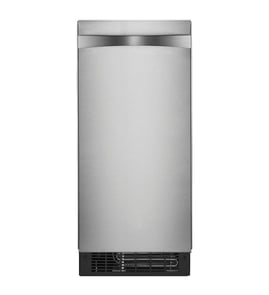
Yes. KitchenAid is widely considered a premium, upper-mid-range brand; it typically sits above entry-level brands in materials, fit and finish, and feature set. For a KitchenAid freestanding ice maker like model KUIX535HPS01, that usually translates to stronger performance-focused design and better long-term serviceability.
KitchenAid is best described as premium rather than true luxury. In practical terms, you usually get:
- More robust components and tighter tolerances than budget appliances
- Pro-style design cues and upgraded controls
- Better parts availability for repairs over time
- Higher purchase price than basic models, but below luxury-tier pricing
Freestanding ice makers are more complex than many people expect (water system, refrigeration system, controls). KitchenAid models like KUIX535HPS01 are commonly chosen when you want consistent ice production and a built-in look without stepping into luxury-only brands.
Common “premium” service parts you may see on this model include:
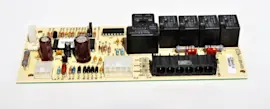
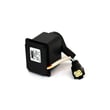
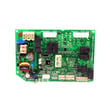
- Control-elek W11034363 (electronic control)
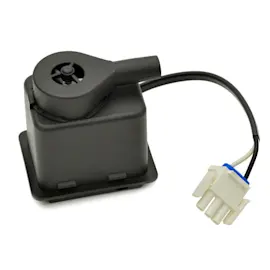
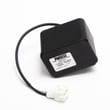
- Pump-recircu W11542867 (recirculation pump)
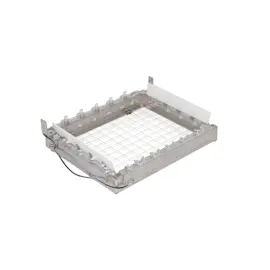
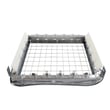
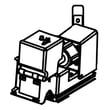
- Grid-assy, 2 W10919199 (cutter grid)
| Tier | Typical focus | What you can expect |
|---|---|---|
| Upper-mid-range | Basic function, lower cost | Fewer features, lighter-duty components |
| Premium (KitchenAid) | Performance + design | More features, better fit/finish, repairable systems |
| Luxury | Brand prestige + top specs | Highest cost, specialized features, often built-in-only lines |
If you treat KitchenAid as premium, you make better decisions about maintenance and repairs. Replacing a key component (like a control or pump) can be a cost-effective way to extend the life of a higher-quality ice maker instead of replacing the entire unit.
Last updated: February 2026
Can I leave my countertop ice maker on all the time?
Yes. For a KitchenAid freestanding ice maker like model KUIX535HPS01, it’s normal to leave the unit powered on so it can cycle automatically and maintain ice production; for long trips or seasonal shutdown, we recommend turning it off, draining it, and cleaning it to prevent odors and leaks.
- Keep steady airflow around the cabinet so the condenser can shed heat.
- Use a dedicated, properly grounded outlet (avoid extension cords).
- Confirm the water supply valve is fully open and the inlet line is not kinked.
- Empty old ice periodically so cubes do not clump and pick up freezer odors.
- Clean and descale on a routine schedule to reduce slime and mineral scale.
Turn the ice maker off and drain it when any of these apply:
- You’ll be away for more than a few days.
- You notice water in the bin area or on the floor.
- Ice tastes or smells off.
- The unit is running constantly and not keeping up.
For symptom-based help, use freestanding ice maker troubleshooting.
| Situation | Leave it on? | What we recommend |
|---|---|---|
| Daily household use | Yes | Keep ventilation clear; clean regularly |
| Vacation (several days+) | No | Turn off, drain, wipe dry |
| Low use (occasional parties) | Depends | Turn on 12 to 24 hours before needed |
| Repeated leaking or poor ice | No | Troubleshoot before continued operation |
Leaving an ice maker on continuously is convenient, but water, heat, and minerals can create scale buildup, odors, and leak risk over time. Regular cleaning and good airflow protect key components like the pump-recircu W11542867 and the valve W10897719.
Last updated: February 2026
How do I fix my KitchenAid refrigerator ice maker?
For the KitchenAid KUIX535HPS01 freestanding ice maker, most “ice maker not working” problems are fixed by restoring power, confirming water supply, and cleaning mineral buildup so the unit can circulate water and freeze properly. If it runs but will not make ice, focus on the pump, inlet valve, and controls.
- Make sure the unit is plugged in and the outlet has power.
- Turn the ice maker OFF for 1 minute, then ON to restart a cycle.
- Confirm the water shutoff valve is fully open.
- Inspect the water line for kinks or a pinched section.
- Clean the ice maker if you see scale or cloudy ice.
- Verify the room temperature and airflow around the cabinet (blocked vents reduce production).
These are the most common causes on freestanding ice makers like model KUIX535HPS01:
| Symptom | Most likely cause | What to do next |
|---|---|---|
| Water not entering reservoir | Inlet valve issue | Check/replace the valve W10897719 |
| Water in reservoir but not circulating | Recirculation pump issue | Check/replace the pump-recircu W11542867 |
| Unit powers on but acts “dead” or erratic | Control problem | Inspect connections; consider the control-elek W11034363 |
| Ice slab forms but will not cut | Cutter grid issue | Inspect/replace the grid-assy, 2 W10919199 |
Mineral scale is a top reason freestanding ice makers slow down or stop producing.
- Run a cleaning cycle on a regular schedule.
- Wipe the reservoir and internal surfaces after cleaning.
- Keep the condenser area free of dust and lint.
- Use a water supply that meets your local hardness needs (hard water increases scale).
This model relies on steady water flow and recirculation to freeze a uniform slab of ice. When flow is restricted (scale, a weak pump, or a failing valve), the freeze cycle cannot complete correctly, so you get little ice, no ice, or poor-quality cubes.
For step-by-step symptom troubleshooting, use freestanding ice maker troubleshooting.
Last updated: February 2026
How do I tell how old my KitchenAid is?
To tell how old your KitchenAid KUIX535HPS01 freestanding ice maker is, we use the serial number on the appliance data label and decode the date code. On most KitchenAid appliances, the serial format identifies the production week and year, which tells you the unit’s age.
Check these common label locations on KitchenAid freestanding ice makers:
- Inside the cabinet on a side wall (open the door and look along the liner)
- On the rear exterior panel near the power cord
- Along the lower front frame behind the toe grille or kickplate
- On the side panel near the bottom edge
If the label is hard to read, clean it gently with a damp cloth; avoid scraping so you do not remove the printed characters.
KitchenAid is part of the Whirlpool family for many appliances; their serial numbers commonly include a year code and a week code.
Here is the decoding approach we use most often:
- Write down the full serial number exactly as shown
- Identify the year character (often a letter in the early part of the serial)
- Identify the week digits (often two numbers that follow the year character)
- Convert the week number to an approximate build date (week 01 is early January)
| Week code | Approximate build window |
|---|---|
| 01 to 05 | Early January to early February |
| 20 to 25 | Mid-May to late June |
| 45 to 52 | November to late December |
Knowing the build date helps us match the right replacement parts and troubleshoot more accurately, especially for components that change by production run (controls, pumps, valves, and wiring).
If you are already ordering parts for your KUIX535HPS01, the serial number also helps confirm compatibility for items like the control-elek W11034363 or the pump-recircu W11542867.
Last updated: February 2026
How do you reset the icemaker on a KitchenAid refrigerator?
A KitchenAid refrigerator ice maker resets with a simple power reset: turn the ice maker off, shut off power to the refrigerator for 1 minute, then restore power and turn the ice maker back on. For KitchenAid model KUIX535HPS01 (a freestanding ice maker), use the same power reset, then focus on water flow and circulation.
- Switch the ice maker OFF (switch or arm, depending on design).
- Unplug the refrigerator or turn the circuit breaker OFF for 60 seconds.
- Restore power.
- Switch the ice maker ON.
- Wait for a harvest cycle; normal production can take several hours after a reset.
On KUIX535HPS01, repeated resets rarely fix “no ice”; the usual cause is water not entering, not circulating, or not draining.
- Confirm the shutoff valve is fully open.
- Check the water line for kinks or a pinched saddle valve.
- Verify the reservoir has water and the unit is recirculating.
- If water enters but doesn’t circulate, check the pump.
- If the unit runs but behaves erratically, check the control.
| Symptom on KUIX535HPS01 | What to check | Model part to consider |
|---|---|---|
| No water fill | Supply flow, inlet valve | Valve W10897719 |
| Water present but not moving | Recirculation pump | Pump-recircu W11542867 |
| Dead display or odd cycling | Electronic control | Control-elek W11034363 |
| Standing water, won’t drain | Drain pump | Pump, reservoir drain W11542868 |
A reset clears minor control glitches, but it does not correct a restricted water supply, a failed pump, or a failing electronic control. Matching the steps to the appliance type (refrigerator vs freestanding ice maker) saves time.
Related troubleshooting: ice maker runs but no ice
Last updated: February 2026
How much to replace a KitchenAid ice maker?
Replacing a KitchenAid freestanding ice maker like model KUIX535HPS01 typically costs $900 to $2,500+ installed, depending on the new unit price, installation complexity, and whether you also replace the water line, drain setup, or door panel. If the unit is repairable, replacing a failed part is often the lower-cost option.
- New freestanding ice maker: $700 to $2,000+
- Installation labor: $150 to $600
- Optional parts/materials: $25 to $250 (water line, fittings, drain hose, shutoff valve)
- Haul-away/disposal (if applicable): $25 to $75
| Scenario | What you pay for | Typical total |
|---|---|---|
| DIY swap (same hookups) | Unit only, basic supplies | $700 to $2,100 |
| Pro install (standard) | Unit + labor + minor materials | $900 to $2,500 |
| Pro install (complex) | Unit + plumbing/electrical changes | $1,500 to $3,500+ |
If your KUIX535HPS01 still cools and runs but has a specific failure, a targeted repair is usually the best value.
Common repairable issues and parts to check:
- No ice or weak circulation: pump-recircu W11542867
- Not cutting ice cleanly: grid-assy, 2 W10919199
- Not filling or slow fill: valve W10897719
- Won’t power up or acts erratic: control-elek W11034363
- Leaking or not draining: pump, reservoir drain W11542868
Freestanding ice makers are more like compact refrigeration systems than simple refrigerator ice makers. Replacement cost is driven by the sealed system, cabinet/door configuration, and whether your installation needs a gravity drain or pump drain setup.
For symptom-based troubleshooting before you replace the whole unit, use freestanding ice maker troubleshooting.
Last updated: February 2026
What are the parts of the ice maker machine?
For the KitchenAid KUIX535HPS01 freestanding ice maker, the machine is built from a sealed cooling system (compressor and evaporator), a water system (valves, reservoir, pumps), and a control system (switches and control board). These parts work together to freeze water, release ice, and keep production consistent.
- Cooling system: compressor, evaporator, condenser coil
- Water fill and circulation: inlet valve, reservoir, recirculation pump
- Drain system: drain pump and drain tubing
- Ice forming and cutting: cutter grid and related wiring
- Controls and user interface: control board, control assembly, rocker switch
- Cabinet and door parts: door, door wrap, latch, bins, panels
- Lighting and wiring: LED light, wire harnesses
| Part (example) | What it does | When it commonly needs attention |
|---|---|---|
| Compressor W11735041 | Pressurizes refrigerant to create cooling | Unit runs warm, little or no ice |
| Ice maker evaporator WPW10218037 | Freezes water into a slab/sheet of ice | Poor freeze, thin ice, long cycles |
| Ice maker condenser coil WP2313624 | Releases heat from the sealed system | Overheating, reduced output |
| Pump-recircu W11542867 | Circulates water over the evaporator | No ice, weak water flow, noise |
| Valve W10897719 | Controls water entering the unit | No fill, slow fill, leaking |
| Grid-assy, 2 W10919199 | Cuts the ice slab into cubes | Ice not cutting, irregular cubes |
Knowing which system a symptom belongs to speeds up troubleshooting. For example, “runs but no ice” often points to water flow (valve, reservoir, recirculation pump) or cooling (condenser coil, evaporator), while “not cutting ice” points to the cutter grid.
- No water entering: check supply shutoff, then suspect the inlet valve
- Water present but no ice: suspect recirculation pump, condenser airflow, or evaporator performance
- Ice slab forms but will not cut: suspect cutter grid or related wiring
- Leaks: inspect reservoir, drain path, and valve connections
- Dead/no power: check outlet and switch, then suspect control board
For step-by-step diagnosis, use freestanding ice maker troubleshooting.
Last updated: February 2026
What is the most common problem with a KitchenAid refrigerator?
The most common KitchenAid refrigerator complaint is an ice maker that stops producing ice or produces poor-quality ice. On your KitchenAid KUIX535HPS01 freestanding ice maker (not a refrigerator), the closest equivalent “most common” issue is also ice production problems caused by water fill, circulation, or control faults.
KitchenAid refrigerators and the KUIX535HPS01 share similar ice-making fundamentals, but the symptoms show up differently.
| Appliance type | Most common customer-reported issue | What you notice first |
|---|---|---|
| KitchenAid refrigerator | Ice maker not making ice | Empty ice bin, slow ice, small/hollow cubes |
| KUIX535HPS01 freestanding ice maker | Runs but makes little or no ice | No slab/low production, thin ice, long cycles |
- Water not entering correctly (house shutoff partially closed, kinked line, restricted inlet)
- Weak or interrupted water circulation over the evaporator plate (recirculation pump issue)
- Drain or reservoir problems that disrupt the freeze cycle
- Control not advancing cycles consistently (electronic control issue)
- Dirty condenser coil reducing cooling efficiency
- Confirm the water shutoff valve is fully open and the supply line is not kinked.
- Clean the condenser area; restricted airflow commonly reduces ice output.
- Run a cleaning cycle and descale if you have hard water buildup.
- Listen for pump operation during the freeze cycle (steady water movement sound).
- Check for standing water where it should not be (drain path or reservoir issue).
If your KUIX535HPS01 has water fill or cycling problems, these model-matched parts are typical suspects:
- Valve W10897719 (water inlet valve that controls fill)
- Pump-recircu W11542867 (recirculation pump that moves water across the evaporator)
- Control-elek W11034363 (electronic control board that manages the ice-making cycle)
Ice production issues usually start as “slow ice” and progress to no ice. Addressing water supply, circulation, and condenser cleanliness early helps restore normal output and prevents repeat shutdowns.
Last updated: February 2026
Why is my KitchenAid icemaker not making ice?
If your KitchenAid freestanding ice maker KUIX535HPS01 isn’t making ice, the most common causes are no water supply, restricted water flow, a dirty/scale-coated water system, or a failed circulation/drain component. Start with water and cleaning checks, then move to the pump, valve, and control.
- Confirm the unit is powered on and not in a cleaning or standby mode.
- Verify the household shutoff valve is fully open and the supply line isn’t kinked.
- Make sure the drain path is open (a blocked drain can stop production).
- Clean mineral scale from the reservoir and water path; scale can prevent proper freeze and harvest.
- Check for unusual noise or no water movement during a cycle (points to a pump issue).
If the basics check out, these model-matched parts are frequent culprits:
- Valve W10897719 (won’t fill or fills slowly)
- Pump-recircu W11542867 (no water circulation over the evaporator)
- Pump, reservoir drain W11542868 (won’t drain correctly, can interrupt cycles)
- Control-elek W11034363 (cycle logic issues, intermittent operation)
- Ice maker water reservoir W11614100 (cracks, heavy scale, poor water delivery)
| What you notice | Most likely area to check | What to do next |
|---|---|---|
| No water entering | Water supply, inlet valve | Confirm supply pressure; inspect/replace valve if not opening |
| Water present but not moving | Recirculation pump | Listen for pump; check for flow; replace pump if dead/noisy |
| Water leaks or puddles | Reservoir, valve, drain | Inspect reservoir and fittings; verify drain pump operation |
| Unit runs but cycles seem “off” | Electronic control | Power reset; if recurring, test/replace control |
This model relies on steady water fill, strong recirculation over the evaporator, and proper draining to complete freeze and harvest. A small restriction (scale, weak valve, failing pump) can stop ice production even when the unit powers on.
Use our step-by-step flow for this symptom: ice maker runs but no ice.
Last updated: February 2026