Error Codes



What is the most common problem with a GE refrigerator?
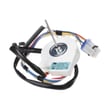
The most common problem we see with GE refrigerators like model GNE25JYKGFFS is not cooling well (fresh food warm, freezer struggling, or temperatures swinging). In many cases, the root cause is restricted airflow or a failing cooling component such as a fan, sensor, or defrost control.
Most common causes of poor cooling
Start with the items that cause the highest number of “warm fridge” complaints:
- Dirty condenser coils (heat cannot dissipate, compressor runs longer)
- Air vents blocked by food packages (cold air cannot circulate)
- Evaporator fan issue (weak airflow from the freezer into the fresh food section)
- Defrost system problem (frost buildup blocks airflow)
- Temperature sensing or control issue (bad readings lead to wrong run times)
Quick checks we recommend first
These steps solve a lot of cooling complaints without replacing parts:
- Set controls to normal (about 37°F fresh food, 0°F freezer) and wait 24 hours
- Clean the condenser area and confirm the condenser fan runs when the compressor runs
- Make sure nothing is covering return vents in the fresh food section
- Listen for the evaporator fan in the freezer (a steady fan sound when the door switch is pressed)
- Look for heavy frost on the freezer back wall (points to a defrost problem)
Parts that commonly fix “not cooling” symptoms on this model
If basic airflow and cleaning checks do not help, these model-matched parts are common fixes:
| Symptom | What it often points to | Example part for GNE25JYKGFFS |
|---|---|---|
| Temps swing, food freezes then warms | Bad temperature feedback | GE profile refrigerator temperature sensor WR55X10025 |
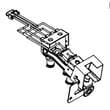
| Fresh food warm but freezer cold | Airflow control not opening | Refrigerator air damper WR60X27396 |
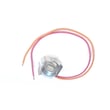
| Frost buildup, warm fresh food | Defrost control issue | Refrigerator defrost bi-metal thermostat WR50X10069 |
Why it matters
When cooling is weak, the compressor and fans run longer, food spoils faster, and ice production drops. Fixing airflow restrictions early can prevent repeat warm-ups and reduce wear on major components.
Last updated: February 2026
How to remove bottom grille on GE refrigerator?
On the GE GNE25JYKGFFS bottom-mount refrigerator, the bottom grille (base grille or toe grille) typically pulls off after you release a few retaining screws or clips. Once it is loose, we pull the grille straight out and slightly upward to disengage the tabs.
Quick steps to remove the bottom grille
- Unplug the refrigerator (or switch off power) for safety.
- Locate the fasteners along the top edge of the grille (common locations are left and right corners).
- Remove screws if present using a Phillips screwdriver.
- Pull the grille forward from the top edge first.
- Lift slightly to unhook tabs along the bottom edge, then remove the grille.
What to check if it will not come off
- Look for hidden screws near the corners or behind small caps.
- Check for side locking tabs; press the tab while pulling the grille forward.
- If the grille feels stuck, inspect for ice buildup or debris along the bottom edge.
- Make sure the refrigerator is not tilted forward; leveling can bind the grille.
- Pull evenly from both sides to avoid cracking the plastic.
Reinstalling the grille (so it fits flush)
- Hook the bottom tabs into the frame first.
- Swing the top edge into place.
- Reinstall the screws (do not overtighten).
| Symptom | Most likely cause | What we do next |
|---|---|---|
| Grille rattles after reinstall | Tabs not fully seated | Rehook bottom tabs, then tighten screws |
| Grille will not align | Refrigerator not level | Level the front feet, then refit grille |
| Grille cracks when pulling | Pulled from one side only | Pull evenly from both corners |
Why it matters
The bottom grille helps protect components and supports airflow around the machine compartment. Removing it correctly makes it easier to clean dust buildup and access service areas without breaking mounting tabs.
For related GE door-area trim and alignment help, we recommend: how to remove a GE french door refrigerator flipper mullion.
Last updated: February 2026
How to order GE appliance parts?
You can order replacement parts for your GE GNE25JYKGFFS bottom-mount refrigerator directly from the parts list for this model, then match the part ID to the component you need (for example, a water filter, ice maker, or control board). Use your full model number to avoid fit issues.
What we recommend before you order
- Confirm the full model number: GNE25JYKGFFS (from the rating label inside the fresh food section)
- Identify the failed symptom (no ice, warm fridge, leaking water, door not sealing)
- Compare the part name and part ID carefully (similar parts can look alike)
- If you are replacing a water filter, plan to flush the system after install
- If you are replacing an electronic part, unplug the refrigerator first
Commonly ordered parts for model GNE25JYKGFFS
These are examples of parts customers often replace on this model:
| What you are fixing | Part to consider | What it does |
|---|---|---|
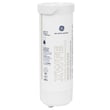
| Water tastes bad or flow is slow | GE refrigerator water filter XWFE | Filters drinking water and ice maker water |
| Ice maker not producing ice | Refrigerator ice maker WR30X39385 | Cycles to fill, freeze, and harvest ice |
| Temperature swings or warm sections | GE profile refrigerator temperature sensor WR55X10025 | Feeds temperature data to the control system |
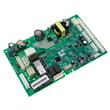
| No cooling or intermittent cooling (advanced repair) | Main control board WR55X46945 | Manages compressor, fans, and defrost logic |
Why it matters
Ordering by model number plus part ID helps prevent returns and delays. Refrigerators like the GE GNE25JYKGFFS can use multiple versions of similar parts (especially controls, sensors, and water system components), so exact matching is the fastest path to a correct fit.
After you receive the part
- Inspect for shipping damage before installing
- Keep the packaging until the repair is complete
- Take a photo of wire locations and connectors before disconnecting anything
- Restore power and verify operation (cooling, ice production, dispenser flow)
Last updated: February 2026
What are the disadvantages of a bottom freezer refrigerator?
Bottom-freezer refrigerators like the GE GNE25JYKGFFS make fresh food easier to reach, but the tradeoffs are mostly cost, ergonomics, and freezer access. You typically pay more up front, you bend more to use the freezer drawer, and deep freezer storage can be harder to keep organized.
Common disadvantages (what owners notice most)
- More bending and lifting: heavy frozen items sit low in the drawer.
- Harder freezer organization: deep drawers can hide smaller items under larger packages.
- Less convenient for frequent freezer use: you open and dig through a drawer instead of scanning shelves.
- Often higher purchase price: compared with many top-freezer designs.
- Potential for more “ice and water” maintenance (if equipped): filters, ice maker fill issues, and air in the water line can add upkeep.
What to check if you are comparing styles
| Consideration | Bottom freezer | Top freezer |
|---|---|---|
| Fresh food access | Best (eye level) | Good, but lower shelves require bending |
| Freezer access | More bending | Easier, at chest height |
| Organization | Drawer-based, can be deep | Shelf-based, easier to see |
| Typical cost | Higher | Lower |
Why it matters
If your household uses the refrigerator section far more than the freezer, a bottom-freezer layout can feel more comfortable day to day. If you use the freezer constantly (meal prep, bulk frozen foods), the drawer format can feel slower and heavier.
Tips to reduce the downsides on the GNE25JYKGFFS
- Use bins or baskets to separate meats, vegetables, and quick-grab items.
- Keep the heaviest items closest to the top of the drawer for easier lifting.
- If water flow or ice production becomes inconsistent, start with filter and line checks; the how to replace the water filter in a GE refrigerator guide helps.
- For ice maker performance issues, inspect the fill area and consider common fixes in common refrigerator ice maker problems and solutions.
- If you are troubleshooting cooling complaints, check for airflow issues and review GE refrigerator error codes.
Last updated: February 2026
Can I replace fridge parts myself?
Yes. For your GE GNE25JYKGFFS bottom-mount refrigerator, we can safely replace many common, non-sealed-system parts ourselves (filters, gaskets, ice maker components, sensors) using basic hand tools; sealed-system and complex electrical diagnostics are best handled by a technician.
Good DIY replacements for this model
These repairs are typically straightforward and low-risk when you unplug the refrigerator first:
- Replace the water filter: GE refrigerator water filter XWFE
- Test or replace a temperature sensor: GE profile refrigerator temperature sensor WR55X10025
- Replace the ice maker assembly: refrigerator ice maker WR30X39385
- Replace a worn door gasket (warm it to reshape, then re-seat it): refrigerator door gasket WR14X40082
- Fix cooling airflow issues by replacing the damper (if it is stuck or noisy): refrigerator air damper WR60X27396
Repairs we do not DIY
These jobs involve refrigerant handling, specialized tools, or higher shock risk:
- Sealed-system work (compressor, condenser, drier)
- Control board diagnosis when multiple symptoms overlap
- Wiring harness repairs inside machine compartments
Quick guide: DIY vs. technician
| Repair type | Typical DIY? | Why |
|---|---|---|
| Water filter swap | Yes | No tools; low risk |
| Ice maker replacement | Yes | Mostly mechanical and plug connections |
| Door gasket replacement | Yes | Fit and seal task |
| Main control board replacement | Sometimes | Requires careful labeling and static-safe handling |
| Compressor or drier replacement | No | Sealed-system service |
Safety and prep checklist
Before we start any repair:
- Unplug the refrigerator (or switch off the breaker).
- Turn off the water supply if working on the filter, ice maker, or dispenser.
- Protect floors with towels; keep a shallow pan handy.
- Take photos of wire connectors and screw locations.
- Confirm the part matches the model GNE25JYKGFFS before ordering.
Why it matters
DIY-friendly repairs can restore cooling, stop leaks, and improve ice and water performance quickly. Choosing the right repair level also prevents repeat failures, especially when symptoms point to airflow, temperature sensing, or door sealing.
For step-by-step help on common GE refrigerator tasks, use: how to replace the water filter in a GE refrigerator.
Last updated: February 2026