Owner’s manual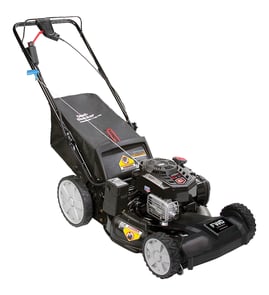

Is a mower with a roller better?
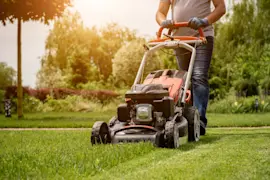
A mower with a rear roller is better when you want lawn stripes and a smoother finish on flat, well-kept turf; it is not automatically “better” for every yard. For your MTD 12A-559K401 walk-behind mower, overall cut quality and safety depend more on mowing conditions, height setting, and footing than on a roller.
A roller (often paired with a reel or cylinder cutting system) makes the grass lay in one direction, which creates striping and a very even appearance.
- You mow frequently and keep grass from getting tall
- Your lawn is mostly flat and relatively smooth
- You want visible stripes and a “finished” look
- You prefer a clean, scissor-like cut (common with reel/cylinder designs)
- You do not need to handle heavy weeds or rough terrain often
Rollers can reduce maneuverability and can struggle when conditions are less ideal.
- Tall, thick, or wet grass (clumping and uneven results are more likely)
- Uneven ground, ruts, holes, or hidden obstacles
- Sloped yards where footing is the main concern
- Infrequent mowing where you remove more than one-third of grass height
Your owner’s guidance for this model focuses on safe traction and smart mowing technique.
- Mow across the face of slopes, not up and down
- Avoid slopes over 15 degrees
- Do not mow wet grass (slip risk and poor discharge)
- Clear sticks, stones, and wire before mowing
- For a healthy lawn, cut one-third or less of the grass height
For model-specific operating and safety details, use the 12A-559K401 owner’s manual.
| Feature | Roller-style mowing | Typical rotary walk-behind mowing |
|---|---|---|
| Lawn stripes | Excellent | Possible with striping kit or technique |
| Best terrain | Flat, smooth | Mixed, more forgiving |
| Tall grass performance | Weaker | Stronger |
| Wet grass tolerance | Poor | Still not recommended |
Choosing the right mower setup reduces scalping, improves cut consistency, and helps you avoid slips on slopes. With walk-behind mowers, traction and footing are the biggest safety and performance factors.
Last updated: February 2026
What is the best lawn mower for an elderly person?
For an elderly person, the best lawn mower is a lightweight, easy-start model that minimizes pushing and reduces fall risk. For many seniors, that means a self-propelled walk-behind mower with simple controls and an easy height adjustment; review the safety and operating guidance in the 12A-559K401 owner's manual before choosing or using any mower.
- Self-propel drive: reduces effort on flat yards and long passes.
- Easy starting: electric start or low-effort pull start.
- Lightweight and balanced: easier turning and less strain on shoulders.
- Simple, reachable controls: blade control handle that’s easy to hold and releases cleanly.
- Good traction wheels: helps maintain footing, especially on uneven turf.
- Easy bagging or mulching: fewer stops and less lifting.
Our MTD 12A-559K401 operator guidance highlights key safety points that are especially important for older users:
- Do not mow wet grass; slips and falls are more likely.
- Walk, don’t run, and stop the blade when crossing gravel or walkways.
- Avoid steep slopes; do not mow inclines over 15 degrees.
- Stop the engine and wait for the blade to stop before unclogging the chute or removing the bag.
| Mower type | Best for | Main tradeoff |
|---|---|---|
| Self-propelled gas walk-behind | Medium to large yards; thicker grass | Heavier; pull-start and maintenance may be harder |
| Self-propelled battery walk-behind | Most seniors; quiet, low effort starting | Battery runtime limits; battery replacement cost |
| Lightweight corded electric push | Small, simple yards; lowest maintenance | Cord management; not ideal for large yards |
| Robotic mower | Small to medium, obstacle-light yards | Setup and boundary work; not great on complex terrain |
The “best” mower for an elderly person is the one that reduces strain and prevents falls. Features like self-propel drive, stable wheels, and avoiding wet grass and steep slopes make mowing safer and more comfortable over time.
Last updated: February 2026
How big of a lawn mower do I need for 1 acre?
For a 1-acre lawn, we typically recommend a mower with a 42 to 52 inch cutting width for the best balance of speed and maneuverability. Your MTD 12A-559K401 is a walk-behind mower, so it can handle 1 acre, but it will take longer than a riding mower; plan on multiple passes and steady pace (especially in thick grass). See the 12A-559K401 owner's manual for safe mowing practices on slopes and in wet or tall grass.
- Walk-behind mower (20 to 22 inch deck): works, but expect longer mow time
- Self-propelled walk-behind: reduces fatigue on 1 acre
- Riding mower (42 to 52 inch deck): fastest for 1 acre
- Zero-turn (42 to 54 inch deck): fastest when you have lots of obstacles
- Hilly yards: prioritize traction and control over maximum deck width
A 1-acre yard can mow very differently depending on conditions. Use these factors to choose the right “size” mower:
- Terrain: slopes, bumps, and soft ground slow you down
- Obstacles: trees, beds, and fences favor smaller decks or zero-turns
- Grass conditions: thick, new, or wet grass often needs a narrower cut and slower pace
- Bagging vs mulching: bagging fills quickly on 1 acre; mulching saves stops but needs sharp blades
- Operator comfort: self-propel drive and handle height make a big difference over longer mow times
The manual guidance is especially important on larger yards where fatigue sets in:
- Mow across slopes, not up and down
- Avoid slopes greater than 15 degrees
- Do not mow wet grass (slip risk and clumping)
- Clear the yard of sticks, stones, and wire before mowing
| Yard size | Best-fit mower type | Typical cutting width |
|---|---|---|
| Up to 1/2 acre | Walk-behind | 20 to 22 in |
| About 1 acre | Riding or strong self-propel walk-behind | 42 to 52 in (riding) |
| 1 to 2 acres | Riding | 42 to 52 in |
Choosing the right cutting width reduces mowing time, improves cut quality, and helps you mow safely. On a 1-acre lawn, the wrong mower size often leads to rushing, scalping, or mowing in unsafe conditions.
Last updated: February 2026