Installation guide
 Owner’s manual
 Error Codes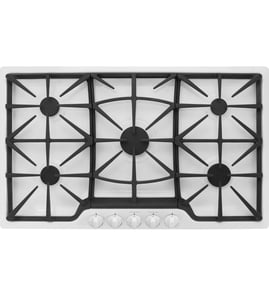




How to find Bosch cooktop model number?
On the Bosch NGM8054UC gas cooktop, the model information is on the product data plate attached to the underside of the rough-in box, underneath the cooktop. You will typically see the model number plus an FD number (a unique identifier used for service and parts).
Where to look on model NGM8054UC
We recommend checking these spots in this order:
- Look under the cooktop at the underside of the rough-in box (this is the primary location)
- Use a flashlight and mirror if the label faces down or toward the cabinet
- If the cooktop is installed over a drawer, remove the drawer for a clearer view
- If access is tight, follow the safe access steps in the installation guide
What to write down (and why)
Having the full data plate info helps us match the correct Bosch cooktop parts and avoid ordering the wrong component.
| Data plate item | What it’s used for | Example format |
|---|---|---|
| Model number (E-Nr) | Identifies the exact cooktop version | NGM8054UC |
| FD number | Product identifier used for service/parts matching | FD #### #### |
| Serial tag details | Helps confirm production details | Varies |
Tips if the label is hard to read
- Wipe grease and dust off the label gently; do not soak it
- Take a phone photo and zoom in to read small print
- Copy the characters exactly (including slashes or dashes if shown)
Why it matters
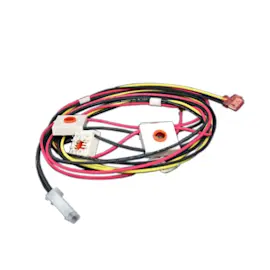
Bosch cooktops can use different burner valves, igniters, and wiring harnesses across similar-looking models. Using the exact model number from the data plate helps ensure you get the right replacement part the first time.
Last updated: February 2026
How to clean a Bosch gas cooktop?
For your Bosch NGM8054UC gas cooktop, we recommend daily cleaning with a soapy sponge, then rinsing and drying once the burners are OFF and fully cool. Keep burner caps, grates, and igniters clean and dry so the electronic ignition lights reliably; wipe stainless steel with the grain.
Daily cleaning steps (safe routine)
- Turn all knobs OFF; let grates and burner caps cool completely.
- Wipe the cooktop surface with a soapy sponge.
- Rinse with clean water, then dry right away to prevent water marks.
- For stainless areas, rub in the direction of the grain.
- Reinstall burner caps and grates in the correct positions before cooking.
Cleaning burner parts and ignition areas
Keeping the igniter and ports clean prevents weak sparking and hard-to-light burners.
- Remove grates and burner caps.
- Wipe around the igniter carefully; keep it dry.
- Clean igniter ports after boilovers or if a burner clicks but will not light.
- Match burner caps to the correct burner base (letters on the cap and base must correspond).
What to avoid
- Abrasive pads or harsh scrubbers that can scratch the cooktop finish.
- Cleaning removable cooktop parts in a self-cleaning oven.
- Flammable cleaners (for example, lighter fluid or WD-40).
Quick reference table
| Area | What to do | Why |
|---|---|---|
| Cooktop surface | Soapy sponge, rinse, dry | Removes daily soil safely |
| Stainless trim | Wipe with the grain, dry | Helps prevent streaks and water marks |
| Igniter/ports | Keep clean and dry | Improves ignition and reduces nuisance clicking |
| Burner caps/grates | Cool first; reinstall correctly | Prevents poor flame and flare-ups |
Why it matters
A clean, dry igniter and properly seated burner caps help your sealed burners light smoothly and burn evenly. Drying the surface also reduces staining and water marks, especially on stainless finishes.
For model-specific care notes and safety precautions, follow the owner's manual.
Last updated: February 2026
How to fix a Bosch stove top?
For a Bosch NGM8054UC gas cooktop, most “stovetop” problems come from ignition, gas flow, or knob/valve operation. Start by confirming the burner knob is being pushed down and turned correctly, then check for a clicking igniter and a steady blue flame; clean and dry burner parts before replacing components.
Quick safety first
- Turn all knobs to OFF and let the cooktop cool.
- If you smell gas: stop, ventilate the area, and do not use flames or switches.
- Unplug power (or switch off the circuit) before accessing wiring or ignition parts.
- Use the correct knob technique described in the NGM8054UC owner's manual.
Most common fixes (in order)
- Burner will not click or spark: Check power to the cooktop; ignition needs electricity even though it is a gas cooktop.
- Clicks but will not light: Clean and fully dry the burner base and igniter area; moisture and spills commonly block ignition.
- One burner keeps clicking: A stuck or wet igniter switch is common; consider replacing the cooktop burner igniter switch 00627235.
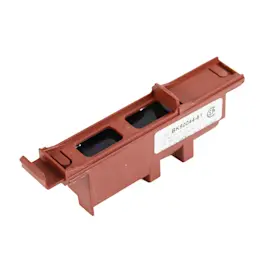
- No burners spark at all: The ignition control can fail; consider the spark module 12004873.
- Weak flame or uneven flame: Confirm the gas supply is on; if flame stays weak across burners, the cooktop pressure regulator 00611976 can be a factor.
- Knob feels loose or won’t seat right: Inspect the grommet and reinstall it correctly; replace the cooktop knob grommet 00611956 if torn.
Knob operation and removal (model-specific)
Your NGM8054UC uses standard burner controls with “infinite” heat settings. We recommend:
- Push the knob down and turn counterclockwise to light and set flame.
- Turn clockwise back to OFF to shut off.
- To remove: with the burner OFF, lift the knob off, then pull the grommet out from the sides.
What to replace based on symptoms
| Symptom | Most likely area | Part to consider (if needed) |
|---|---|---|
| No clicking on any burner | Ignition control | Spark module 12004873 |
| Clicking continues after lighting | Switch stuck/wet | Cooktop burner igniter switch 00627235 |
| Low flame on multiple burners | Gas regulation/supply | Cooktop pressure regulator 00611976 |
| Knob wobble or poor fit | Knob seal/grommet | Cooktop knob grommet 00611956 |
Why it matters
Ignition and flame issues are usually simple (cleaning, drying, correct knob use), but persistent clicking, no-spark conditions, or weak flame can point to electrical parts (switches, spark module) or gas regulation that affects safe, consistent burner performance.
Last updated: February 2026