Installation guide
 Owner’s manual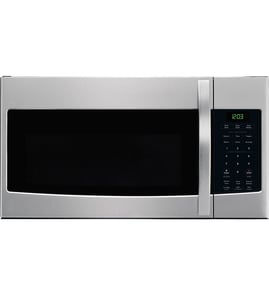



Is there a reset on a Kenmore microwave?
Yes. On Kenmore microwave/hood combo model 66569619990, the most common “reset” is a basic power reset (unplugging briefly, then restoring power) and then re-setting the clock if the display is flashing ":" after a power interruption. For model-specific control steps, use the 66569619990 owner's manual.
Quick reset options (start here)
- Power reset: Unplug the microwave (or switch off the breaker) for about 1 minute, then restore power.
- Reset the clock: If the display shows a flashing ":", set the clock again after power is restored.
- Clear a stuck program: Press STOP/CANCEL once to stop cooking; press again to clear the display.
- Vent fan or light acting odd: Power reset first; then check settings and bulbs.
- If the unit is completely dead: Check the house outlet and breaker first; then inspect internal protection parts (see safety note below).
What a “reset” fixes (and what it does not)
| Symptom | What to try first | What it usually means |
|---|---|---|
| Display flashing ":" | Set the clock | Power interruption occurred |
| Buttons not responding | STOP/CANCEL, then power reset | Control logic needs a restart |
| Runs but does not heat | Do not keep testing | Likely a high-voltage heating circuit issue |
| Completely dead | Verify outlet power | Possible internal fuse/thermal protection issue |
Safety note for over-the-range microwaves
If your 66569619990 runs but does not heat, or it goes dead repeatedly, avoid repeated test runs. Microwaves contain high-voltage components that can store a dangerous charge even when unplugged.
For heating problems, we use the same troubleshooting path outlined in why is my microwave not heating. If a repair points to a high-voltage component, common items in the heating circuit for this model include the diode W11256462 and capacitor W10850446.
Why it matters
A true reset helps after a power blink or a control glitch; it will not correct a failed door interlock, thermal fuse, or high-voltage part. Using the right reset step saves time and prevents unnecessary parts replacement.
Last updated: February 2026
What are the different types of over the range microwave vents?
Kenmore over-the-range microwave/hood combos like model 66569619990 support three venting setups: outside exhaust through the wall (horizontal), outside exhaust through the roof (vertical), or recirculating (ventless) that filters air and returns it to the kitchen. Confirm the correct option for your cabinet and duct layout in the installation guide.
The 3 vent types (what they mean)
- Outside exhaust, wall (horizontal): Ductwork runs straight back through the wall behind the microwave.
- Outside exhaust, roof (vertical): Ductwork runs upward through the upper cabinet and out the roof.
- Recirculating (non-vented): No exterior duct; air is pulled through filters and blown back into the room.
How to choose the right venting method
Your best option depends on your kitchen layout and whether ducting already exists.
- Choose wall (horizontal) if you have a rear wall duct opening.
- Choose roof (vertical) if you have an overhead duct path through the cabinet and ceiling.
- Choose recirculating if you cannot vent outdoors (common in apartments or interior kitchens).
- Plan for proper clearances and solid mounting support (studs plus upper cabinet support).
- Use the included templates and follow the step sequence so the damper and vent connector align correctly.
Quick comparison
| Vent type | Duct required | Where air goes | Typical best for |
|---|---|---|---|
| Wall (horizontal) | Yes | Outdoors through wall | Existing rear wall vent |
| Roof (vertical) | Yes | Outdoors through roof | Existing overhead duct |
| Recirculating | No | Back into kitchen | No practical duct route |
Why it matters
Picking the correct vent type affects installation steps (damper orientation, cabinet cutouts, and duct sealing) and how well the microwave hood removes smoke, steam, and cooking odors. For safety and performance, we follow the guidance to vent air outdoors when ducting is available.
Last updated: February 2026
Can a range hood and microwave be on the same circuit?
For the Kenmore 66569619990 microwave/hood combo, we recommend a dedicated 120-volt, 60 Hz, 15- or 20-amp grounded circuit for the microwave portion. Even if a separate circuit is not strictly required by every local code, sharing a circuit with another hood or kitchen load often leads to nuisance breaker trips and poor performance (especially when the microwave is heating).
What the installation requirements say
The electrical requirements call for:
- 120-volt, 60 Hz, AC-only supply
- 15- or 20-amp fused electrical supply (time-delay fuse or breaker recommended)
- A grounded 3-prong outlet (no adapter, no extension cord)
- A separate circuit serving this appliance only (recommended)
For the exact wording and placement guidance for the outlet in the upper cabinet, use the installation guide.
Practical guidance for sharing a circuit
If you are asking about putting a separate range hood and a microwave on the same circuit, the deciding factors are the circuit size, what else is on it, and local electrical code requirements.
- A microwave can draw a significant load while heating; sharing increases trip risk.
- A range hood fan and lights add load, especially if the hood uses halogen/incandescent bulbs.
- Other common kitchen loads (toaster, coffee maker) on the same circuit can push it over the limit.
- If the breaker trips or lights dim when the microwave runs, the circuit is overloaded.
- For best reliability, we treat a dedicated circuit as the correct setup.
Quick comparison: shared vs dedicated circuit
| Setup | What you gain | Common downside |
|---|---|---|
| Shared circuit (microwave + hood/other loads) | Fewer electrical changes | Breaker trips, voltage drop, inconsistent microwave heating |
| Dedicated circuit (microwave only) | Stable power and fewer nuisance trips | May require electrical work |
Why it matters
Microwave/hood combos like the Kenmore 66569619990 use high-voltage components during heating; stable input power helps the unit run safely and consistently. A dedicated circuit also reduces the chance of repeated power interruptions that can look like a microwave failure.
Last updated: February 2026
What is the difference between a range hood and a microwave hood?
A range hood is built only to ventilate cooking smoke, steam, grease, and odors, while a Kenmore microwave/hood combo like model 66569619990 combines a microwave oven with a built-in vent fan and light. Both can vent outside or recirculate, depending on how the unit is installed.
How ventilation works on a microwave/hood combo
Your Kenmore 66569619990 microwave hood is factory set for ventless (recirculating) operation. If your kitchen is set up for ducting, it can typically be converted to vent through the wall or roof by changing the venting configuration during installation (using the templates and steps in the install instructions).
- Recirculating (ventless): air is pulled through filters and returned to the kitchen
- Vented (ducted): air is routed through ductwork to the outside
- Installation planning matters; the unit must mount to a flat vertical wall and upper cabinet structure
- The supporting structure needs to handle substantial load (the installation guide calls out support for 150 lb, plus contents)
For the exact venting options and conversion steps for this model, use the installation guide.
Range hood vs. microwave hood: quick comparison
| Feature | Range hood | Microwave/hood combo (like 66569619990) |
|---|---|---|
| Primary purpose | Ventilation | Cooking plus ventilation |
| Space above range | Uses the full space | Saves space by combining two appliances |
| Typical airflow | Often higher on dedicated hoods | Often sufficient for everyday home cooking |
| Lighting | Yes | Yes (built-in cooktop light) |
| Install complexity | Varies by hood | Requires secure wall/cabinet mounting and vent choice |
Why it matters
Choosing between a range hood and a microwave hood comes down to priorities: if you want maximum ventilation for heavy cooking, a dedicated hood is often the better fit; if you want to save space and still get everyday venting, a microwave/hood combo is a practical solution.
Parts that affect venting performance
If your microwave hood is not clearing smoke well, these parts commonly matter:
- Grease filter (clogged filters restrict airflow): grease filter WP6803
- Vent damper (stuck damper can block exhaust): damper W10843943
- Vent grille (damage or blockage can reduce flow): microwave/hood grille vent 8184599
Last updated: February 2026
How big is a Kenmore microwave model 66569619990 in inches?
For Kenmore microwave/hood combo model 66569619990, the installation guide lists the product dimensions as 29-7/8 inches wide by 16-1/4 inches high. Depth varies by installation and venting setup, so we use the guide’s cabinet-depth and clearance requirements to plan fit.
Model 66569619990 dimensions and fit notes
Here’s what we use from the installation requirements to size the space correctly:
- Width: 29-7/8 in (fits a standard 30 in cabinet opening)
- Height: 16-1/4 in
- Minimum cabinet opening width: 30 in
- Recommended upper cabinet depth: 12 to 14 in (helps with removal and servicing)
- Support requirement: framing must support up to 150 lb plus contents
For the exact dimension diagram and clearances for your venting configuration (recirculating or ducted), use the installation guide.
Quick reference table
| Measurement | What to use for planning | Notes |
|---|---|---|
| Overall width | 29-7/8 in | Matches standard 30 in opening |
| Overall height | 16-1/4 in | From product dimension diagram |
| Upper cabinet depth | 12 to 14 in (recommended) | Helps service access |
| Cabinet opening width | 30 in (minimum) | Required opening |
Why depth can be different than “overall depth”
Over-the-range microwaves often end up with different front-to-back projections depending on the wall, cabinet depth, mounting plate position, and whether you are using a damper or duct adapter. Planning from the installation clearances prevents a tight fit that can cause vibration, poor venting, or difficult service access.
Related parts that affect fit and venting
If you are replacing damaged venting or trim pieces during a reinstall, these model-matched parts are commonly involved:
- Microwave/hood grille vent 8184599 (front vent grille style)
- Microwave/hood grille vent 8184600 (alternate grille style)
- Damper W10843943 (helps control backdraft in ducted setups)
- Mounting cabinet WP8206174 (mounting plate used to hang and secure the unit)
Last updated: February 2026