Error Codes

Do electric stoves plug into the wall?
Yes, many electric stoves plug into a wall outlet, but it depends on the type: most freestanding electric ranges use a heavy-duty 240V plug, while built-in appliances like the GE JTP20BF4BB electric wall oven are typically hardwired to a junction box instead of using a standard plug.
- Freestanding electric range (stove): commonly uses a 3-prong or 4-prong 240V range cord and receptacle
- Slide-in range: often plugs in, but some installations are hardwired depending on the home setup
- Wall oven (like GE JTP20BF4BB): typically hardwired (no cord and plug)
- Cooktop: commonly hardwired
- Pull the drawer (if your range has one) and look behind the lower front panel for a range cord.
- Look at the wall behind the range for a large 240V receptacle (not a standard 120V outlet).
- For a wall oven, check the cabinet area for a junction box cover and conduit.
- If you see a cord, confirm it is not damaged or overheated; a failing connection can cause intermittent power.
The connection type affects safety and troubleshooting. A plugged-in range can have issues at the cord, receptacle, or terminal block; a hardwired wall oven more often points to the junction box connections, wiring, or internal components like the control.
If your wall oven has power but heats incorrectly or behaves erratically, these model-matched parts are commonly involved:
| Symptom | Common suspect | Model-matched part example |
|---|---|---|
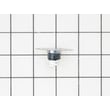
| Oven temperature way off | Temperature sensor | Wall oven temperature sensor WB23T10015 |
| Display or functions act unpredictable | Control board | Range oven control board WB27T10411 |
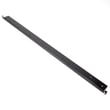
| Oven won’t heat in bake | Bake element | GE range bake element WB44T10018 |
For ordering additional replacement parts by model number, use the parts list for GE JTP20BF4BB or search on Sears PartsDirect.
Last updated: February 2026
What kind of outlet does a wall oven need?
Most wall ovens, including the GE JTP20BF4BB electric wall oven, are designed for a dedicated 240-volt circuit and are typically hardwired in a junction box rather than plugged into a standard 120V receptacle. The exact connection method depends on the oven’s rating and your home wiring.
In most installations, you should plan for:
- A dedicated 240V circuit (no other appliances on the same circuit)
- A double-pole breaker sized to the oven’s electrical load (commonly 30A to 50A)
- Copper wire sized to the breaker and distance (commonly 10 AWG for 30A, 8 AWG for 40A)
- A junction box connection (hardwired) or, less commonly, a 240V receptacle if the oven is cord-and-plug connected
Many built-in wall ovens are hardwired. If your oven uses a plug, it will be a 240V range-style receptacle, not a standard household outlet.
| Connection style | What you’ll see | Common in wall ovens? |
|---|---|---|
| Hardwired (junction box) | No plug; conduit or cable into a box | Very common |
| Cord-and-plug (240V) | Large 3-prong or 4-prong 240V plug | Less common |
Use these practical checks to avoid buying the wrong electrical parts or planning the wrong hookup:
- Look at the oven’s wiring coming out of the cabinet (conduit usually means hardwired)
- Check your breaker panel for a double-pole breaker labeled “oven”
- Confirm you have a dedicated circuit available
- Inspect the existing connection behind the oven (junction box vs. receptacle)
- If the oven is not heating correctly after install, test key heating components like the GE range bake element WB44T10018
Wall ovens draw much more power than countertop appliances. Using the correct 240V circuit, breaker, and wire gauge prevents nuisance tripping, slow preheat, uneven baking, and overheating at the connection point.
If you need replacement parts for your GE JTP20BF4BB (for example, a heating element or temperature sensor), you can order from the parts list for this model or search by model number on Sears PartsDirect.
Last updated: February 2026
What voltage does a wall oven use?
Most electric wall ovens, including the GE JTP20BF4BB, are designed to run on a 240-volt circuit. In many homes the actual supply can be 208V, 220V, or 240V; a wall oven rated for 240V is built to operate correctly across that range.
- Dedicated circuit: Wall ovens normally use a dedicated double-pole breaker.
- Common supply voltages: 208V (some condos/apartments), 220V, or 240V.
- Hardwired connection: Many wall ovens are hardwired to a junction box (some use a cord kit if the installation allows it).
- Higher heat times at 208V: Baking and preheat can take longer on 208V than on 240V.
- Correct wire size matters: The circuit wire gauge must match the oven’s amperage requirements.
| Supply voltage | Where it’s common | What you’ll notice |
|---|---|---|
| 208V | Multi-unit buildings | Slower preheat, slightly less heating power |
| 240V | Most single-family homes | Normal performance and faster recovery |
- Check your electrical panel for a double breaker labeled “oven” or “wall oven.”
- If you’re comfortable using a meter, follow a safe testing process from how to use a multimeter to test electrical parts video.
- If the oven is not heating properly, voltage is one of the first things to verify before replacing parts.
Using the correct voltage helps the bake and broil elements reach and maintain temperature properly. If voltage is low or unstable, you can see symptoms like long preheat times, weak broiling, or inconsistent baking. If you’re troubleshooting heating issues on this model, common related parts include the wall oven temperature sensor WB23T10015 and the GE range bake element WB44T10018.
You can order replacement parts for your GE JTP20BF4BB from the parts list for this model, or search by model number on Sears PartsDirect.
Last updated: February 2026
Where can I find the GE Wall Oven model number?
You can find the model number for your GE electric wall oven on the oven’s identification label; on model JTP20BF4BB, it’s typically visible when you open the oven door and look around the door frame area. If the label is worn, we use the model number to match the correct parts list.
- Open the oven door and inspect the door frame (front frame) on the left or right side
- Check along the bottom edge of the oven frame near the door opening
- Look behind the lower drawer or lower access panel (if your wall oven has one)
- Check the side trim area just inside the door opening
- For double wall ovens, check both upper and lower door frame areas
Most GE wall ovens use a paper or foil label that includes:
- Model number (for example, JTP20BF4BB)
- Serial number
- Electrical ratings (volts/amps)
If you see several codes, use the one labeled Model.
The model number is the fastest way to ensure we match the exact configuration of your wall oven (controls, heating system, and door style) to the correct replacement parts.
| What you’re fixing | Example part for JTP20BF4BB | What it helps with |
|---|---|---|
| Oven light not working | Oven lamp 40A15 | Restores interior oven lighting |
| Oven temperature seems off | Wall oven temperature sensor WB23T10015 | Helps the control regulate temperature accurately |
| Bake not heating | GE range bake element WB44T10018 | Restores bake heat output |
If you need to look up parts by model number across appliances, search by model on Sears PartsDirect.
Last updated: February 2026