 Error Codes


How do I tell what model my Kenmore dryer is?
Your Kenmore dryer’s model number is printed on the appliance ID label; for model 1106108710, it will read 1106108710 (sometimes with a prefix like 110.). Once you match that full number, you can confidently choose compatible parts and troubleshooting info.
Where to find the model number label
On most Kenmore electric dryers like 1106108710, check these common spots:
- Inside the door opening on the front panel (most common)
- On the door frame itself
- On the back panel of the dryer cabinet
- Along the lower front edge behind the door
- Near the lint screen housing (varies by design)
How to read the number (and avoid mix-ups)
Kenmore model numbers are easy to misread because they are long and can include punctuation.
- Write the model number exactly as shown (all digits, in order)
- Ignore spaces; keep all numbers together
- If you see 110.6108710, the usable model number is still 1106108710
- Use the full model number, not just the first three digits
Quick check table
| What you see on the label | What to use for parts lookup |
|---|---|
| 1106108710 | 1106108710 |
| 110.6108710 | 1106108710 |
| 110 6108710 | 1106108710 |
Why it matters
We use the exact model number to match the correct Kenmore dryer parts (like a door switch, drive belt, or thermostat). Even one digit off can point to a different drum size, door style, or wiring setup.
Helpful next step
If you’re troubleshooting and the dryer is showing an error or acting up after you confirm the model number, use our Kenmore 110 series electronic control model dryer error codes guide to narrow down the failure.
Last updated: February 2026
What are common problems with Kenmore dryers?
Common problems we see on Kenmore electric dryers like model 1106108710 include no heat, long dry times, the drum not turning, and unusual noises. Most of these issues trace back to airflow restrictions (lint and venting), worn drive components, or failed safety and temperature-control parts.
Most common symptoms and what usually causes them
- Dryer runs but won’t heat: failed thermostat, heating circuit issue, or a safety device opening due to overheating
- Long drying times: restricted venting, clogged lint screen housing, or weak airflow
- Drum won’t turn: worn or broken belt, seized drum support parts, or motor-related problems
- Squealing, thumping, scraping: worn drum support components or a loose/worn belt
- Won’t start: door not closing/latching, a bad switch, or power supply problems
Quick checks we recommend first (fast, high-impact)
- Clean the lint screen and check for lint buildup at the exhaust outlet.
- Confirm strong airflow outside at the vent hood while the dryer runs.
- Verify the door closes firmly and the latch engages; a worn strike can prevent proper closure.
- Listen for motor hum with no drum movement (often points to a belt or drum support issue).
- If the dryer is completely dead, check the house breaker (electric dryers typically use a 2-pole breaker).
Parts on this model that commonly relate to these problems
| Symptom | Part that can be involved | What it affects |
|---|---|---|
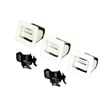
| Door won’t stay shut or won’t start | Door strike 279570 | Door closure and latch engagement |
| No heat or overheating behavior | Thermostat 238913 | Temperature control and heat cycling |
| Drum not turning | Drive belt WP337019 | Drum rotation |
Why it matters
Airflow problems can cause overheating, shut down heating, and shorten the life of components like thermostats and belts. Fixing venting and basic wear items first often restores normal drying and prevents repeat failures.
For display or diagnostic messages on Kenmore dryers, we also use the Kenmore 110 series electronic control model dryer error codes guide to match the code to the most likely failed circuit or part.
Last updated: February 2026
What is the average lifespan of 1106108710?
A Kenmore electric dryer like model 1106108710 typically lasts 13 years with normal household use and basic maintenance. Keeping airflow strong and replacing wear items (like belts and door components) on time helps the dryer reach its full service life.
Typical lifespan and what affects it
Most dryers reach their expected lifespan when heat can move freely through the drum and vent system, and the drum support and drive system stay in good condition.
- Clean the lint screen before every load
- Keep the vent run short, smooth, and unobstructed
- Avoid overloading (extra strain on the motor and belt)
- Address squealing, thumping, or burning smells right away
- Replace worn parts before they cause secondary damage
Common wear items for this model
If your 1106108710 is still heating and tumbling but is getting noisy, slow to start, or not closing properly, these are common repair points.
| Symptom | Often involved part | Example from available parts |
|---|---|---|
| Drum will not tumble | Belt or drive system wear | Drive belt WP337019 |
| Door will not stay shut | Latch alignment or strike wear | Door strike 279570 |
| Door leaks air, longer dry times | Door seal wear | Door seal W11613302 |
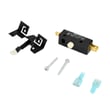
| Dryer will not start (door-related) | Door switch issue | Switch W10820036 |
Why it matters
A dryer that is near end-of-life often shows up as longer dry times, overheating, or repeated part failures. Fixing airflow issues and replacing a simple wear part (like a belt or door seal) can restore performance and prevent bigger repairs.
Last updated: March 2026





