Owner’s manual
 Error Codes


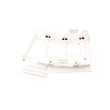
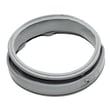
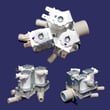

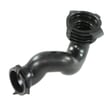
How long do LG front loader washing machines last?
Most LG front-load washers last 10 to 15 years with normal household use and basic upkeep. For the LG WM2301HW, following the care and cleaning steps in the WM2301HW owner's manual helps you reach the high end of that range by reducing odor, leaks, and drain problems.
Typical lifespan and what affects it
A washer’s life is mostly driven by load habits, installation, and maintenance.
- Load size and balance: frequent overloading and unbalanced spins shorten bearing and suspension life
- Moisture control: leaving the door closed traps humidity and speeds up gasket and odor issues
- Detergent use: too much detergent increases residue, suds, and drain strain
- Water quality: hard water can accelerate scale buildup on internal components
- Drain health: coins, lint, and debris can stress the pump and cause slow drains
What “end of life” usually looks like
These symptoms often show up in the last few years of service and can guide repair decisions.
| Symptom | Common cause | Often involves |
|---|---|---|
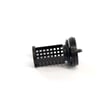
| Won’t drain or drains slowly | Clogged filter or failing pump | Washer drain pump filter 383EER2001A, drain pump |
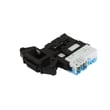
| Door won’t lock or unlock | Failed lock mechanism | Washer door lock switch EBF49827801 |
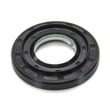
| Leaks at the door | Worn or torn boot | LG washer door boot 4986ER0004F |
| Won’t fill or fills slowly | Inlet valve issue or screen blockage | inlet valve |
Maintenance that extends life (high impact)
We recommend these habits for WM2301HW and most LG front-load washers:
- Wipe the door glass and door boot dry after the last load
- Leave the door and dispenser slightly open between washes
- Clean the drain pump filter periodically (catch debris before it reaches the pump)
- Run a monthly tub-clean routine (per the manual’s care section)
- Level the washer and keep loads balanced to reduce vibration
Why it matters
A front-load washer can easily reach 10 to 15 years, but small maintenance steps prevent the most common early failures: leaks at the door boot, drain restrictions that overwork the pump, and vibration that wears bearings and mounts.
Last updated: February 2026
Is a DE1 error expensive to repair?
On the LG WM2301HW, a dE1 (door error) is usually not expensive to fix because it is commonly caused by a door that is not fully closing, a mis-seated door boot, or a door lock issue. Costs rise mainly when a part such as the door lock switch or door boot needs replacement; see the WM2301HW owner's manual for model-specific checks.
What to check first (no-parts steps)
- Power the washer off, then unplug it for 1 minute and plug it back in.
- Close the door firmly; remove any laundry caught between the glass and the gasket.
- Wipe the door glass and the door boot sealing surface; detergent residue can prevent a full seal.
- Confirm the washer is level and not twisted; cabinet flex can affect door alignment.
- Run a quick rinse and spin cycle to see if the lock engages consistently.
Parts that most often affect dE1
If the basic checks do not help, these are the most common repair paths:
- Replace the door lock assembly: washer door lock switch EBF49827801
- Replace a torn or deformed gasket: LG washer door boot 4986ER0004F
| Repair path | Typical difficulty | Typical cost driver |
|---|---|---|
| Door not closing, residue on seal | Easy | Time and cleaning |
| Door lock switch replacement | Moderate | Part cost plus labor |
| Door boot replacement | Moderate to advanced | More disassembly time |
Why it matters
A door error stops the washer from filling and spinning for safety. Fixing the root cause quickly prevents repeated cycle interruptions and helps avoid leaks around the door boot.
Last updated: February 2026
What are the common errors on an LG washing machine?
Common LG washer errors typically point to a few problem areas: unbalanced loads during spin, water fill problems, draining problems, and door lock issues. On the LG WM2301HW, many of these start with simple fixes like balancing the load, cleaning inlet filters, or checking the drain path; see the WM2301HW owner's manual for the exact code list and model-specific steps.
Common LG washer error categories (and what they usually mean)
- Unbalanced load / spin issues (often UE): load too small, heavy single items, or uneven distribution.
- Water fill / inlet issues (often IE): restricted water supply or clogged inlet screens.
- Drain issues (often OE): slow or blocked draining, sometimes related to the pump or filter.
- Door lock/door shut issues (often dE or similar): door not fully closed or lock not engaging.
- Water level/overfill or sensor issues: can involve the inlet valve or pressure sensing.
Quick checks we recommend before replacing parts
- Redistribute the load: add 1 or 2 similar items and restart the spin if the load is off-balance.
- Confirm water supply: fully open both taps; straighten kinked hoses.
- Clean inlet filters: the manual notes hard water can clog inlet filters and trigger a fill error.
- Check for drain restrictions: look for coins, pins, or lint that can block draining.
- Listen for normal sounds: a brief click (door lock) and a hum/gurgle (drain pump) can be normal during operation.
Parts that commonly relate to these symptoms (when checks do not fix it)
| Symptom | Common area | Example part for WM2301HW |
|---|---|---|
| Won’t drain, drains slowly | Drain pump / drain path | Washer drain pump assembly 4681EA2001T |
| Won’t fill or fills slowly | Inlet valve / inlet screens | LG washer single-solenoid water inlet valve 5220FR2006H |
| Door won’t lock, cycle won’t start | Door lock switch | Washer door lock switch EBF49827801 |
Why it matters
Error codes help you avoid repeat shutdowns and prevent secondary issues like excessive vibration from an unbalanced load or leaks from improper hose connections. Starting with the basic checks saves time and helps you replace only the part that actually failed.
Related help: LG front load washer error codes.
Last updated: February 2026
What does Dei mean on my LG washing machine?
On the LG WM2301HW washer, “dE” (sometimes shown as dE1 or dE2 and misread as “DEI”) means the door is not locking correctly. Close the door firmly until it clicks; if it still won’t lock, the door lock switch may be failing.
Quick checks to clear the dE message
- Press the door closed at the latch side until you hear and feel a solid click.
- Make sure no laundry is trapped between the door glass and the door boot.
- Check the door boot for folds or debris that keep the door from sealing.
- Power reset: unplug the washer (or switch off the breaker) for 1 minute, then restore power.
- Try a short cycle (Rinse+Spin) to confirm the lock engages.
When it points to a part problem
If the door closes normally but the code returns, the lock mechanism or its wiring is usually the cause.
| What you notice | Most likely cause | What we recommend |
|---|---|---|
| Door won’t “click” shut | Latch/lock not engaging | Inspect the lock area; replace the lock if damaged |
| Door clicks but won’t start | Door lock switch not sensing locked | Test/replace the lock switch |
| Intermittent dE during cycle | Loose connection or failing lock | Check harness connections; replace lock if needed |
A common replacement for this symptom is the washer door lock switch EBF49827801.
Why it matters
The washer will not tumble or spin until it confirms the door is locked. Fixing the door seal and lock engagement prevents no-start problems and helps avoid leaks around the door boot.
Where to confirm the exact code behavior
Use the troubleshooting section in the WM2301HW owner's manual to match the display message (dE, dE1, dE2) with the recommended checks for your exact control panel.
Last updated: February 2026
What is the capacity of the wm2301hw?
The LG WM2301HW is a front-load washer with a 3.6 cu. ft. drum capacity. For the most accurate loading guidance (and to avoid overfilling), we recommend following the load-size and cycle recommendations in the WM2301HW owner's manual.
What that capacity means for everyday loads
A 3.6 cu. ft. front-load washer typically handles medium-to-large loads efficiently when items can tumble freely.
- Load the drum loosely; do not pack items tightly.
- Mix similar fabrics and weights to help balance during spin.
- Wash bulky items (comforters, blankets) one at a time when possible.
- Close the door easily; if it takes force, the load is too large.
- Use HE (high-efficiency) detergent to control suds and improve rinsing.
Quick load guidance (practical rule of thumb)
Use this as a simple way to prevent poor cleaning and out-of-balance spinning.
| Load type | How full to load the drum | Common result if overfilled |
|---|---|---|
| Everyday mixed load | About 1/2 to 2/3 full | Poor tumbling, less cleaning |
| Towels/denim | About 1/2 full | Vibration, longer cycle time |
| Bulky items | 1 item (or very loose) | Off-balance, spin issues |
Why it matters
Capacity affects cleaning and spin performance. When the WM2301HW is overloaded, clothes cannot tumble properly, and the washer is more likely to struggle during high-speed spin (up to 1,200 RPM), which can lead to vibration and longer cycle times.
Last updated: February 2026
Why are LG parts so expensive?
LG parts for the WM2301HW washer often cost more because they are engineered to meet tight performance and safety standards, and many assemblies are sold as complete modules (not individual sub-pieces). Pricing also reflects specialized materials, electronics, and the supply chain for model-specific components.
What typically drives the price up
- Complete assemblies vs. small pieces: A “pump assembly” or “valve assembly” includes multiple components, wiring, and seals.
- Electronics and sensors: Control-related parts and motor feedback components cost more to manufacture and test.
- Precision fit for your model: Front-load washers use tight tolerances for sealing, balancing, and vibration control.
- Warranty-grade components: Some major components have longer coverage periods, which often correlates with higher build cost (details vary by component and region; see the WM2301HW owner's manual).
- Lower interchangeability: Model-specific parts reduce “universal” options, which can keep prices higher.
Examples on the WM2301HW (what you are paying for)
| Part type | Example part on this model | Why it is pricier than it looks |
|---|---|---|
| Drain system | Washer drain pump assembly 4681EA2001T | Motor, housing, impeller, seals, and electrical connections sold together |
| Fill system | LG washer single-solenoid water inlet valve 5220FR2006H | Solenoid coil, valve body, screens, and leak-resistant sealing surfaces |
| Motor feedback | Washer motor rotor position sensor 6501KW2002B | Precision sensing and calibration for smooth tumbling and spin control |
How to keep repair costs down (without cutting corners)
- Match parts by model number WM2301HW and the exact part ID.
- Confirm symptoms before ordering (drain, fill, spin, leak) to avoid “guessing” parts.
- Clean and maintain wear items (for example, keep the drain path clear) to extend pump life.
- Compare the cost of a single high-dollar assembly to the cost of repeated smaller “trial” repairs.
- Use the troubleshooting and maintenance guidance in the WM2301HW owner's manual to narrow the failure.
Why it matters
Using the correct LG washer parts helps prevent leaks, repeat failures, and error codes caused by mismatched electrical connectors or incorrect flow rates. On a front-load washer like the WM2301HW, correct fit and sealing are especially important.
Last updated: February 2026