Owner’s manual
 Error Codes


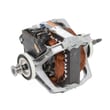
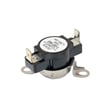
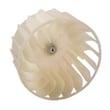

Where can I find my Electrolux dryer model number?
On your Electrolux dryer, the model number is printed on the appliance ID label; for model ELFE7337AW0, you’ll typically find that label on the dryer cabinet opening (inside the door area) or on the back/side of the cabinet. Use the exact model number when ordering parts or checking error codes in the ELFE7337AW0 owner's manual.
Most common label locations
Check these spots in order (they’re the fastest to access):
- Inside the dryer door opening on the cabinet frame
- Along the door opening edge near the lint screen housing
- On the back of the dryer cabinet near the top
- On a side panel near the front edge
What to write down (and why)
We recommend recording these items exactly as shown on the label:
- Model number (example format: ELFE7337AW0)
- Serial number
- Purchase date
- Model series (Electrolux notes the series number is embedded in the model number)
Quick reference table
| Item on label | What it’s used for | When you’ll need it |
|---|---|---|
| Model number | Matching the correct parts diagrams and parts | Ordering parts like a belt, thermistor, or door switch |
| Serial number | Identifying production details for service | Warranty and service calls |
| Model series | Narrowing down feature sets within a family | Comparing manuals and troubleshooting steps |
Why it matters
Electrolux dryers often share similar styling across multiple series; using the exact model number prevents ordering a look-alike part that does not fit (for example, a drum belt, thermistor, or door switch).
Last updated: February 2026
What are common Electrolux dryer problems?
Common problems we see with the Electrolux ELFE7337AW0 dryer are long drying times, no heat, not starting, stopping mid-cycle, and loud thumping or squealing. Most of these trace back to airflow restrictions (lint filter or venting), overloading, or a worn drive system; the ELFE7337AW0 use & care manual covers key operating and troubleshooting checks.
Most common symptoms and what usually causes them
- Long drying times or hot cabinet: clogged lint filter, restricted exhaust duct, crushed vent, or high humidity
- No heat or weak heat: airflow restriction, temperature-sensing issue, or a safety device opening due to overheating
- Dryer will not start: power supply issue, door not fully closed, delay start enabled, or a tripped thermal limiter
- Stops mid-cycle: overheating from poor venting, load too large, or sensor cycle confusion from mixed fabrics
- Loud noise (thump, squeal, rumble): worn drum support rollers, belt wear, idler/tension issues, or blower wheel debris
Quick checks we recommend first (fast, no parts)
- Clean the lint filter before every load and never run the dryer without it installed.
- Confirm the exhaust duct is 4-inch rigid or semi-rigid metal and the run length matches the manual’s limits.
- Check the outside vent hood for a strong, steady airflow while the dryer runs.
- Reduce load size; overloading causes uneven drying, wrinkles, and excess lint.
- If the dryer is on 208V, expect drying times to run about 20% longer than on 240V.
Parts that commonly fix noise, no-start, and overheating
If basic airflow and loading checks do not solve it, these model-matched parts are common culprits:
| Symptom | Common part involved | Example model-matched part |
|---|---|---|
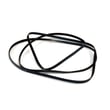
| Squealing, thumping, drum not turning well | Belt or drum support | White-westinghouse dryer drum belt 134719300, dryer drum support roller 5304523152 |
| Overheating, shuts off, won’t start after cooling | Safety temperature limiters | Dryer inlet thermal limiter 137032600, kelvinator dryer high-limit thermostat 3204267 |
| Poor airflow, rumbling, lint buildup inside | Blower system | Dryer blower wheel 5304513609 |
Why it matters
Airflow problems are the root cause behind many Electrolux dryer complaints. Restricted venting makes cycles run long, can trigger safety limiters, and accelerates wear on the motor, belt, rollers, and seals.
Last updated: February 2026
Is Electrolux a good brand of dryer?
Electrolux is a good dryer brand overall; we see strong long-term satisfaction with drying performance, quiet operation, and fabric-care features on models like the Electrolux ELFE7337AW0. Like any brand, results depend on correct installation, venting, and routine lint and airflow maintenance (details in the ELFE7337AW0 use & care manual).
What you can expect from Electrolux dryers
- Strong, even drying when airflow is correct (clean lint screen, clear exhaust duct)
- Good fabric-care focus (less overdrying when sensors and thermistors are working correctly)
- Generally quiet operation when the drum support system is in good shape
- Solid feature set across many series, with clear operating instructions and troubleshooting sections
Common ownership issues (and what they usually mean)
These are the most common “brand” complaints we hear, and they are usually maintenance or wear-item related rather than a brand-wide defect:
- Clothes still damp on auto cycles: restricted venting, overloaded drum, or a sensor/thermistor issue
- Long dry times: lint buildup in the lint chute or ducting, crushed vent hose, or weak airflow
- Thumping/squealing: worn drum support rollers or a worn belt
- No heat or overheating: thermal limiter/high-limit thermostat opening due to airflow restriction
Quick part-to-symptom guide (ELFE7337AW0)
| Symptom | Common cause | Example part for this model |
|---|---|---|
| Squeal, rumble, thump | Drum support wear | Dryer drum support roller 5304523152 |
| Drum not turning | Belt wear/break | White-westinghouse dryer drum belt 134719300 |
| Overheats, shuts off | Airflow restriction; safety opens | Dryer inlet thermal limiter 137032600 |
Why it matters
A dryer can only perform as well as its airflow path. Even a high-end Electrolux dryer will dry poorly if the lint screen, lint chute, blower area, or vent duct is restricted. Keeping airflow strong also helps protect heating components and thermostats.
Helpful reference for troubleshooting
If your ELFE7337AW0 shows an error code or behaves inconsistently, use the Electrolux iq-touch dryer error codes guide alongside the troubleshooting section in the manual.
Last updated: February 2026