 Installation guide
 Owner’s manual





What is the average lifespan of a GE dishwasher?
A GE dishwasher typically lasts 10 to 12 years. For your GE DDT575SMF6ES, lifespan depends most on how often it runs, water quality, and routine care like cleaning the filters and keeping spray arms clear; those habits help it reach the upper end of the range.
Typical lifespan range (what to expect)
Most residential dishwashers, including GE models, fall into this range:
| Usage and care level | Typical lifespan | What usually ends it first |
|---|---|---|
| Heavy use, minimal cleaning | 8 to 10 years | Pump wear, leaks, heating issues |
| Average use, basic maintenance | 10 to 12 years | Drain problems, control issues |
| Light use, consistent maintenance | 12 to 15 years | Normal wear parts, seals, racks |
What extends the life of a GE DDT575SMF6ES
We recommend these high-impact habits (they prevent the most common performance and wear issues):
- Clean the filters every other month (more often if dishes feel gritty); follow the steps in the DDT575SMF6ES owner's manual.
- Keep the spray paths clear; remove debris and check for clogs in the lower spray arm.
- Run hot water at the sink before starting a cycle so the wash starts with hotter water.
- Use a quality detergent and rinse aid to reduce film and mineral buildup.
- De-odorize and descale periodically (citric acid-type cleaners are commonly used for mineral deposits).
Signs your dishwasher is nearing end-of-life
These symptoms usually mean a major component is wearing out (or multiple smaller issues are stacking up):
- Dishes stay dirty even after filter cleaning and proper loading
- Standing water or repeated drain issues
- Poor drying performance that does not improve with rinse aid
- Intermittent power, unresponsive buttons, or cycle interruptions
- New leaks at the door or underneath the tub
Why it matters
Knowing the expected lifespan helps you decide whether to repair or replace. If your DDT575SMF6ES is near 10 to 12 years old, investing in maintenance (filters, cleaning, addressing small leaks early) often prevents bigger failures like pump or heating problems.
Last updated: February 2026
Can I replace dishwasher parts myself?
Yes, for the GE DDT575SMF6ES dishwasher, we recommend DIY replacement only for parts and adjustments that the DDT575SMF6ES owner's manual specifically calls out; always disconnect power before maintenance, and shut off water when working on any fill or drain connection.
What you can usually replace yourself
These are common DIY-friendly repairs on many GE dishwashers when you follow the manual and basic safety steps:
- Spray arms and related wash components (clogs, cracks, poor cleaning)
- Door latch and door hardware (won't start because the door won't latch)
- Drain hose (slow drain, leaks at the hose connection)
- Tub gasket (leaks around the door opening)
- Leveling adjustments (door hits tub, racks roll forward or backward)
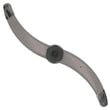
If you are troubleshooting poor cleaning, a worn or clogged lower spray arm is a common culprit; the dishwasher spray arm, lower WD22X33499 is a model-matched part for this unit.
Repairs we recommend leaving to a technician
The manual guidance is clear: do not attempt repairs that are not specifically recommended, and disconnect power before any maintenance. For these items, professional service is the safer path:
- Electronic control board and user interface diagnostics
- Internal wiring repairs (door harness, control housing)
- Leak-detection related issues (cycle cancels due to a detected leak)
- Electrical supply and grounding concerns
Quick safety checklist before you start
Use this checklist every time you work on the DDT575SMF6ES:
- Turn off power at the breaker (turning the dishwasher off is not the same as disconnecting power)
- Turn off the water supply valve under the sink before disconnecting any water line
- Protect the floor with towels or a shallow pan for residual water
- Take photos of wire and hose routing before removal
- Re-level the dishwasher after reinstalling it; racks should not roll on their own
DIY decision guide
| Task type | Typical DIY difficulty | Common tools |
|---|---|---|
| Spray arm, rack parts, gasket | Low | Pliers, screwdriver |
| Drain hose replacement | Medium | Pliers, nut driver |
| Control board or UI replacement | High | Multimeter, nut driver |
Why it matters
Dishwashers combine water, heat, and electricity. Following the manual’s safety steps and keeping the unit level helps prevent leaks, door alignment problems, and repeat service issues.
Last updated: February 2026
What is the most common problem with GE dishwashers?
The most common GE dishwasher problem is poor draining, usually caused by a dirty filter area, a restricted drain path (including the air gap, if you have one), or a weak drain pump. On the GE DDT575SMF6ES, regular filter cleaning and checking the drain path fixes many “won’t drain” complaints.
Quick checks we recommend first
- Turn the dishwasher off at the breaker before inspecting internal parts.
- Clean the filters (a drop in wash performance or gritty dishes is a strong clue the filters need cleaning).
- If your sink setup uses an air gap, clean it (debris here can block draining).
- Confirm the door is fully closed and latched; an interrupted cycle can look like a drain failure.
- Run a short cycle after cleaning to confirm the symptom is gone.
Common symptoms and the most likely causes
| Symptom | Most likely cause | What to do next |
|---|---|---|
| Water left in bottom | Clogged filters or drain restriction | Clean filters; check air gap and drain hose routing |
| Hums but won’t drain | Drain pump issue or blockage | Inspect for debris; consider replacing the pump |
| Beeps or stops mid-cycle | Door opened or cycle interrupted | Press Start and close the door to resume |
| “LEAK DETECTED” message | Leak detection triggered | Check for leaks and water in the base area |
Parts that commonly relate to these issues
If cleaning and hose checks do not solve it, these model-matched parts are often involved:
- Dishwasher drain hose WD24X10062 (kinked, restricted, or improperly routed)
- Dishwasher drain pump WD19X25187 (weak pump, jammed impeller)
- Dishwasher float switch WD21X10519 (overfill protection can affect fill and cycle behavior)
Why it matters
Drain restrictions and dirty filters reduce wash performance, can leave gritty residue on dishes, and can trigger cycle interruptions. Keeping the drain path clear is one of the highest-impact maintenance steps for GE dishwashers.
For model-specific cleaning steps and troubleshooting charts, follow the DDT575SMF6ES owner’s manual.
Last updated: February 2026





