
How to find a compatible garage door opener?
For a compatible garage door opener (or remote) with your Craftsman model 139654031, match the replacement to the exact model number on the motor unit label and confirm the opener’s drive type and learn button style. This prevents pairing issues and travel or safety-sensor problems.
What to check on your current opener
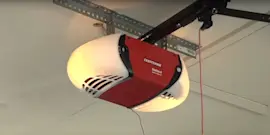
Look at the label on the ceiling-mounted motor head and the rail/drive setup.
- Brand and model number: Craftsman 139654031
- Drive type: chain, belt, or screw drive
- Learn button color and location (used for remote/keypad compatibility)
- Safety sensor setup (photo eyes at the door tracks)
- Door size and weight (single vs. double door; insulated doors are heavier)
Quick compatibility guide
Use this as a fast way to narrow choices before you buy.
| What you’re replacing | Must match | Why it matters |
|---|---|---|
| Complete opener | Door weight/size range, drive type, power source | Prevents strain, stalling, and premature gear wear |
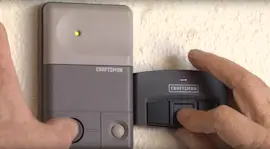
| Remote or keypad | Learn button system and frequency family | Ensures it will program and operate reliably |
| Wall control | Control type (standard vs. smart features) and wiring | Avoids no-response or intermittent operation |
Steps we recommend before purchasing
- Write down 139654031 from the motor unit label.
- Identify the drive type (chain/belt/screw) and note any unusual noises or slipping.
- Check the learn button style so you choose a compatible remote/keypad.
- If the opener flashes lights or shows diagnostic behavior, use Craftsman error codes to pinpoint what’s actually failing.
Why it matters
Garage door opener “compatibility” is not just brand matching. The wrong remote may not program, and the wrong opener size can cause reversing, incomplete travel, or safety-sensor faults that keep the door from closing.
Last updated: February 2026
How to find out garage door opener type?
To identify the opener type for your Craftsman model 139654031, start by checking how the door is moved (chain, belt, or screw drive) and what kind of motor/control system it uses. This helps you match remotes, troubleshoot blinking lights, and choose the right repair approach.
Quick ways to identify your opener type
- Look at the rail above the door:
- Chain drive: metal chain like a bicycle chain
- Belt drive: rubber or reinforced belt (often quieter)
- Screw drive: long threaded steel rod
- Check the motor housing label (on the ceiling unit): brand, model, and sometimes logic board series
- Listen and feel:
- Chain drives are typically louder with more vibration
- Belt drives are typically smoother and quieter
- Check the wall control style (basic button vs. multi-function panel); this often indicates the control platform
- Watch the opener lights when it fails; blink patterns often point to a specific system fault
What “type” usually means (and why it matters)
Most customers mean one of these categories:
| What you’re identifying | Examples | Why it matters |
|---|---|---|
| Drive mechanism | Chain, belt, screw | Determines common wear parts and repair steps (gears, trolley, rail setup) |
| Control platform | Different Craftsman logic board families | Affects troubleshooting steps and diagnostic blink codes |
| Safety sensor setup | Photo-eye sensors at the door tracks | Impacts “won’t close” problems and alignment checks |
Fast troubleshooting clue: use the diagnostic codes
If your Craftsman opener has blinking light patterns or a diagnostic LED, use the code chart to narrow the system type and failure area (sensors, travel limits, force settings, RPM sensing, etc.). See our Craftsman error codes guide.
Why it matters
Once you know whether your Craftsman 139654031 is chain, belt, or screw drive (and which control platform it uses), you can make the right force and travel adjustments, diagnose sensor issues faster, and avoid buying incompatible remotes or controls.
Last updated: February 2026
How do I know what model my garage door opener is?
On a Craftsman garage door opener, the model number is usually printed on a label on the powerhead (the motor unit) under a light lens or on the side near the antenna wire. For model 139654031, check the light cover areas first, then scan the opposite side of the antenna for a rating label.
Where to look on the opener head (powerhead)
Most Craftsman openers place the ID label in one of these spots:
- Under the front light lens (remove or swing down the light cover)
- Under the left light lens when you are facing the opener from inside the garage
- On the opposite side of the antenna wire (often on the side panel)
- Near the learn/program button area (sometimes close to the wiring terminals)
- On the rear or side of the motor housing where the rail attaches
What the label typically shows
The label usually includes several identifiers. Use the model number as your primary match when searching parts.
| Label item | What it means | What to do with it |
|---|---|---|
| Model number | The exact opener model (example: 139654031) | Use it to match the correct parts list |
| Serial number | Unique ID for your specific unit | Helpful for service history, not required for most parts |
| Logic board number | Control board identifier | Useful when troubleshooting electronics |
| Date code | Approximate build date | Helps confirm opener generation |
If you cannot find the label quickly
Use these practical checks to narrow it down while you keep looking:
- Look for a second label on the rail near the motor head
- Check the wall control style (basic button vs. multi-function panel)
- Note whether you have a chain drive or belt drive
- Watch the opener lights for blink patterns after a failed close or open
For blink patterns and diagnostic flashes, use our Craftsman error codes guide.
Why it matters
Craftsman garage door opener parts and programming steps can vary by opener generation (logic board, safety sensor style, and remote compatibility). Using the exact model number helps you avoid ordering the wrong safety sensors, wall control, or circuit board.
Last updated: February 2026
Is it worth repairing a 20 year old garage door opener?
Yes, repairing a 20-year-old garage door opener can be worth it when the problem is small (remote issues, sensor alignment, minor adjustments) and your Craftsman model 139654031 still runs smoothly; for major drive or motor problems, replacement is usually the better value.
Quick decision checklist
- Repair makes sense if the opener runs quietly, the door is balanced, and the issue is intermittent or adjustment-related.
- Replace makes sense if the opener struggles to lift the door, reverses unexpectedly, or needs major internal parts (motor, gear set, logic board).
- Safety first: if the door will not reverse properly or the safety sensors are unreliable, fix that before regular use.
Common “worth repairing” fixes (low cost, high impact)
- Realign and clean the photo-eye safety sensors
- Replace remote batteries and reprogram remotes
- Tighten loose mounting hardware and rail fasteners
- Adjust travel limits and force settings
- Lubricate door hardware (hinges, rollers, springs) and check door balance
For step-by-step troubleshooting that matches Craftsman openers, use our Craftsman error codes resource.
When replacement is the smarter investment
Major repairs on older openers often stack up quickly. Use this as a practical guide:
| What’s failing | Typical outcome | Best choice |
|---|---|---|
| Sensors or settings | Usually correctable with cleaning/adjustment | Repair |
| Remote/wall control issues | Often wiring, programming, or control failure | Repair first |
| Drive gear/worm gear wear | Can be a bigger teardown | Replace if repeated failures |
| Motor or main control board | High cost and time | Replace |
Why it matters
A garage door opener is a safety device as much as a convenience feature. Putting money into a 20-year-old unit only pays off when it restores reliable closing, proper reversing, and consistent remote operation without chasing repeated breakdowns.
Last updated: February 2026
What are the common problems with Craftsman garage door openers?
Common problems on the Craftsman garage door opener model 139654031 usually fall into three buckets: door travel issues (won’t open/close or reverses), safety sensor problems (door won’t close), and drive or control issues (grinding, clicking, or no response from remotes or wall control). Use the opener’s light-flash patterns and diagnostics to narrow the cause quickly using Craftsman error codes.
Most common symptoms and likely causes
- Door won’t close: safety sensors misaligned, dirty lenses, sunlight interference, or wiring issues
- Door reverses or stops mid-travel: force setting too low, binding door hardware, or a door that is out of balance
- Grinding or loud clicking: worn drive gear/worm gear, loose chain/belt, or worn sprocket components
- Opener runs but door doesn’t move: trolley not engaged, broken door spring, or stripped internal drive components
- Remote/keypad won’t work: dead battery, lost programming, radio interference, or receiver/logic board issue
- Wall control acts odd (intermittent, no lights, no response): wiring short, bad wall control, or control board problem
Quick checks we recommend before replacing parts
- Test the door balance: disconnect the opener and lift the door halfway; it should stay in place.
- Inspect safety sensors: confirm both LEDs are steady, lenses are clean, and brackets are not bent.
- Check the emergency release: make sure the trolley is fully re-engaged.
- Listen for the sound: grinding points to drive gear wear; repeated clicking can point to a control or travel issue.
- Verify power and controls: confirm outlet power, then test wall control and remote separately.
What the symptoms usually point to
| What you notice | What it often means | What to do next |
|---|---|---|
| Lights blink and door won’t close | Sensor alignment/obstruction | Clean/align sensors; reduce sun glare |
| Door reverses at floor | Force/travel setting or door binding | Check door movement; adjust force/travel |
| Motor hums, door doesn’t move | Door spring issue or stripped drive | Check door balance; inspect drive system |
| Remote works up close only | Weak battery or interference | Replace battery; reprogram remote |
Why it matters
A garage door opener can look like the problem when the real issue is the door hardware (springs, rollers, tracks). Fixing binding or an unbalanced door prevents repeated gear wear, nuisance reversals, and sensor-related no-close complaints.
Last updated: February 2026