 Owner’s manual
 Error Codes
What is the average lifespan of an electric hot water tank?
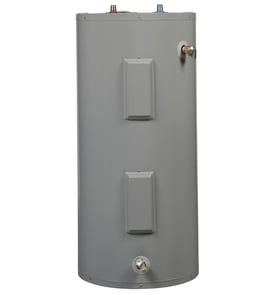
Most electric tank-style water heaters last 10 to 15 years. For your Kenmore 153312462 Economizer electric water heater, regular maintenance (flushing sediment, checking the anode rod, and keeping thermostats set correctly) is what most often determines whether you land closer to 10 years or closer to 15.
| Water heater type | Typical lifespan | What usually ends its life |
|---|---|---|
| Electric tank water heater (like model 153312462) | 10 to 15 years | Tank corrosion, leaks, heavy sediment |
| Electric tankless water heater | 20+ years | Scale buildup, electronics failure |
- Hard water and sediment: mineral buildup insulates the heating element and overheats components.
- Anode rod condition: a healthy anode rod sacrifices itself to protect the tank lining.
- Thermostat settings: higher temperatures increase wear and scale.
- Leak history: once the tank itself leaks, replacement is typically the practical fix.
- Maintenance frequency: periodic draining and inspection slows corrosion and buildup.
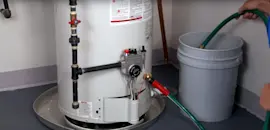
- Flush the tank periodically to reduce sediment.
- Inspect and replace the anode rod when it is heavily worn (the manual warns not to remove it and leave the tank unprotected).
- If you service electrical components, shut off power first and follow the safety steps in the owner's manual.
- Replace failed heating or temperature-control parts promptly, such as the element 100108346 or thermostat 100108424, to prevent overheating and nuisance shutdowns.
- Water around the base of the tank (possible tank leak)
- Rusty or discolored hot water
- Rumbling or popping sounds (heavy sediment)
- Inconsistent hot water even after element and thermostat checks
A water heater that is past its typical service life is more likely to develop tank corrosion and leaks. Staying ahead of sediment and anode wear helps protect the tank and keeps heating elements and thermostats from working harder than they should.
Last updated: February 2026
How to tell if an electric water heater element is bad?
On your Kenmore 153312462 economizer electric water heater, a bad heating element typically shows up as no hot water, not enough hot water, or a heater that trips the breaker. The most reliable confirmation is an electrical test (resistance and short-to-ground) after shutting off power at the breaker; see the owner's manual for access-panel and service steps.
- Water stays cold or turns lukewarm quickly
- Recovery is very slow (hot water runs out faster than normal)
- Breaker trips or a fuse blows when the heater tries to heat
- You recently had very hot water, then suddenly no hot water (often tied to the high-limit system behind the access panel)
- Popping or sizzling sounds (sediment can overheat and damage an element)
- Turn OFF power to the water heater at the breaker (electrical shock hazard).
- Remove the access panel(s) and fold back insulation.
- Confirm wiring is tight and not heat-damaged.
- Use a multimeter to check:
- Resistance across the element screws (a good element shows a steady ohms reading; many elements land roughly in the 10 to 30 ohm range depending on wattage).
- Short-to-ground (probe from an element screw to the metal tank; any continuity indicates a failed element).
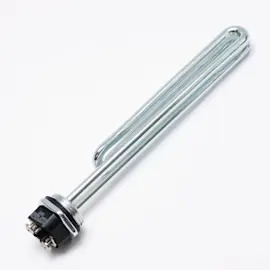
If the element tests bad, replace it with the correct model-matched part such as the element 100108346.
| Symptom | More likely cause | What to check next |
|---|---|---|
| No hot water at all | Power supply, high-limit, or upper controls | Breaker, fuses, high-limit reset, wiring |
| Some hot water, then cold | Lower element issue or heavy usage | Element resistance, sediment, usage vs. capacity |
| Water not heating to set temp | Thermostat out of calibration or failed | Settings and the thermostat 100108424 |
A failed element can leave you without hot water and can also stress wiring and controls. Testing first prevents replacing the wrong part and helps you restore safe, reliable heating.
Last updated: February 2026
What is usually the most common water heater problem?
For the Kenmore 153312462 economizer electric water heater, the most common problems we see are no or not enough hot water (often tied to power supply, thermostat settings, or a tripped high-temperature reset) and noise from normal expansion or sediment-related rumbling. Use the owner's manual troubleshooting steps to narrow it down safely.
- No hot water: breaker tripped, blown fuse, disconnect switch off, or power interruption
- Not enough hot water: heavy demand, very cold incoming water, or thermostat set too low
- Water suddenly went cold after being very hot: high-temperature shut off (reset button on the thermostat)
- Strange sounds: expansion and contraction during heat-up and cool-down (often normal)
- Smelly hot water (rotten egg odor): water chemistry reaction involving the anode rod
- Water around the heater: condensation, a leaking connection, or a true leak that needs pinpointing
- Turn power OFF at the breaker before opening access panels.
- Confirm the tank is completely full of water before restoring power (running elements dry can damage them).
- Check the home’s breaker/fuses and any disconnect switch.
- Verify thermostat temperature settings.
- If you had scalding hot water and then none, press the high-limit reset (after power is OFF).
| Symptom | Most likely cause | What to do next |
|---|---|---|
| No hot water | Power supply issue | Check breaker, fuses, disconnect, house power |
| Hot water runs out fast | Demand exceeds capacity | Wait for recovery; check for hot-water leaks |
| Water too hot | Thermostat set too high | Lower thermostat setting |
| Rotten egg smell | Anode rod reaction | Consider replacing the anode rod |
If testing points to a failed component, these model-matched parts are commonly involved:
- Thermostat 100108424 (temperature control and high-limit reset system)
- Element 100108346 (heats the water)
- Anode rod 100109594 (helps protect the tank; can be tied to odor complaints)
Catching the common causes early helps prevent element damage, reduces energy waste, and avoids repeated high-limit trips. It also helps you separate normal operating sounds from conditions that need repair.
Last updated: February 2026
Is it worth replacing the anode rod in a water heater?
Yes. Replacing the anode rod in your Kenmore 153312462 electric water heater is worth it because the anode rod protects the tank from corrosion; keeping a working anode rod helps prevent premature tank failure and can also address certain water-odor issues described in the owner's manual.
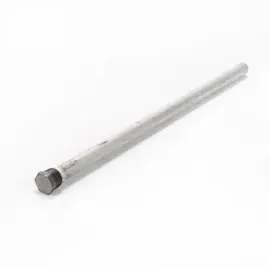
The manual explains that the water heater is built with at least one anode rod for corrosion protection. The rod is designed to be “sacrificial”, meaning it corrodes so the tank does not.
- Helps slow internal tank rust and corrosion
- Reduces the chance of early tank leaks
- Can be involved in “rotten egg” odor (hydrogen sulfide) under certain water conditions
- Protects the tank; removing it and leaving the tank unprotected is not recommended
Replace the anode rod when it is heavily worn (thin core wire showing, severely pitted, or coated and no longer active). In many homes, a practical inspection and replacement cycle is every 3 to 5 years; hard water and high usage can shorten that interval.
| What you notice | Likely meaning | What to do |
|---|---|---|
| Hot water smells like rotten eggs | Reaction involving the anode rod and water chemistry | Replace the anode rod, then follow the manual’s guidance for tank and hot-line treatment |
| Rusty hot water or frequent sediment issues | Corrosion or tank deterioration may be progressing | Inspect anode rod soon; consider element and gasket condition during service |
| No hot water or slow recovery | Often heating element or thermostat related, not the anode | Troubleshoot electrical heating parts first |
If you are opening the tank for maintenance, these related parts are commonly replaced or checked (as needed):
- Anode rod 100109594
- Water heater heating element gasket 100108379 (if an element is removed and resealed)
- Element 100108346 (if heating performance is poor and testing confirms failure)
Water heaters combine electricity and water. Before removing access panels or servicing components:
- Turn OFF power at the breaker
- Confirm the tank is full of water before restoring power (to avoid element damage)
- Drain to a safe level before removing any tank-mounted part
- Reseat or replace gaskets if you disturb an element seal
Last updated: February 2026
Can you replace parts on a hot water heater?
Yes. On the Kenmore 153312462 economizer electric water heater, we can replace common service parts such as heating elements, thermostats, gaskets, the drain valve, the dip tube, and the anode rod; replacing the failed part often restores hot water and can extend tank life when done safely.
These are typical replaceable items for the 153312462, and several are available as model-matched parts:
- Heating element (restore heating when water is lukewarm or cold)
- Thermostat (fix temperature control issues or no-heat symptoms)
- Heating element gasket (stop leaks at the element opening)
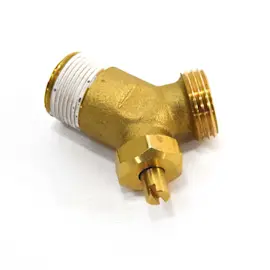
- Drain valve (fix a leaking or clogged drain)
- Dip tube (improve hot water delivery if cold mixes too quickly)
- Anode rod (reduce tank corrosion and odor issues)
The owner's manual calls out key service points we follow during common repairs:
- Use a new gasket when reinstalling or replacing an element to help prevent leaks.
- Replacement elements must match the same voltage and be no greater wattage than the rating plate.
- After servicing, check for leaks at the element opening and reposition the gasket if needed.
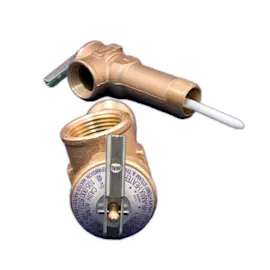
- The temperature-pressure relief valve should be manually operated at least once a year; if it will not reset and keeps releasing water, replace it.
| Symptom | Common cause | Part to check/replace |
|---|---|---|
| No hot water | Failed element or thermostat | Element 100108346, thermostat 100108424 |
| Water leaking at element area | Compressed/damaged gasket | Water heater heating element gasket 100108379 |
| Drain valve drips or will not close | Worn valve seat/debris | Drain 100108269 |
Electric water heater repairs combine electricity, hot water, and pressure. Using the correct voltage and wattage element, installing a fresh gasket, and verifying leak-free operation prevents repeat failures, water damage, and unsafe operating conditions.
Last updated: February 2026