Error Codes





What are the disadvantages of a top mount fridge?
A top-mount refrigerator like the GE GTS18HYNFRFS puts the freezer on top and the fresh-food section below; the main disadvantages are less convenient access to everyday refrigerated items, fewer premium organization features, and fewer built-in dispenser options compared with many bottom-freezer designs.
Common drawbacks (what you will notice day to day)
- You bend more to reach fresh-food items because the refrigerator compartment is lower.
- Shelving and bins are often simpler, so organizing tall bottles, deli items, and meal prep containers can take more effort.
- Many top-mount models do not include an external ice and water dispenser.
- Freezer space can feel less flexible for bulky items (pizza boxes, large roasts) depending on shelf layout.
- Temperature swings can be more noticeable if the door is opened frequently (especially in the fresh-food section).
Top-mount vs. bottom-freezer: quick comparison
| Feature | Top-mount refrigerator | Bottom-freezer refrigerator |
|---|---|---|
| Fresh-food access | Lower, more bending | Higher, easier reach |
| Organization | Often basic | Often more adjustable |
| Dispensers | Less common | More common |
| Cost to buy/repair | Often lower | Often higher |
When a “disadvantage” becomes a repair or setup issue
Sometimes the complaint is really a fixable problem:
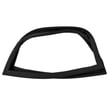
- Door not sealing well: Warm spots, frost, or longer run times can happen if the gasket is not sealing. If the gasket is torn or warped, replacing the refrigerator door gasket (black) WR14X27235 restores proper sealing.
- Noisy or weak cooling: A failing evaporator fan can reduce airflow to the fresh-food section. Our how to fix your evaporator cooling fan guide helps you pinpoint fan-related symptoms.
- Ice maker performance: If your unit has an ice maker and production is inconsistent, the common refrigerator ice maker problems and solutions guide covers the most common causes.
Why it matters
Choosing the right layout affects comfort and food freshness. If you access fresh food far more than frozen food, the top-mount design can feel less ergonomic; if you want simpler design and typically lower ownership cost, top-mount can be a strong fit.
Last updated: February 2026
Are top mount or bottom mount fridges better?
Top-mount and bottom-mount refrigerators are both good choices; the better option depends on how you use your fridge day to day. For a GE top-mount like model GTS18HYNFRFS, top-mount designs typically cost less to own and maintain, while bottom-mount designs usually make fresh-food access more convenient.
Quick comparison
| Feature | Top-mount (freezer on top) | Bottom-mount (freezer on bottom) |
|---|---|---|
| Fresh-food access | You bend more | More eye-level access |
| Freezer access | Easier to reach | Often a pull-out drawer |
| Typical price | Lower | Higher |
| Energy use | Often slightly lower | Varies by design |
| Repairs | Often simpler layout | More drawer hardware |
When a top-mount is the better choice
- You want a reliable, budget-friendly refrigerator style
- You use the freezer often and want it at chest height
- You prefer fewer moving drawer parts (common on bottom-mount freezers)
- You want a layout that is typically straightforward to service
- You have a tighter kitchen space and want a simpler door swing setup
When a bottom-mount is the better choice
- You use fresh food more than frozen food and want it at a comfortable height
- You like freezer drawers for organizing bags and boxes
- You want less bending for everyday items like milk, produce, and leftovers
What matters most for performance (either style)
Even “better” fridge styles can struggle if airflow and sealing are off. These checks apply to both top-mount and bottom-mount designs:
- Confirm doors close fully and the gasket seals all the way around
- Keep vents inside the refrigerator and freezer unblocked
- Set temperatures to typical targets (about 37°F fresh food, 0°F freezer)
- Clean dust from the condenser area periodically
- Address fan noise or warm spots quickly (airflow problems get worse over time)
If you are troubleshooting cooling or airflow on this GE model, our how to fix your evaporator cooling fan guide helps you pinpoint common fan-related symptoms.
Why it matters
Choosing the right mount style affects comfort (how often you bend), organization (shelves vs drawers), and long-term upkeep. For many households, top-mount wins on value and simplicity; bottom-mount wins on everyday convenience.
Last updated: February 2026
What is the most common problem with GE profile refrigerators?
The most common service issue we see across GE Profile refrigerators is a cooling problem (fresh food section warm, freezer not holding temperature, or both). On your GE top-mount refrigerator model GTS18HYNFRFS, the fastest checks are airflow (fans), frost buildup, and door sealing.
Most common symptoms and what they usually point to
- Refrigerator warm but freezer cold: restricted airflow from the freezer (frosted evaporator cover, blocked vents, weak evaporator fan)
- Both sections warm: compressor not running efficiently, condenser airflow issue, or dirty condenser area
- Loud humming, rattling, or squealing: fan blade hitting ice or a failing fan motor
- Ice maker not making ice: water supply issue, inlet valve problem, or ice maker module issue
- Water under the refrigerator: defrost drain restriction or water line/valve seepage
Quick checks you can do in 10 minutes
- Confirm controls are set to a normal mid-range setting (not “off” or “warmest”).
- Listen for the evaporator fan when the freezer door is closed; a failed fan often causes warm fresh food.
- Check for heavy frost on the freezer back wall; that points to a defrost airflow restriction.
- Inspect door gaskets for gaps, tears, or areas not sealing.
- If you have an ice maker, verify the household water supply valve is fully open.
Parts that commonly solve “not cooling” and “noise” complaints
| Symptom | Common suspect | Example part for GTS18HYNFRFS |
|---|---|---|
| Warm fresh food, freezer OK | Evaporator fan not moving air | Evaporator fan motor WR60X31522 |
| Fan noise, vibration | Fan blade damage or rubbing | Refrigerator condenser fan blade WR60X10207 |
| Warm temps, moisture, long run times | Door not sealing | Refrigerator door gasket (black) WR14X27235 |
Why it matters
Cooling problems usually get worse quickly: food safety, ice production, and compressor run time are all affected. Catching an airflow or door-seal issue early often prevents bigger, more expensive repairs.
Helpful GE troubleshooting resources
- Use GE refrigerator error codes if your unit is displaying a code or flashing lights.
- If the door alarm is part of the complaint, follow how to reset the door alarm on a GE refrigerator.
Last updated: February 2026