 Installation guide
 Owner’s manual
 Error Codes





Does a GE dishwasher have a filter that needs to be cleaned?
Yes. The GE GDT645SSN3SS dishwasher uses a filter system that should be inspected and cleaned periodically to prevent gritty residue, poor cleaning, and drainage issues. GE’s care guidance is to clean the filters about every other month, or sooner if performance drops.
How to clean the filters on model GDT645SSN3SS
Follow the steps in the GDT645SSN3SS owner’s manual; the typical process is:
- Pull out the bottom rack.
- Twist the ultra-fine filter assembly counterclockwise to unlock it.
- Lift the filter assembly out.
- Rinse with warm, soapy water.
- Use a soft sponge to remove stuck-on particles (avoid harsh scrubbing that can damage mesh).
If your model has a 2-piece filter with a separate filter basket, unlock the basket by twisting it counterclockwise, dump debris, then rinse and reinstall.
When to clean it sooner
Clean the filters right away if you notice any of these symptoms:
- Dishes feel gritty after a cycle
- Food particles are left on glasses or plates
- Water seems to pool in the bottom
- The dishwasher smells musty
- Cycles sound louder than normal (pump working harder)
Quick troubleshooting: filter vs. other causes
| Symptom | Most common cause | What to check next |
|---|---|---|
| Gritty dishes | Clogged filter | Spray arms for blocked holes |
| Not draining well | Filter or drain path restriction | Air gap (if installed) and drain hose routing |
| Poor cleaning on top rack | Low water flow | Middle/lower spray arm obstructions |
| Suds/foam | Wrong detergent | Use automatic dishwasher detergent only |
Why it matters
A clean filter helps the wash pump maintain strong water circulation, keeps soil from redepositing on dishes, and can reduce odors. It also helps you spot issues early, such as debris that can lead to drainage problems.
Last updated: February 2026
Is GE profile considered high end?
Yes. GE Profile is generally considered GE’s higher-end mainstream line; it typically adds more features, quieter operation, and more premium styling than standard GE models, while still sitting below GE’s true luxury lines. For your GE dishwasher model GDT645SSN3SS, the exact feature set is best confirmed in the GDT645SSN3SS owner's manual.
What “high end” means for GE Profile dishwashers
GE Profile usually targets shoppers who want upgraded performance and convenience features without moving into luxury pricing.
Common “higher-end” traits include:
- More wash options and soil-sensing cycles
- Quieter sound ratings than entry-level models
- More advanced drying features (fan-assisted or extended dry options)
- Better rack adjustability and loading flexibility
- More electronic controls and diagnostics
Quick comparison: GE tiers (typical positioning)
| GE lineup tier | Typical positioning | What you usually get |
|---|---|---|
| Standard GE | Value and essentials | Core cycles, basic racks, fewer extras |
| GE Profile | Premium mainstream | More features, quieter builds, upgraded design |
| GE luxury lines | Luxury | Highest-end finishes, top feature sets, premium pricing |
How to confirm what your GDT645SSN3SS includes
We recommend checking the model-specific documentation and then matching symptoms or features to the control panel options.
Use these steps:
- Review cycle and option descriptions in the GDT645SSN3SS owner's manual
- Check for any diagnostic indicators or fault behavior using GE electronic dishwasher error codes
- Compare your control panel options to the “Getting Started” and “Using the dishwasher” sections
- If performance issues are driving the question (not cleaning, not drying, not filling), troubleshoot those symptoms first before assuming a “tier” issue
Why it matters
Knowing the tier helps set expectations for noise level, drying performance, and feature availability. It also helps when choosing compatible replacement parts (for example, controls, sensors, or wash system components) that match the exact configuration of GDT645SSN3SS.
Last updated: February 2026
What is the most common problem with a GE dishwasher?
The most common GE dishwasher problems are draining issues, not starting, and poor cleaning. On the GE GDT645SSN3SS, these symptoms are often tied to a clogged filter area, a door that is not fully latched, a tripped breaker, or a drain system restriction; we start with the quick checks in the GDT645SSN3SS owner's manual.
Most common symptoms and what they usually mean
- Dishwasher won’t run or stops early: breaker/fuse, wall switch power, control lock, or door latch not engaging
- Not draining: drain hose restriction, drain pump issue, or a blocked sump/filter area
- Not cleaning well: spray arm blockage, loading issue, or detergent dispenser being blocked by tall dishes
- Suds/foam in tub: wrong detergent (hand dish soap) or rinse aid spill
- Odor or film: mineral buildup from hard water; needs cleaning and maintenance
Quick checks we recommend first (in order)
- Confirm power: reset the breaker or replace a blown fuse; check any nearby wall switch that feeds the dishwasher.
- Check the door latch: close the door firmly; if it feels loose or won’t “click,” inspect the latch.
- Cancel/reset the cycle: if suds are present, follow the manual’s steps to clear suds and restart.
- Inspect for drain restrictions: look for kinks or clogs in the drain path.
- Verify detergent and loading: use automatic dishwasher detergent; do not block the dispenser with large items.
Parts that commonly fix these problems on GDT645SSN3SS
| Symptom | Common suspect | What it affects |
|---|---|---|
| Won’t start | GE dishwasher door latch lock WD21X10490 | Prevents the control from running if the door isn’t sensed as locked |
| Not draining | Dishwasher drain pump WD19X25461 | Pushes water out during drain portions of the cycle |
| Not filling or fills slowly | Dishwasher water inlet valve WD15X26078 | Controls water entering the dishwasher |
| Poor wash performance | Dishwasher spray arm, lower WD22X33499 | Water distribution to the lower rack |
Why it matters
Drain and start problems can look like “the dishwasher is dead,” but they are often caused by simple power, latch, or blockage issues. Fixing the root cause protects the pump, prevents standing water odors, and restores normal cycle performance.
Last updated: February 2026
What is the average lifespan of a GE dishwasher?
A GE dishwasher like model GDT645SSN3SS typically lasts 10 to 12 years with normal household use. Consistent cleaning, correct loading, and addressing draining or heating problems early are the biggest factors that help you reach (or beat) that average.
What affects lifespan the most
- Water quality (hard water speeds up mineral buildup on the tub, sump, and spray arms)
- How often you run it (multiple loads daily shortens overall service life)
- Cleaning and maintenance habits (filters, seals, and spray arms)
- Drying and heating performance (a weak heater can lead to poor drying and longer cycles)
- Drain health (standing water strains the drain pump and can cause odors)
Maintenance that adds years (high impact)
We recommend following the care steps in the GDT645SSN3SS owner's manual. In day-to-day terms, these habits make the biggest difference:
- Run a monthly cleaning cycle using citric acid or a dishwasher cleaner
- Wipe the door edges and check the tub seal area for debris
- Keep the spray arms clear of food particles and hard-water scale
- Use the right detergent amount; too much can leave residue, too little can reduce cleaning
- If you notice slow draining, correct it quickly to protect the pump
Common “end-of-life” symptoms and what they usually point to
| Symptom | What it often means | Parts commonly involved on this model |
|---|---|---|
| Not draining or water left in bottom | Restriction, hose issue, or failing pump | Drain system, including dishwasher drain pump WD19X25461 |
| Poor cleaning, especially on lower rack | Clogged or worn spray arm, low wash pressure | Dishwasher spray arm, lower WD22X33499 |
| Won’t heat or dries poorly | Heating circuit or heater issue | Element heat WD05X35098 |
Why it matters
Knowing the typical 10 to 12-year lifespan helps you decide whether to repair or replace. If your GDT645SSN3SS is under about 8 years old, repairs like a drain pump, spray arm, or heater are often practical; beyond 12 years, repeated failures usually signal it is nearing replacement time.
Last updated: February 2026
Can I replace dishwasher parts myself?
Yes, for the GE GDT645SSN3SS dishwasher, we often see customers successfully replace straightforward parts (like spray arms, a drain hose, or a door latch) with basic tools after shutting off power and water. For electrical, grounding, or leak-related repairs, follow the installation guide and use a qualified technician when needed.
What you can usually replace yourself
These repairs are typically DIY-friendly when you work carefully and keep track of screws and wire positions:
- Lower or middle spray arm (poor cleaning, no spray)
- Drain hose (leaks, kinks, poor draining)
- Door latch components (won’t start because the door won’t latch)
- Tub gasket (leaks at the door or tub edge)
- Silverware basket or rack items (fit and function issues)
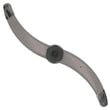
Helpful model-matched examples include the dishwasher spray arm, lower WD22X33499 and dishwasher drain hose WD24X10062.
Repairs that are higher risk (often better for a technician)
The manual notes to disconnect power before maintenance and not to repair or replace parts unless recommended; that is especially important for these items:
- Control and wiring repairs (shock risk, miswiring)
- Water inlet valve replacement (plumbing connections, leak risk)
- Wash pump and sump work (seals, clamps, and leak detection concerns)
- Grounding or hard-wiring changes (must be done correctly)
If your dishwasher won’t run, checking the breaker, wall switch, and control lock is a smart first step; then use the GE electronic dishwasher error codes to narrow down what the control is reporting.
Quick DIY safety checklist (before you start)
- Turn off the circuit breaker (or remove the house fuse)
- Shut off the dishwasher water supply
- Protect the floor; keep towels ready for residual water
- Take photos of wire routing and hose connections
- Confirm the dishwasher can be removed for service (don’t trap it in the opening)
Common symptoms and likely parts
| Symptom | Common cause | Example part for this model |
|---|---|---|
| Not draining | Clog, failed drain pump, kinked hose | Dishwasher drain pump WD19X25461 or Dishwasher Drain Hose WD24X10062 |
| Not cleaning well | Clogged spray arm, low spray pressure | Dishwasher Spray Arm, Lower WD22X33499 |
| Won’t start | Door not latching | GE Dishwasher Door Latch Lock WD21X10490 |
| Leaking at tub edge | Worn gasket | Dishwasher Tub Gasket WD08X23477 |
Why it matters
DIY replacement can restore cleaning and draining performance quickly and save service costs, but dishwashers combine water and electricity. Following the correct shutoff steps and installation practices helps prevent leaks, shock hazards, and repeat failures.
Last updated: February 2026
What are the commonly replaced parts in a dishwasher?
In the GE GDT645SSN3SS dishwasher, the most commonly replaced parts are the wash and drain components (spray arms, pumps, inlet valve), door sealing and latching parts, and a few electrical items that stop the unit from running. These parts typically fail from clogs, leaks, wear, or heat-related stress.
Commonly replaced parts (and what they do)
- Spray arms: Spin and distribute wash water; cracks or clogged jets reduce cleaning.
- Heating system: Heats water and supports drying; failures can cause poor drying and cooler washes.
- Door latch and strike: Confirms the door is closed so the dishwasher can run.
- Water inlet valve: Controls fill water; problems can cause no-fill or slow-fill.
- Drain system: Moves water out; issues cause standing water.
- Seals and gaskets: Prevent leaks around the tub and door.
- Controls and wiring: Power delivery and cycle control; failures can cause no-start or mid-cycle stops.
Model-matched examples for GDT645SSN3SS
| Symptom | Likely part type | Example part for this model |
|---|---|---|
| Not cleaning well | Spray arm or wash pump | Dishwasher spray arm, lower WD22X33499, wash pump main asm WD19X25700 |
| Not draining | Drain pump or drain hose | Dishwasher drain pump WD19X25461, dishwasher drain hose WD24X10062 |
| Won’t start or stops | Door latch or wiring | GE dishwasher door latch lock WD21X10490, dishwasher wire harness and thermal fuse WD21X27402 |
| Not filling | Inlet valve | Dishwasher water inlet valve WD15X26078 |
| Leaking | Tub gasket or sump seals | Dishwasher tub gasket WD08X23477, dishwasher sump and seal assembly WD19X28199 |
Quick checks before replacing parts
- Reset the breaker or replace a blown fuse if the dishwasher will not run.
- Confirm any wall switch feeding the dishwasher is ON (common near a disposer switch).
- Make sure the control panel is not locked.
- Check for obvious kinks in the drain hose and clear clogs.
- Clean filters and inspect spray arm holes for debris.
Why it matters
Replacing the right part first saves time and prevents repeat failures. For example, a “not draining” complaint can be a clogged hose, a failing drain pump, or a leak-detection shutdown, so matching the symptom to the correct system is key.
For safety and model-specific procedures (including warnings about the heating element and safe operation), follow the GDT645SSN3SS owner’s manual.
Last updated: February 2026





