Owner’s manual




What is the typical lifespan of a gas snowblower?
A gas snowblower like the Poulan PR271-96192009101 typically lasts 10 to 20 years with normal residential use and consistent maintenance. Most early failures come from neglected fuel storage, worn belts, and drivetrain wear, all of which are manageable with routine service and timely part replacement.
Typical lifespan ranges (what we see most often)
- 10 to 20 years: common for a well-maintained gas snow blower
- 8 to 12 years: common when maintenance is irregular or storage fuel is left untreated
- 15 to 20 years: common when belts, friction components, and wear parts are replaced as needed
| Usage and care level | Typical lifespan | What usually ends it |
|---|---|---|
| Light use, stored correctly | 15 to 20 years | Wear in auger/drive system, corrosion |
| Average use, basic upkeep | 10 to 15 years | Belts, cables, drivetrain wear |
| Heavy use, minimal upkeep | 8 to 12 years | Fuel system issues, repeated belt failures |
Maintenance that extends life the most
Use the owner's manual for the exact intervals and procedures for your PR271-96192009101. In general, these habits add years:
- Change engine oil on schedule and check oil level before each season.
- Stabilize fuel for storage; run the engine dry or follow the manual’s storage steps.
- Inspect and replace worn belts before they start slipping.
- Keep the chute and auger housing clear of packed snow and debris.
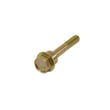
- Check fasteners and hardware for looseness after the first few uses each season.
Parts that commonly affect longevity
If performance drops (slipping, weak throwing, intermittent drive), these model-compatible parts are often involved:
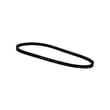
- Snowblower drive belt, 38.2-in 584216102
- Husqvarna snowblower auger drive belt 501818201
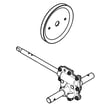
- Snowblower gearbox 598831601
When repair vs. replace makes sense
A practical rule: if a major repair estimate is more than about half the machine’s current value, replacement is usually the better long-term choice.
Why it matters
A snowblower’s lifespan is mostly about preventing off-season damage (fuel and corrosion) and keeping the drive and auger systems transferring power efficiently. Small maintenance steps reduce expensive failures like gearbox damage and repeated belt burn-off.
Last updated: February 2026
How to tell if a snowblower auger belt is bad?
A bad auger belt on your Poulan PR271-96192009101 typically shows up as weak snow throwing or augers that stop under load. Common clues include squealing, a hot rubber smell, or visible belt damage (cracks, fraying, glazing) when you inspect it using the steps in the owner's manual.
Quick symptoms you can spot while operating
- Auger engages but the machine barely throws snow
- Auger starts, then slows or stops in heavy snow
- Squealing or chirping when you squeeze the auger control
- Burning rubber smell after a short run
- Belt dust or black residue near the belt cover area
What to look for during a belt inspection
Shut the engine off, remove the key (if equipped), and wait for all moving parts to stop before checking the belt.
- Cracks across the ribs or on the belt’s flat side
- Frayed edges or cords showing
- Shiny, glazed surfaces (a sign of slipping)
- Missing chunks or a “chunked” edge
- Belt sitting deep in the pulley groove or looking stretched
Simple belt condition checklist
| What you see | What it usually means | What to do next |
|---|---|---|
| Glazing or shiny spots | Belt has been slipping | Check idler tension and pulley alignment; replace belt if glazed |
| Frayed edges | Misalignment or worn pulleys | Inspect pulleys and guides; replace belt |
| Cracks or missing chunks | Age, heat, or impact damage | Replace belt |
| Belt looks intact but slips | Stretched belt or weak tension | Check cable adjustment and idler spring; replace if still slipping |
Common causes that mimic a “bad belt”
Sometimes the belt is fine, but another issue prevents the auger from driving correctly.
- Loose auger control cable adjustment
- Frozen or seized idler pulley or auger pulley
- Packed snow or debris binding the auger/impeller
- Worn auger bearings (dragging load)
- Shear pin issues (auger turns inconsistently)
Parts that are often involved
If inspection confirms belt wear or slipping, the auger belt is a common fix. On this model, you may also find the drive belt involved in overall traction performance.
Why it matters
A slipping auger belt reduces throwing distance and can overheat, leaving you without auger drive mid-storm. Catching belt wear early also helps protect pulleys, idlers, and the auger gearbox from unnecessary strain.
Last updated: February 2026
Is a 2 stage or 3 stage snowblower better?
A 2-stage snow blower is the better choice for most homeowners because it handles typical driveway snowfalls well and is usually lighter and simpler to maintain. A 3-stage snow blower is better when you regularly face very deep, packed, or icy snow and want faster intake and higher throughput. For operating and maintenance details on your Poulan PR271-96192009101, use the owner's manual.
Quick comparison: 2-stage vs 3-stage
- 2-stage: auger pulls snow in; impeller throws it out the chute
- 3-stage: adds an accelerator (a fast center auger) to feed snow to the impeller faster
- Best “better” choice: the one that matches your snow depth, snow type, and driveway size
| Feature | 2-stage snow blower | 3-stage snow blower |
|---|---|---|
| Typical best for | Most driveways; moderate to heavy snow | Frequent deep, dense, or icy snow; plow berms |
| Clearing speed | Strong | Faster intake in tough snow |
| Complexity | Lower | Higher |
| Weight and handling | Usually easier to maneuver | Often heavier |
| Maintenance cost | Typically lower | Typically higher |
How we recommend choosing
Use these practical “tie-breakers”:
- Snow conditions: If you often deal with wet, heavy snow or end-of-driveway plow piles, 3-stage performance can be worth it.
- Driveway size: Larger areas benefit more from higher throughput.
- Storage and maneuvering: If you have tight storage or lots of turns, a lighter 2-stage can be easier to live with.
- Maintenance comfort: More moving parts generally means more adjustments over time (belts, cables, chute components).
- Budget: A 2-stage usually delivers the best value for typical winter use.
Why it matters
Choosing the right “stage” helps you clear snow with fewer clogs and less strain on wear items like belts, bearings, and chute parts. When a machine is undersized for your conditions, you tend to overload it, which can accelerate wear on components such as the snowblower auger drive belt 501818201 and snowblower drive belt, 38.2-in 584216102.
Last updated: February 2026